Archive | Interviews RSS feed for this section

The magazine will feature exclusive interviews with artists, scientists, writers and creative thinkers.

Contemplatives in Conversation: Images in Contemplative Practice

Images in contemplative practice turn on a seeming contradiction: they can serve as guides on the mystical path but can easily become obstacles as well. On October 10th, 2021, I met with Don Salmon on Zoom, as the two of us shared our experiences and ideas about the promises and pitfalls of using images to deepen our connection to God. This piece, which is based on our conversation, explores the contradictions inherent in our use of images for spiritual guidance, along with questions related to the intersection of art and theology. We discuss whether abstract images or images of nature have the same power to inspire contemplation through devotion and love as sacred images of specific mystics, yogis, sages, and saints. Whether there is a difference in the state of consciousness achieved through religious tradition as compared to contemporary methods of spiritual practice that aren’t necessarily associated with a tradition, and the role of imagery in devotional practices vs non-devotional practices. We explore the relative value of image-based vs. non-image-based meditation, and the benefits of using digital images for contemplation. We also discuss the nature of apophatic and cataphatic methods and how different traditions approach images as vehicles for spiritual enlightenment.

Paul Walde: Requiem for a Glacier

Paul Walde is an artist, composer, and curator. Walde’s body of work suggests unexpected interconnections between landscape, identity, and technology. In 2013, he completed ‘Requiem for a Glacier’, a site-specific sound performance featuring a fifty-five-piece choir and orchestra live on the Farnham Glacier in the Purcell Mountains. In this interview with art and ecology author, John K. Grande, he discusses this work as well as his other projects.

Mediating our relationship to the molecular world

Laura Splan is a transdisciplinary artist working at the intersections of science, technology, and culture. Her research-driven projects connect hidden artifacts of biotechnology to everyday lives through embodied interactions and sensory engagement. Her recent exhibitions featuring molecular animations and material artifacts of laboratory animals include her large-scale immersive installation in the Brooklyn Army Terminal at BioBAT Art Space, NYC.

Cognitive Architectures for Artificial Consciousness

“Consciousness is what makes us human, and therefore, to build a human-like robot, it is inescapable to face the problem of consciousness.”

Antonio Chella is a Professor of Robotics and Director of RoboticsLab at the Department of Engineering, University of Palermo. He is the author of more than 200 publications and an editorial director of scientific journals and of book series in the fields of Robot Consciousness, Computational Creativity, Cognitive Science and Artificial Intelligence.

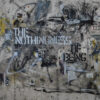
On ‘Being You’

Anil Seth is Professor of Cognitive and Computational Neuroscience at the University of Sussex, where he is also Co-Director of the Sackler Centre for Consciousness Science. He is also Co-Director of the Canadian Institute for Advanced Research (CIFAR) Program on Brain, Mind, and Consciousness, and of the Leverhulme Doctoral Scholarship Programme: From Sensation and Perception to Awareness. Editor-in-Chief of Neuroscience of Consciousness (Oxford University Press) and a Clarivate Highly Cited Researcher (2019, 2020, 2021), which recognizes the top 1% of researchers by field with sustained impact over a period of a decade.

His new book ‘Being You: A New Science of Consciousness’ is a Sunday Times Top 10 Bestseller, a New Statesman Book of the Year, a Guardian Book of the Week and a Guardian and Financial Times Science Book of the Year. His 2017 main-stage TED talk has more than 12 million views and is one of TED’s most popular science talks.

People-Identities

Alexa Wright is London-based artist working across a range of media including photography, video, interactive installation and book works. She has worked at the intersection of art and medical science since the late-1990s and often works with people with mental and physical differences to make works that address questions of human identity and otherness through qualities like vulnerability and empathy. She has been involved in several long term inter-disciplinary collaborations, for example with Alf Linney, Professor of Medical Physics and computer scientists at UCL (1999-2010) and Hybrid Bodies, a unique international, interdisciplinary project based in Toronto, Canada that brought together medics, visual artists, a philosopher and social scientists to explore the emotional and psychological effects of heart transplantation (2007-19).

Curating Art and Science Collaborations

Esther Mallouh is an arts entrepreneur. She launched her arts curatorial career in Istanbul, Turkey in 1990. Her fascination with the interpretative power of the arts has fuelled her drive to conceptualize distinct art and scientific themes. Since 1993, she has been curating exhibitions at the intersection of science and the arts delving into intriguing concepts that attract explorative enquiries and collaborations between renown scientists and artists.

Analog Astronaut

Richelle Gribble is an expeditionary artist exploring planetary connectivity, both on and off Earth. Her work explores connectivity in a world where human impact, technology, and the environment collide. She has completed 18 art residencies as part of her project The Nomadic Artist, where she travels the world to reflect social and environmental changes across the globe. She is an Analog Astronaut and Head of Creative Research for analog space missions on the Moon and Mars via Hawai’i Space Exploration Analog and Simulation (HI-SEAS), Sensoria Program, and Lunares Research Station.

Contemplating Complexity

“Complexity is the underlying focus of my work. My work is not rigidly representational but rather it’s suggestive of the very real and very complicated parts and systems that compose and surround us but that cannot be seen by the naked eye. Using motifs from microbiology, I experiment with material, scale, and replication to create abstract biomorphs of vivid color, hyper-texture, and dedicated detail.”

Drawing on her experience with ceramics, fabric, and sculpture, Amie Esslinger’s paintings and distinctive mixed-media installations attempt to bridge the gap between art and science.

Nothing is Beautiful

Niki Hare is a diverse visual artist whose work revolves around ideas of existence and vision. The work dissects and explores the world she has suddenly found herself in. There is a focus on detailing and observation. “The world is paused, broken down into layers, shuffled, pushed back together and sent on its way. Nothing is static, there is a sense of the temporary, imbalance, discomfort.”.