Nothing is Beautiful
Niki Hare is a diverse visual artist whose work revolves around ideas of existence and vision. The work dissects and explores the world she has suddenly found herself in. There is a focus on detailing and observation. “The world is paused, broken down into layers, shuffled, pushed back together and sent on its way. Nothing is static, there is a sense of the temporary, imbalance, discomfort.”.
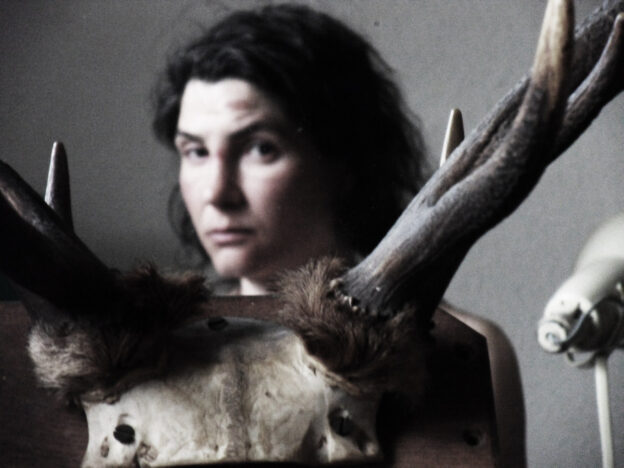
Niki Hare
Richard Bright: Can we begin by you saying something about your background?
Niki Hare: My childhood was spent in the countryside and I had two passions, art and horses. I wouldn’t say I was talented at either, but I always had great determination. I started at art college but it didn’t work out, somehow it completely killed my creativity. So I went off and rode horses for the next 20 odd years. My speciality was backing and producing the youngsters, in particular the misfits and problem ones, and once I hit the other side of 40 I decided I was getting too old for the injuries and it was time to do something new.
Finding a job outside of the horse industry proved to be difficult, so whilst I was looking I started to experiment with painting and photography. I also discovered the internet for the first time, which blew my mind. It was also very influential; it gave me the idea that art could be anything. I spent a lot of time looking at Art Review and ended up making contacts all around the world that led to involvement in projects ranging from a postal collage group in the US (which is still continuing) to video and photography group that exhibited for many years running, in Cologne, Germany.
It also led me to discover online galleries like Saatchi Art and that was to be my start of getting online sales and realising that it could be a way of earning a living. I never wanted to be an artist, it was just something I fell into.
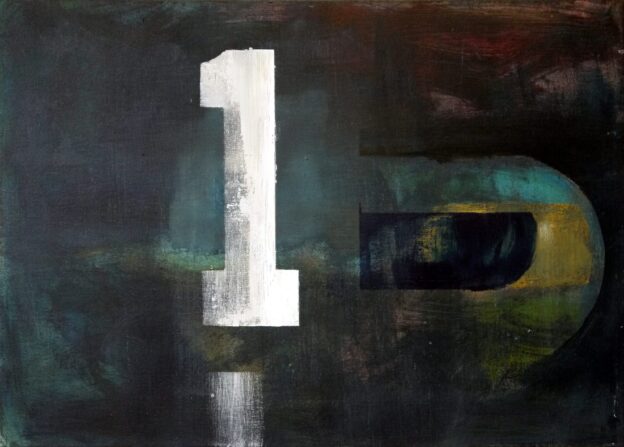
i dreamt i was a bird, 50 x 70 x 4cm, acrylic on canvas, 2013
RB: Have there been any particular influences to your art practice?
NH: Somehow my lack of influence has been my biggest influence. When I worked with horses there was no available time for anything else. I think my career with horses very much influenced my attitude towards painting, as in, work hard expect little in return. I had no idea what I was doing with painting so I just worked hard at the unknown and looked inside rather than outside for inspiration. The word paintings came about because I found some discounted stencils in the local stationers and because I like letter forms I thought they would be good to use in my abstract paintings. Initially I just used them individually, or a part of them. It was quite a long time before I thought of saying something with them.
The super bright colours came about in the same way, the stationers was shutting down and all the paint was reduced, the useful colours soon sold out and all that was left were the weird shiny ones and neon colours, which then came home with me.
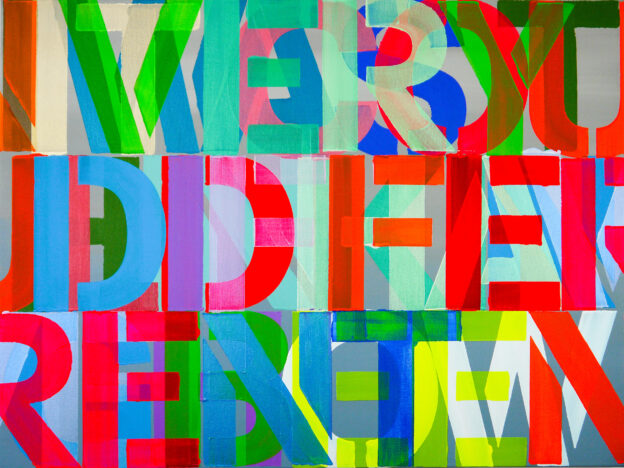
very different, 76 x 102 x 3cm, acrylic on canvas, 2021
RB: What is the underlying focus of your work?
NH: I’m not good at expressing myself verbally and so when I discovered painting words it was a bit of a revelation. Not only could I paint how I felt with no restraint, I could also cover it up again if I wanted to, however the words had still been said. My idea with painting, any sort of painting, was that if it was absolutely honest and you had put some kind of inner part of yourself into it, it would be a good painting. It was like finding a language that I could speak in for the first time. But whilst the paintings are very personal, they are also very open to interpretation, the idea is that the viewer takes what they want from them. When I made the first word paintings I had no intention of putting them online, I was uncomfortable with the thought of exposing myself in that way. But when I eventually did put them online the response I found was that people didn’t see me in the paintings, but instead found something of themselves.
When I look back at older paintings they work for me as a sort of visual diary, they pinpoint the moment in time that I painted them and what was going through my mind. But they are also quite fluid, I might paint with one thought in mind, and then some time later it could mean something completely different to me. For the most part they are painted in a very direct way, often the words just fall out of my head as I go along, I like the idea that they are unprocessed and there is rarely any consideration of what the end result might look like.
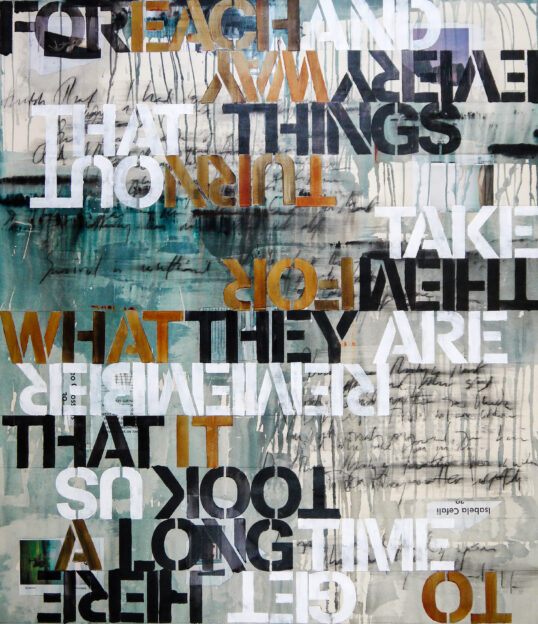
A Long time to get here, 150 x 130cm, mm, collage, charcoal on canvas, us, 2020
RB: Text and art have been intertwined for centuries. Can you say something about your particular use of words in your paintings?
NH: Because I knew nothing about art when I started and had never come across any text- based art, I just evolved it in my own way. When I did discover all the artists using text in their work I was quite horrified, but at least by then I had gotten started with it. Had I seen the others first I would have steered well clear.
I think my layering of text is fairly unique, that started because I would write something and then cover it up, either just with paint, or with more letters. And I got to playing with transparencies, so that you could almost read multiple layers at the same time, like listening to multiple dialogues at once. Then once I found the florescent colours and interference paints, then layers of colours became great fun to work with, and they somehow created a real energy, as if they were alive.
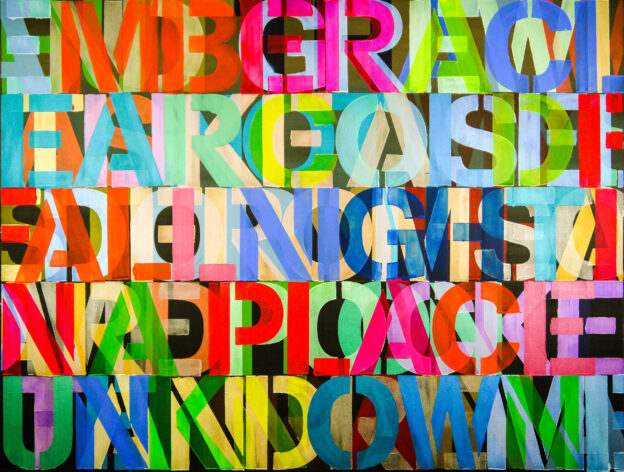
but that was not my story(i heard it on the train), 150 x 200cm, us, acrylic on canvas, 2021
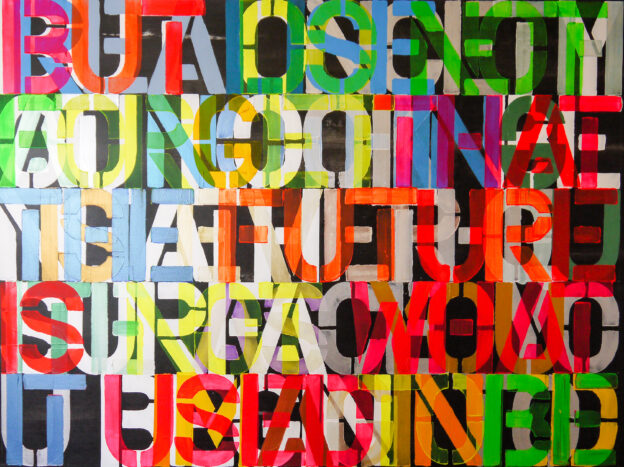
the future is not what it used to be, 150 x 200 x 4cm, acrylic on canvas, 2019
RB: Your Words paintings create a visual language through layering and complex compositions. Can you say something about the working process of these works?
NH: The paintings are rarely planned, although there is a bit of a working process that I use for the very brightly coloured ones. With these I have in mind to have the letters almost hovering, so I will use a graduated background from light to dark, with the base layer of letters from dark to light, to contrast. The second layer of letters is mostly painted with interference colours that provide a certain opacity over dark, but are almost invisible, except from at a certain angle, over light. The top layer is mostly florescent colours, which are quite transparent and become very dramatic over white or very pale colours, almost disappearing over dark colours. But even within that process I am always experimenting and mixing things up.
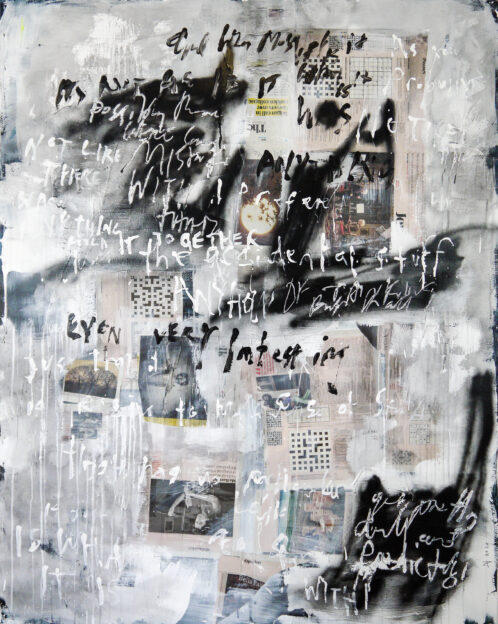
as you probably noticed, 152.5 x 122, collage on heavy watercolor paper, tear below, 2020
Other styles of stencilled paintings, with no layered text, and built up with layers of collage and acrylic washes, with the text added at the end.
The freestyle mixed media and collage paintings are usually made in two stages, the collage and text base layer, and then a session often working wet on wet in a spontaneous sort of way.
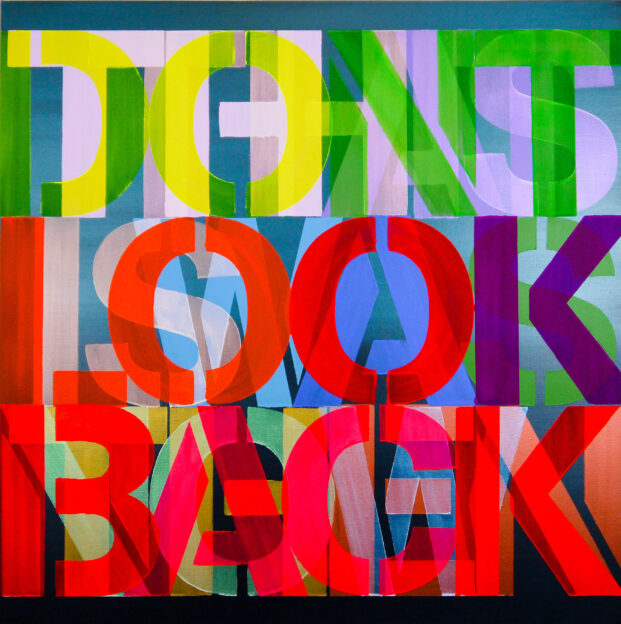
dont look back 4, 100 x 100 x 4cm, acrylic on canvas, 2021
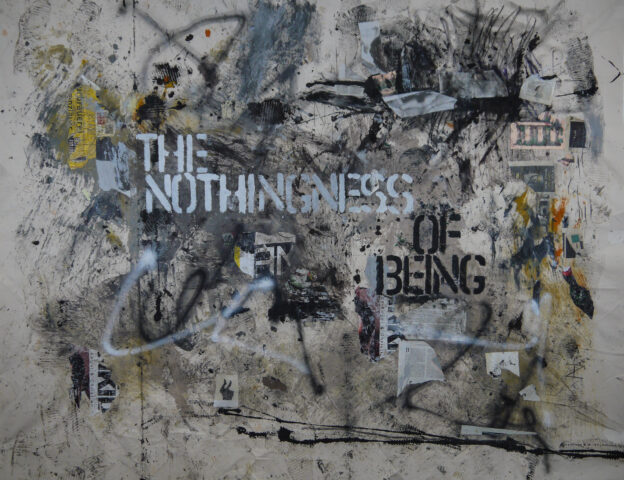
Nothingness of being, mixed media and collage on canvas,182 x 237, 2018
RB: The titles of our works, The Nothingness of Being and Nothing is Beautiful, evoke ontological concepts. Can you say more about these works and the meaning behind their titles?
NH: The title is important to me, sometimes it comes first and influences the painting, other times it isn’t decided until after. I like the notion of nothingness, for me it is both everything blended into one, and a complete absence of anything at the same time. The Nothingness of Being started off as a big canvas left on the studio floor for a few weeks to absorb accidents. It then moved to the wall where I worked into it further and added collaged elements. The idea with it was that it would create a sense empty nothingness from a distance, but close up you would discover that the nothingness was actually composed of a multitude of fractured details. I thought about calling it Being And Nothingness after Sartre’s book, which I had been attempting to read, but then hit upon The Nothingness of Being which I liked both for the twist, and that it better summed up what the painting was about.
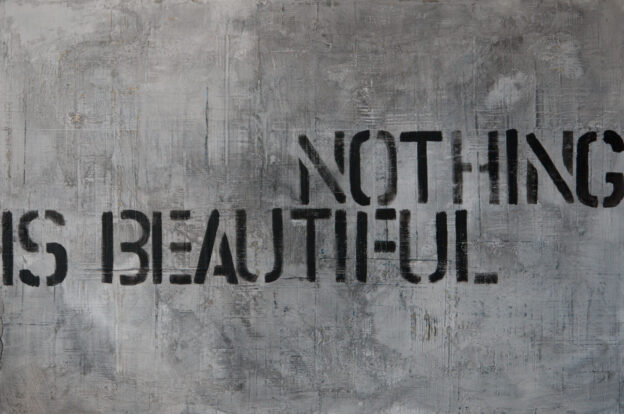
Nothing Is Beautiful, 81 x 122 x 5.5cm, mixed media on wood, 2015
Nothing is Beautiful again looks like nothing, but the beauty is in the complexity of the textured detail. The idea is to explain the beauty of nothingness, but it could also be taken the other way around.
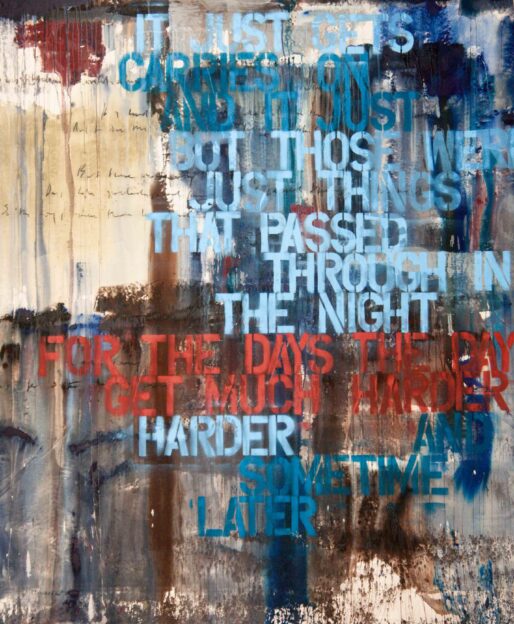
Passed through in the night, 200 x 168cm, mixed media on canvas, 2016
RB: Speaking of your work you have said “I paint in order to stave off the nausea”. What do you mean by this? Is this a reference to Jean-Paul Sartre’s existential nausea?
NH: I wrote that a long time ago and I think in part I was trying to sound clever, which I am not. But yes, it was a reference to Sartre’s Nausea. For me the worst thing of all is to feel nothing at all. I find painting difficult, painful even, although this applies more to some sorts of work than others. The constant battle with painting, digging deep inside yourself trying to find something that you don’t even know what it is, that totally staves of the nausea.
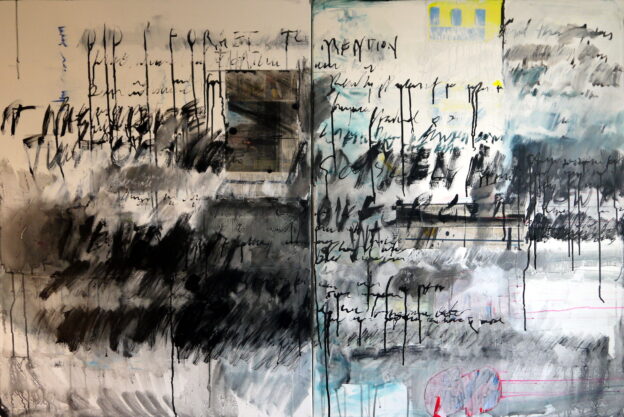
the way I see it, diptych, 101 x 152 x 1.6cm, mixed media on canvas, 2014
RB: What projects are you currently working on or have coming up in the future?
NH: Much of my time is spent dealing with online sales, the packing, building crates, paperwork and accounts side of it adds up to a fair bit of work.
I have a joint show at the JGM Gallery in London scheduled for next year, this was a prize from the Wells Art Contemporary last year, but to be honest I haven’t even thought about it yet.
Mostly I don’t do commissions, however there are a few exceptions and people I work with on a regular basis, so there is often one of those on the go. I don’t really like using other people’s words as it defeats the whole purpose of painting for me, however I’m not so bothered about doing corporate jobs, I can understand why they select specific words and I just see it as playing around with the colours.
The Black Bear (Gloucestershire’s oldest pub) is opposite me and currently under renovation, I am going to be doing a painting directly onto a wall for them. Fortunately, it’s a big renovation job and going quite slowly as I haven’t really had a chance to think about it yet.
Today I have been doing a couple of oil paintings for a student’s Masters project in Canada. She is researching the influence of music on artists and their work. Needless to say the deadline is tomorrow, but at least they don’t need to be sent physically. It has been interesting to do and I like that I just focused on the music not the painting, I find painting goes better if you don’t look or think about it too much.
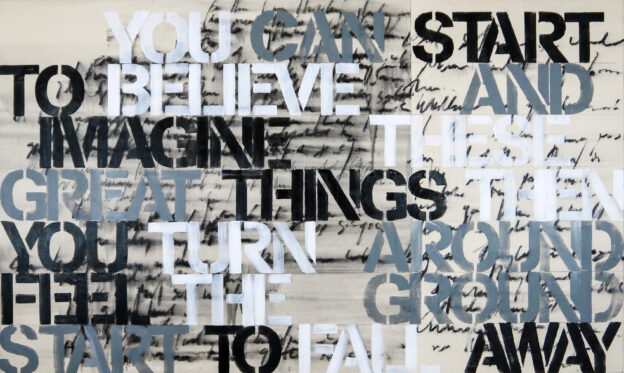
common ground, 91 x 152cm, acrylic and charcoal on canvas, 2019
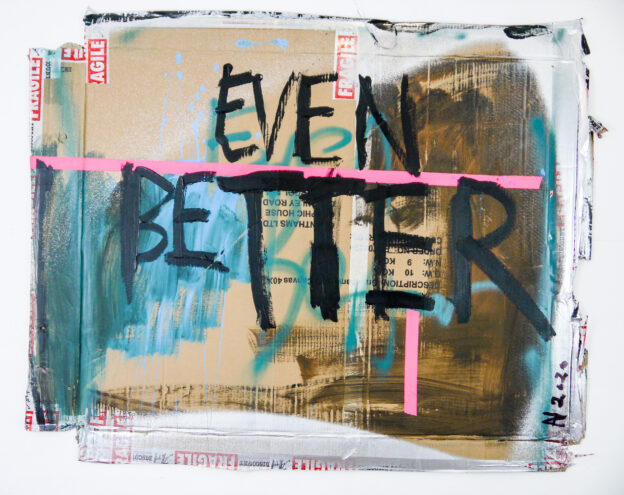
even better, 93 x 118cm, mixed media and tape on cardboard, 2020
…………………………………………….
All images copyright and courtesy of Niki Hare
Get the Full Experience
Read the rest of this article, and view all articles in full from just £10 for 3 months.
No comments yet.