Complexity and Consciousness
Issue 97 September 2026
On Complexity and Consciousness
Neil Theise is a Professor of Pathology at the NYU Grossman School of Medicine. Through his scientific research, he has been a pioneer of adult stem cell plasticity and the anatomy of the human interstitium. Dr. Theise’s book, ‘Notes on Complexity: A Scientific Theory of Connection, Consciousness, and Being’ (Spiegel & Grau, 2023) calls on his studies in complexity theory to address topics such as consciousness studies and science-religion dialogue. In this interview he discusses his life, ideas and work.
Why AI Makes Us Anxious About Our Own Thoughts
This essay argues that generative AI does not destroy originality but exposes the weakness of the idea that thought can be pure, untouched and entirely self-generated. Drawing on the author’s experience as a hydrologist, it compares AI-assisted writing with scientific modelling: both tools produce outputs that require human judgement, interpretation and accountability. The essay proposes that authorship should be understood not as freedom from influence, but as the responsible transformation of inherited material. Originality, on this view, begins after influence rather than before it.
AI-Boosted Religion
“AI religions are beginning to emerge as a significant cultural and intellectual phenomenon. This emergent development invites serious scholarly inquiry into the intersection of artificial intelligence, religious cognition, and the deep structures of spiritual longing that have characterized human civilization across millennia.”
Cristian Horgos lives in Romania. After graduating Math and IT, he taught Math-IT for ten years. He currently works for an IT company. Some of his other published articles are: Mathematical equation, hidden in Brâncusi’s Triptych from Târgu-Jiu.
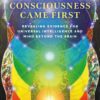
Extract from ‘Consciousness Came First’
Dr Edi Bilimoria is an award-winning author, engineer, and international speaker with over fifty years of study in the Perennial Philosophy. ‘Consciousness Came First’ is a unique, panoramic and powerful book bridging the gulf between contemporary science and the philosophy of the ages. Aimed at the general rather than the specialist academic reader, it is essential reading for all those attempting to unravel the mysteries of life in the modern age. Based on his monumental award-winning four-volume work ‘Unfolding Consciousness: Exploring the Living Universe and the Intelligent Powers in Nature and Humans’, it is arguably the most radical and persuasive reappraisal of the subject in decades.
Eyes on the road (chapter 1)
Florian Coulmas is Professor emeritus of Japanese Society and Sociolinguistics at the IN-EAST Institute of East Asian Studies at Duisburg-Essen University. He has published numerous books, including one about Hiroshima, where he once lived. In 2016, he was awarded the Meyer-Struckmann-Prize for Research in Arts and Social Sciences.
“Eyes on the road is a travelogue which isn’t really a travelogue because it is about a journey fifty years back.”

The Spiritual In Art Collective
THE SPIRITUAL IN ART COLLECTIVE is an international collective dedicated to research into the spiritual dimension of contemporary art. Formed in 2026 following an international Open Call, the Collective brings together artists from different geographical, cultural and disciplinary contexts. They are united not by a common aesthetic or a predetermined definition of the spiritual, but by a shared willingness to explore its meaning and possibilities within contemporary art.
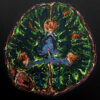
How individual consciousness works – and makes us unique
Peter Coppola is a Visiting Researcher, Cambridge Neuroscience, University of Cambridge.
“Most of my work focuses on network dynamics, graph theory and consciousness. I am very interested in neurological and neuropsychological cases and what these can tell us regarding consciousness. I intend to investigate how the neuroscience of consciousness can be integrated in clinical psychological practice and ethics.”
Emmanuel A Stamatakis is Lead, Cognition and Consciousness Imaging Group, Division of Anaesthesia, University of Cambridge.
“My work focuses on understanding the neural mechanisms underlying a broad spectrum of altered states of consciousness in healthy volunteers (induced by anaesthetics or psychedelics), and patients who have sustained brain injuries that result in disorders of consciousness (DoC e.g. minimally conscious state, coma). This work is underpinned by fundamental neuroscience questions as well as broader cognitive architecture questions. In addition to my work on severe brain injury and DoC, I am interested in concussion focusing on the potential of fMRI to predict long-term cognitive/affective post-concussive symptoms. I also employ pharmacological fMRI to investigate therapeutic interventions in patients with traumatic brain injury.”
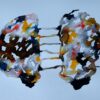
How to build a digital ‘twin’ of the human brain – what existing models overlook
Andrea Luppi is a Senior Research Associate, Department of Psychiatry, University of Oxford.
Wellcome Early Career Fellow at the University of Oxford and Research Fellow of St John’s College, University of Cambridge. I work at the intersection of computational neuroscience, network science, and complex systems to understand principles of consciousness and cognition in biological and artificial systems.
Professor Gustavo Deco is Research Professor at the Institució Catalana de Recerca i Estudis Avançats (ICREA) and Professor (Catedrático) at the Pompeu Fabra University (UPF) where he leads the Computational Neuroscience group. He was also Director of the Center of Brain and Cognition from 2001 to 2021 at UPF.
Professor Morten L Kringelbach is the founding director of the interdisciplinary Centre for Eudaimonia and Human Flourishing at Linacre College, University of Oxford, UK. He is also a Principal Investigator at Center for Music in the Brain, University of Aarhus, Denmark. His prizewinning research has helped elucidate the brain systems driven by hedonic and eudaimonic stimuli such as, for example, infants, food, psychedelics and music. He has published fifteen books, and over 450 scientific papers, chapters and other articles.
Why our physical bodies may be a core part of conscious experience – new research
Renzo Lanfranco is a Principal Researcher in cognitive neuroscience and experimental psychology based in the Department of Clinical Neuroscience and the Department of Neuroscience at Karolinska Institutet.
“My research explores the function of conscious awareness in visual perception and bodily self-perception, using behavioural, psychophysical, computational modelling, and neuroimaging techniques, to understand the perceptual principles and neural mechanisms of these processes.”
How your conscious and unconscious mind interact
Samantha Brooks is an Associate Professor of Cognitive Neuroscience, Liverpool John Moores University.
“My PhD (King’s College, London) examined the neural processes of extreme appetite control in adults with anorexia versus bulimia nervosa. I took what I learned to Sweden (Uppsala University) to measure the early risk markers in the brain of adolescents with a new diagnosis of anorexia (before weight loss/reduced brain volume) occurred. I then took this knowledge to Cape Town (University of Cape Town), to develop a cognitive training intervention to test whether similar brain processes could be strengthened in people with weaker appetite control. e.g. those with addictions. Based on over 100 publications, we have developed a ‘gym training’ for the brain, called ‘curbyouraddiction.com’ – a free intervention to strengthen the brain processes of appetite control (willpower) over one month. I am currently a researcher and associate professor teaching undergraduates and postgraduates on topics from research methods to cognitive neuroscience, at Liverpool John Moores University, UK.”
The next frontier is not artificial intelligence, it’s artificial societies
Professor Nick Jennings is an internationally-recognised authority in the areas of AI, autonomous systems, cyber-security and agent-based computing. He was awarded the 2026 Research Excellence Award by the International Joint Conference on Artificial Intelligence.
His research focuses on developing agentic AI systems for large-scale, open and dynamic environments. In particular, he is interested in how to endow individual autonomous agents with the ability to act and interact in flexible ways and with effectively engineering systems that contain both humans and software agents.
Nick is passionate about the real-world impact of research and his systems have been deployed to save lives in the aftermath of disasters, to win Olympic medals for TeamGB, and to monitor the impact of climate change on glaciers.
He has also been involved with a number of start-ups including Aerogility, Darktrace, Sentient Sports, Reliance Cyber Systems, Trans Humanity and is a board member of Midlands Mindforge.