Future Thoughts and Meeting Points
Issue 29 December 2016




Living Light: Bioluminescent Art
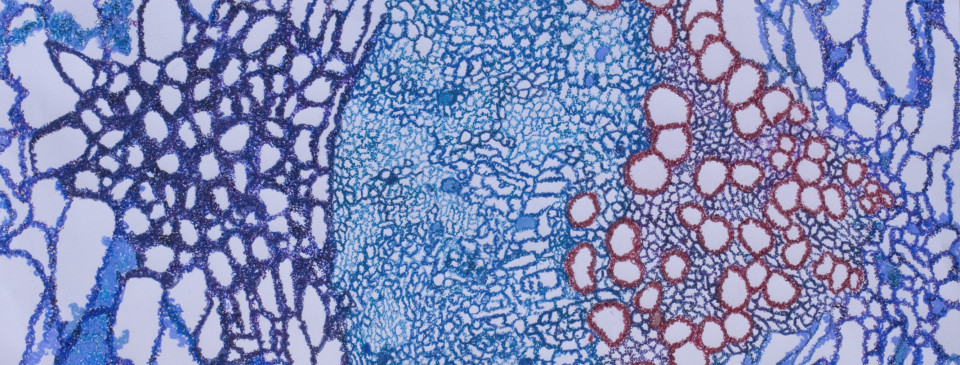
Hunter Cole creates Living Drawings with bioluminescent bacteria. These Living Drawings depict the cycle of life and death calling attention to our own mortality. She creates controlled line drawings using bioluminescent bacteria. The bacteria then grow on Petri dishes. Bacteria become collaborators in the art as it grows and dies. First appearing with bright light, bacteria in the drawing are photographed as it uses up available nutrients, gradually dying-off over a two-week period. She created a movie of bacterial drawings growing and dying with music based on protein sequence in the bacteria. Hunter Cole is also creating a new series called Living Light where people and objects are photographed by the light of bioluminescent bacteria. Her most recent series is called Bioluminescent Weddings where people are posed for wedding photographs by the light of bioluminescent bacteria. One of the functions of bioluminescence in nature is to attract a mate.

Visualising the Sound of Nature
Andy Thomas creates a visual fusion between Nature and Technology, by taking photos and sound recordings of flora and fauna and producing audio responsive animations that visually represent the subject matter in beautiful and abstract ways. By using 3D software to digitize nature, he creates familiar looking structures such as insects and plants that move in a rhythmical dance to corresponding sounds. His work seeks to explore ideas such as self similarity in nature and how evolution and technology co-exist on this planet we call Earth.

Exploring the UnSeen
Jody Rasch is a New York–based artist who explores the duality of nature through scientifically influenced abstractions. He has been exhibiting for over 25 years, including a solo show of his work at Pfizer Corporation’s headquarters in New York. He is affiliated with SciArt Center and Art & Science Collaborations, Inc. (ASCI).

The mind isn’t locked in the brain but extends far beyond it
Keith Frankish is an English philosopher and writer. He is a visiting research fellow with the Open University in the UK and an adjunct professor with the Brain and Mind Programme at the University of Crete.

Embedded beings: how we blended our minds with our devices
Saskia K Nagel is assistant professor in philosophy and ethics of technology at the University of Twente in the Netherlands. She is interested in the intersection of ethics, philosophy and life sciences, and how technologies influence our self-understanding.
Peter Reiner is professor and co-founder of the National Core for Neuroethics at the University of British Columbia in Vancouver, where he is a member of the Department of Psychiatry and the Centre for Brain Health. He is interested in quantitative analysis of public attitudes towards diverse issues in neuroethics, the contours of autonomy in the real world, and the neuroethical implications of Technologies of the Extended Mind

Now it’s time to prepare for the Machinocene
Huw Price is Bertrand Russell Professor of Philosophy and a fellow of Trinity College at the University of Cambridge. He is also academic director of the Centre for the Study of Existential Risk and the Leverhulme Centre for the Future of Intelligence. His most recent book is Expressivism, Pragmatism and Representationalism (2013)

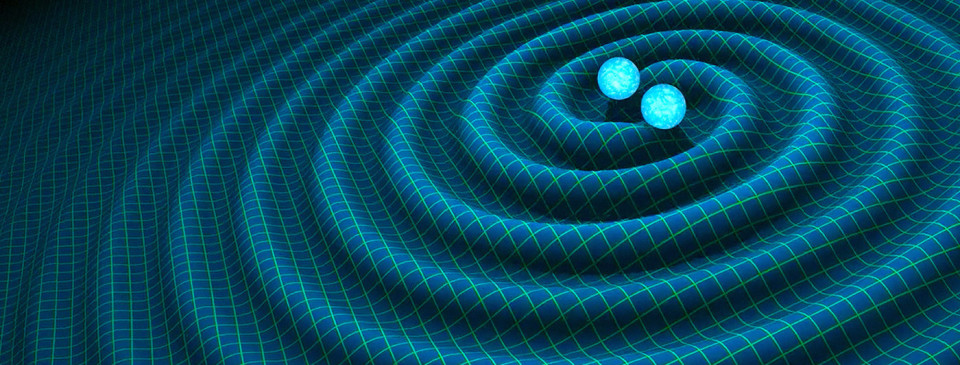
Gravitational waves will bring the extreme universe into view
Daniel Hoak earned his PhD in physics from the University of Massachusetts Amherst. He is currently a Fulbright grantee and postdoctoral researcher at the European Gravitational Observatory near Pisa in Italy, where he is working on the Virgo Experiment.
Future Thoughts and Meeting Points video talks blog link
Featuring – Sam Harris: Can we build AI without losing control over it? ; Monica Byrne: A sci-fi vision of love from a 318-year-old hologram ; Juan Enriquez What will humans look like in 100 years? ; and Kevin Kelly: 12 Inevitable Tech Forces That Will Shape Our Future.