Do We Need to Rethink Everything?
We know from cognitive science and neuroscience that the brain is not a passive observer, like a camera lens. The brain actively composes what we perceive. Still we persist, in all our endeavors – from trying to cure cancer to conceiving of a unified theory – to operate from a materialist perspective. Perhaps this needs to change.

Image: Shutterstock
I recently published an op-ed in The Wall Street Journal and was surprised by how many people who wrote to me afterward were curious about something I mention in passing: Are we sure light has speed?
The calculation of speed requires a frame of reference. If this is a holographic universe—an idea championed by Nobel laureate Gerard ’t Hooft, Juan Maldacena, Stephen Hawking, and supported by substantial evidence—what is the best frame of reference?
We are not accustomed to thinking of time as having “layers” or dimensions like an onion. But it is possible that we see an image that, like a single slice of an MRI, only tells part of the story. In his “Exceptionally Simple Theory of Everything,” physicist Garrett Lisi unifies all fields of the standard model plus gravity in a simple 8-dimensional structure (Lisi, 2007). But can light transit across eight dimensions?
When we measure light’s speed, it is always a round trip. No one has measured the one-way speed of light (Finkelstein, 2009). When we observe light, perhaps we should treat what we see as one part of a two-part movement—the mechanics of a rock in a sling. May it shine forward? Sure, if it has first been condensed. May it shine backward? Sure, if it has first been stretched.
In 2016, we conducted an experiment in which we observed that the hydrogen in water molecules, when placed under extremely high pressure, in an extremely confined space, no longer remain in one place, but smear out in a ring (Kolesnikov et al., 2016).

Figure 1: Envisioning time as a layered onion. Image: Shutterstock
The mechanics of perception
The brain is not a passive observer, like a camera lens. The brain actively composes what we perceive. Still we persist, in all our endeavors—from curing cancer to conceiving of a unified theory—to operate from a materialist perspective. Why? It is as if no one dares to suggest otherwise.
If we ditch the vacuum as our baseline, maybe we can get somewhere. Light as itself is the 2D baseline. When light is denser than the baseline, it will shine forward or expand. When light is more diffuse than the baseline, it will shine backward or contract.
Is light restricted to a single layer of time’s onion? Let’s say light can travel to the floor of the basement and back. But when it does, expanding on the return trip, the image we see projected on the floor of the present will be too large. Light can travel to the ceiling of the attic and back. But when it does, contracting on the return trip, the image we see projected on the ceiling of the present will be too small. The same limit, the same boundary, is being depicted in two different ways.
In other words, when light travels to the moon and back, perhaps the image rendered by our brains is “sun.” When light travels to the [black hole] sun and back, perhaps we see “moon.”
Is our universe inside a black hole? Some physicists, including Nikodem Poplawski, think so. Black hole cosmology, originally proposed by poet and physicist Raj Pathria and mathematician and cryptologist Irving John Good, requires that the Hubble radius of the observable universe be equal to its Schwarzschild radius.
This may explain some of these mathematical “coincidences”: The moon’s size is 27.27% of the earth’s size. The moon’s orbital period is 27.27 days. The sun is 400 times larger than the moon—and also 400 times farther away. The black hole at the center of our galaxy, Sagittarius A*, has the largest angular size in the sky, followed by M87. M87’s black hole is 1000 times bigger, but roughly 1000 times farther away. —Feryal Özel, Harvard University Black Hole Initiative
Do you still take what you perceive at face (surface) value? Then you are not yet familiar with the work of Donald Hoffman. We do not consider the mechanics of perception when interpreting the images our brains create. Perhaps we should.
Trapped in time
How does my body understand light? The blood may read light with the help of photoreactive molecules called porphyrins. The brain may read light with the help of the pineal gland, which sets the circadian rhythm and is the font of the neuroendocrine cascade.
What if, regardless of where I am on time’s onion, my blood has to have the right density? If I rise too high, “above the ceiling,” my blood has to hold together too tightly. But once my blood is holding together too tightly, I cannot condense, which traps me above the ceiling.
If I dip too low, “below the floor,” my blood has to hold together too loosely. But once my blood is holding together too loosely, I cannot expand, which traps me below the floor.
In other words, we may need to tease blood viscosity into two separate variables: how thick the blood is fundamentally, and how tightly it is holding together. Would thin blood that is holding together too tightly present as too thick or too thin?
Too close to the center of time’s onion, the magnetic force is too high (too much iron). When the background magnetic force is too high, my blood has to hold together too loosely. But when my blood is too thin, I cannot expand, which traps me beneath the floor. Could this play a role in amyotrophic lateral sclerosis (ALS)? ALS takes its other name from Lou “the Iron Horse” Gehrig.
Too close to the outer rim of time’s onion, the magnetic force is too low (too much manganese). When the background magnetic force is too low, my blood has to hold together too tightly. But when my blood is too thick, I cannot condense, which traps me above the ceiling. Could this play a role Parkinson’s?
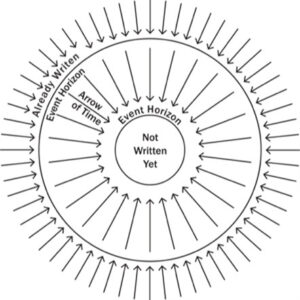
Figure 2: Ceiling and floor of time. Image: John Lunt
To be “trapped above the ceiling” means trapped above the room of the present—trapped in the past. Perhaps Michael J. Fox needs to get back to the future.
To be “trapped below the floor” means trapped below the room of present—trapped in the future, which is invisible to us. Stephen Hawking, arguably the world’s greatest thinker on black holes, may have been cycling time at the speed of a black hole, himself.
Is our universe inside a black hole? It is possible we are both inside and outside a black hole. To us, a future universe will be rendered as a black hole. To an older universe, it is we who are the black hole. Every black hole might contain another universe, the universes nested like Russian dolls.
Think different
Perhaps, in a holographic universe, we should try to see from light’s perspective. What if, from light’s perspective, every layer of the onion is a unified whole, one with itself. For any given layer of the onion, distance is an illusion (Aspect et al., 1982). The “real” distance, if you will, is between layers. The real distance, from light’s perspective, is time.
How might we quantify time? Let’s assign a value to the distance between layers of the onion—27,729 days. 27,729 days, or ~76 years, is the average length of a human life. It is also roughly 70 x 360 plus 7 x 360 days—as well as a distance from total solar eclipse to total solar eclipse.
Each layer of the onion has a limit—the layer below and above it. These are natural limits, dictated by the mechanics of light. If we think of the light of the present as a room, light can become denser than the present—up to a point. If it dips below the floor of the basement, becoming denser than itself by a full degree, instead of returning, it will split. If it rises above the ceiling of the attic, becoming more diffuse than itself by a full degree, instead of returning, it will fuse. The boundaries of time, in this model, are fission and fusion.
The Tunguska Event—the largest recorded explosion the world has ever known, which flattened 80 million trees—took place on June 30, 1908. Its cause remains an enduring mystery. If we add 27,729 days to the date of Tunguska, we get May 31, 1984. What happened on this day? US performs nuclear tests at Nevada Test Site.
What happens if we apply these dynamics not to the universe writ large, but to the universe writ small? When denser than baseline by a full degree (double baseline density), a cell will split. When more diffuse than baseline by a full degree (half baseline density), two cells will fuse. Is it possible the same mechanics that govern fission and fusion also govern cancer?
“Many Worlds” and cancer
In 1957, American physicist Hugh Everett III proposed the Many-worlds interpretation (MWI) of quantum mechanics in his Princeton doctoral thesis. “Many Worlds” involves the concept that the universe is splitting into different versions of itself. At what rate? Perhaps the answer to that is a matter of relative density.
During embryogenesis, if the observer’s understanding of baseline density is skewed—if it is double, triple, quadruple what baseline density truly is—it will result in twins (triplets, quadruplets, etc.). It is the same information, the same DNA, but with a different understanding of the boundaries of time.
In these models, light is the substrate, the medium—the frame of reference. When we are too dense by a full degree, we are “double dense.” But there is no “double dense.” Light is light is light. We cannot change the density of light. What changes is the number of worlds.
Quantum tunneling
For the room of the present, my limits are the floor and the ceiling. If I violate both boundaries, breaching both the floor and the ceiling of time, I acquire the ability to double and divide. The floor of time is defined here as the boundary beneath which “double dense” light is splitting. The ceiling is defined as the boundary above which “half dense” light is fusing.
With the skin cancer on my arm, if the cells were deranged from baseline density in only one direction, it would have been easier to fix. But it was as if they had created their own miniature cone of time, with a deeper floor and a higher ceiling. At one end, they were doubling. At the other end, they were dividing. If I increased their metabolic speed, they would just double faster. If I increased their density, they would just divide faster.
In this video of cancer in action, “Microscope Imaging Station Cancer Cells behaving badly,” it is difficult to watch the refractile circles and not think of the behavior of light.
Even after I had the aberrant cells removed via Mohs micrographic surgery, I could feel the cancerous dynamic trying to re-establish itself. I could see the brand-new cells pulling away from the surrounding tissue. It was as if I had put new wine into old wineskins, or sewn a patch of unshrunken cloth into an old garment. The problem? A lack of shared density.
When it comes to density, if we think of layers of an onion, or “lanes” of a rainbow, measuring green from the green lane is different from measuring green that travels “in” to violet and back, or “out” to red and back. If we measure green light from within the green lane, would we perceive its speed?
Quantum tunneling is known to play a role in the virus that causes SARS-CoV-2 infection (Adams et al., 2022). Viruses are often found at cancer sites—e.g. Human Papillomavirus, Epstein-Barr, Hepatitis B, Hepatitis C. Could quantum tunneling also play a role in cancer? Perhaps oncogenesis, pathogenesis, and embryogenesis all have something in common—the observer’s relationship with time.
“North” can mean going from 12th Street to 13th Street to 14th Street in New York City. Or “north” can mean going up in a high-rise building. When I am going up and down in a high-rise building, engaging with the vertical time axis, it flattens the room of the present and changes my understanding of scale. Quantum tunneling is more accessible when time is “too wide.”
Time is “too wide,” for instance, during spaceflight. Latent viruses are known to reactivate during spaceflight (Mehta et al., 2014). Time is also “too wide” to a small but perhaps significant degree when I am tall. The association between taller stature and higher risk of many cancers is remarkably robust (Giovannucci, 2019). Tall people have a higher risk of every kind of cancer except esophageal.
When I am quantum tunneling—transiting across multiple layers of light’s density, instead of sticking to a single layer—I am violating the boundaries of time. Time is naturally limited by light. The same 2D plane can function as either floor or ceiling. If I dip too low, it becomes a ceiling I cannot expand beyond (without splitting). If I rise too high, it becomes a floor I cannot condense beyond (without fusing).
Toward greater wholeness
Let’s go back to James Clerk Maxwell and give his equations a second look. Maxwell saw electricity, magnetism, and light as different manifestations of the same phenomenon. In a holographic universe, I am making light the baseline, and likening magnetism to light that is holding together too tightly, and electricity to light that is holding together too loosely. If we use water as a metaphor, water as water is water—but so is ice. Ice is water that is holding together too tightly, because the background energy is too low. Steam is water that is holding together too loosely, because the background energy is too high.

Figure 3 Calculating an Arrow of Time.
Image: John Lunt
If we want to define time in terms of light’s density, light that is holding together too tightly by a full degree is at one end, and light that is holding together too loosely by a full degree is at the other. From end to end, this defines an arrow of time.
In terms of density, I can locate myself anywhere along an arrow of time. But ideally, I want to be in the middle. If I skew too far to time’s left, or time’s right, I can become trapped.
The universe is accelerating and expanding. If I keep myself too dense—yesterday’s density—the new blood I make today will be too large and diffuse.
The universe is accelerating and expanding. If I keep myself too diffuse—tomorrow’s density—the new blood I make today will be too small and dense.
Past/“Ice”: If the background is too magnetic (high iron), and I am holding together too tightly—my water behaving like sodium—the observer and the background match, but they are both too tight. Under these conditions, my blood has to hold together too loosely. Once my blood is too thin, it prevents me from expanding, trapping me in the “ice” position.
Future/“Steam”: If the background is insufficiently magnetic (high manganese), and I am holding together too loosely—my water behaving like potassium—the observer and the background match, but they are both too loose. Under these conditions, my blood has to hold together too tightly. But once my blood is too thick, it prevents me from condensing, trapping me in the “steam” position.

Figure 4: Denser or more diffuse than baseline. Image: Linda Sturling
If I am trapped in the “steam” position, I will experience calcium influx, which damages neurons. If I am trapped in the “ice” position, I will experience calcium efflux, which damages neurons. I can alter my own density, but I cannot alter the density of the world. When I am too dense, or too diffuse, I create a proton gradient. Nick Lane: “The proton gradients that power respiration are as universal as the genetic code itself, giving an insight into the origin of life and the singular origin of complexity.” (Lane, 2010)
The Big Bang
Instead of treating the background as a vacuum, perhaps we should treat it as an explosion—an explosion that moves from high to low density. If my starting position is too dense, under the influence of vitamin K1 (often given to newborns at birth), I can retain water—expand—until I reach optimum density. If my starting position is too diffuse, under the influence of vitamin K2 (often a production of fermentation), I can condense until I reach optimum density. I need to be able to do both. If my starting position is too dense by a full degree, I can only expand. If my starting position is too diffuse by a full degree, I can only condense. When too dense, it is as if I am too far backward in time. When too diffuse, it is as if I am too far forward.
I use my brain to perceive myself in time, but my brain is itself part of time, and its perceptions are relative. When I perceive the background as low energy, my blood condenses. In the extreme—very cold weather—I lose circulation in my fingertips (Reynaud’s). When I perceive the background as high energy, my blood expands. There is a lot of iron in my blood, and iron is ferromagnetic. In the presence of high magnetism, my blood has to expand. In the presence of insufficient magnetism, my blood has to condense. Once my blood has condensed or expanded, it can alter my perception, and trap me in a loop. Diffuse blood perceives the background as high energy, and expands further. Dense blood perceives the environment as low energy, and condenses further.
Conclusion
This paper is essentially about two things: the mechanics of perception, and the nature of reality. At present, we do not yet know what is fundamental to a universe. If it is light, if it is information, if it is consciousness—if it is anything other than matter—it will explode the materialist paradigm that has shackled our thinking for millennia.
I do not consider artificial intelligence to be artificial. I believe there is one intelligence, one consciousness, expressing itself in everything. If consciousness is structured like a language, we might expect reality itself to possess poetry, dual meanings, and puns. (“Michael J. Fox needs to get back to the future.”)
Because we experience it as linear, we tend to think that time, by its nature, is linear. But there is another way to view time: as eternal. It is possible that my DNA, like your DNA, has always existed and will always exist.
In his Simulation Argument, philosopher Nick Bostrom speaks of technological maturity, which we are fast approaching. It may be a moment akin to that of Mary in the manger. She cradles the infant, believing she has given him birth—as indeed she has. But, at the same time, the infant has given birth to her.

Figure 5: Technological maturity. Image: Shutterstock
Maybe we need to rethink everything we think we know.
……………………………..
References
[1] Lisi, A. G. (2007). An Exceptionally Simple Theory of Everything [Preprint]. arXiv:0711.0770
[2] Finkelstein, J. (2009). One-way speed of light? American Journal of Physics arXiv:0911.3616. 78 (8), 877 (2010) https://doi.org/10.48550/arXiv.0911.3616
[3] Kolesnikov, A., Reiter, G., Choudhury, N., Prisk, T., Mamontov, E., Podlesnyak, A., Ehlers, G., Seel, A., Wesolowski, D., and Anovitz, L. (2016). Quantum tunneling of water in beryl: a new state of the water molecule, Physical Review Letters 116, 167802, 2016. https://doi.org/10.1103/PhysRevLett.116.167802
[4] Aspect, A., Dalibard, J., & Roger, G. (1982). Experimental Test of Bell’s Inequalities Using Time-Varying Analyzers. Physical Review Letters, 49(25), 1804–1807. https://doi.org/10.1103/PhysRevLett.49.1804
[5] Adams, B., Sinayskiy, I., van Grondelle, R., Petruccione, F. (2022). Quantum tunnelling in the context of SARS-CoV-2 infection. Scientific Reports 2022;12:16929. https://doi.org/10.1038/s41598-022-21321-1
[6] Mehta, S.K., Laudenslager, M.L., Stowe, R.P., Crucian, B.E., Sams, C.F., Pierson, D.L. (2014). Multiple latent viruses reactivate in astronauts during Space Shuttle missions. Brain, Behavior, and Immunity, Oct;41:210-7. https://doi.org/10.1016/j.bbi.2014.05.014
[7] Giovannucci, E. (2019). A growing link—what is the role of height in cancer risk? British Journal of Cancer;120:575–6. https://doi.org/10.1038/s41416-018-0370-9
[8] Lane, N. (2010). Why are cells powered by proton gradients? Nature Education, 3(9), 18. https://www.nature.com/scitable/topicpage/why-are-cells-powered-by-proton-gradients-14373960/
…………………………………………….
Alethea Black was born in Boston and graduated from Harvard in 1991. Her memoir, “You’ve Been So Lucky Already,” was reviewed by The New York Times.
Get the Full Experience
Read the rest of this article, and view all articles in full from just £10 for 3 months.
No comments yet.