
Tag Archives: Philosophy

The Spiritual Art Collective

THE SPIRITUAL IN ART COLLECTIVE is an international collective dedicated to research into the spiritual dimension of contemporary art. Formed in 2026 following an international Open Call, the Collective brings together artists from different geographical, cultural and disciplinary contexts. They are united not by a common aesthetic or a predetermined definition of the spiritual, but by a shared willingness to explore its meaning and possibilities within contemporary art.
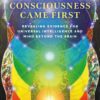
Extract from ‘Consciousness Came First’

Dr Edi Bilimoria is an award-winning author, engineer, and international speaker with over fifty years of study in the Perennial Philosophy. ‘Consciousness Came First’ is a unique, panoramic and powerful book bridging the gulf between contemporary science and the philosophy of the ages. Aimed at the general rather than the specialist academic reader, it is essential reading for all those attempting to unravel the mysteries of life in the modern age. Based on his monumental award-winning four-volume work ‘Unfolding Consciousness: Exploring the Living Universe and the Intelligent Powers in Nature and Humans’, it is arguably the most radical and persuasive reappraisal of the subject in decades.

On Complexity and Consciousness

Neil Theise is a Professor of Pathology at the NYU Grossman School of Medicine. Through his scientific research, he has been a pioneer of adult stem cell plasticity and the anatomy of the human interstitium. Dr. Theise’s book, ‘Notes on Complexity: A Scientific Theory of Connection, Consciousness, and Being’ (Spiegel & Grau, 2023) calls on his studies in complexity theory to address topics such as consciousness studies and science-religion dialogue. In this interview he discusses his life, ideas and work.

The Universe May Be Stranger Than Religion Imagined

David W. Falls writes about artificial intelligence, belief, secular meaning, and the future of human identity. This essay explores how human beings have long interpreted strange or unseen experiences as signs, spirits, visitations, or messages from beyond. Its central argument is that science has not made the universe less mysterious. It has made supernatural explanations harder to defend. The unseen may be real, profound, and astonishing without being sacred, personal, or watching us.

The piece moves through perception, pattern-making, grief, ghost belief, religious explanation, and the hidden realities revealed by modern science. It is skeptical of supernatural claims, but not dismissive of the experiences that often give rise to them. My aim is to take mystery seriously without turning it too quickly into doctrine.

No One Writes to the Colonel

Florian Coulmas is Professor emeritus of Japanese Society and Sociolinguistics at the IN-EAST Institute of East Asian Studies at Duisburg-Essen University. He has published numerous books, including one about Hiroshima, where he once lived. In 2016, he was awarded the Meyer-Struckmann-Prize for Research in Arts and Social Sciences.

Voyage to a Beginning: A review of Gary Lachman’s ‘Touched by the Presence’

Luke Gilfedder, a British author and modernist scholar, reviews Gary Lachman’s new memoir, ‘Touched by the Presence: From Blondie’s Bowery and Rock and Roll to Magic and the Occult’. ‘Touched by the Presence’ follows Lachman’s journey from founding member of Blondie to prolific writer on consciousness, counterculture, and the Western esoteric tradition. The book offers a distinctive perspective on the intersection of the arts, existentialism, and the philosophy of consciousness, as experienced by a young person undergoing a major life transition – from member of a world-famous band to full-time author.

Humanism After the Algorithm

This essay examines how artificial intelligence challenges core humanist commitments to reason, moral responsibility, and human judgment. Rather than treating AI as a technical innovation or future speculation, the essay approaches it as a philosophical problem: the emergence of systems whose conclusions increasingly guide human decisions while appearing objective, neutral, and resistant to scrutiny. It argues that the primary risk posed by AI is not replacement of human intelligence, but deference to automated authority. Drawing on themes from epistemology and ethics, the essay explores how algorithmic systems affect moral judgment, empathy, personal agency, and the human search for meaning. While artificial systems may extend human analytical capacity, the essay contends that interpretation, accountability, and ethical responsibility remain irreducibly human. Written for a philosophically engaged, non-specialist audience, the piece defends a humanist framework that emphasizes skepticism, transparency, and responsibility in an increasingly algorithmically mediated world.

From Curvature to Creation : What π really measures

Sabahat Fida is a lecturer in Zoology with the Higher Education Department in Kashmir. With academic training spanning in both the sciences (MSc Zoology) and the humanities (MA Philosophy), her work seeks to bridge the realms of science, metaphysics, religion, and philosophy. ‘From curvature to creation: what pi really measures’ explores the philosophical implications of the mathematical constant π. The piece traces π from its definition to its quiet governance of physical laws and biological form, arguing that its ubiquity points to a mathematically ordered cosmos.

Do We Need to Rethink Everything?

We know from cognitive science and neuroscience that the brain is not a passive observer, like a camera lens. The brain actively composes what we perceive. Still we persist, in all our endeavors – from trying to cure cancer to conceiving of a unified theory – to operate from a materialist perspective. Perhaps this needs to change.