Tag Archives: Time

How the James Webb deep field images reminded me the divide between science and art is artificial

Cherine Fahd is an artist and academic working in photography and video performance. Cherine has a PhD from Monash University and is an Associate Professor in the Faculty of Design, Architecture and Building at University of Technology Sidney. Cherine’s current research focuses on the ways photography and portraiture bring people together, facilitate trust and build social connections. She writes broadly on photography and creativity practice, publishing across various platforms, including The Conversation, academic journals, and art and design contexts. Her artistic projects have been exhibited and commissioned nationally and internationally, including for the Museum of Contemporary Art, Sydney; Sydney Opera House; Carriageworks, Sydney; National Gallery of Australia, Canberra; Art Gallery of New South Wales, Sydney; the National Gallery of Victoria, Melbourne; Haifa Museum of Art, Israel; Benaki Museum, Athens, Greece; and the Tokyo Metropolitan Museum of Photography in Japan, among others.

James Webb telescope: a scientist explains what its first, amazing images show – and how it will change astronomy

Martin Barstow is Professor of Astrophysics and Space Science, University of Leicester.
He is also the president of the Royal Astronomical Society and Pro-Vice Chancellor as well as Head of the College of Science & Engineering. He is chair of the Space Telescope Institute Council, which will operate James Webb Space Telescope. He is already working on proposals for an even larger space telescope to follow that.
Martin’s research interests are the study of hot white dwarf stars and the surrounding interstellar medium. He has been involved in many space missions during his career, including NASA’s Voyager probes, which travelled to the outer planets of the Solar System. More recently he has worked on the Hubble Space Telescope helping to develop the plans for the final servicing mission, which took place in May 2009. He leads the Leicester contribution to the ESA Gaia mission.

On ‘Nature Fast and Nature Slow’

Nicholas P. Money (Nik Money) is a gentleman of letters, mycologist, and professor at Miami University in Oxford, Ohio. He is the author of popular science books that celebrate the diversity of the microbial world. His latest book, ‘Nature Fast and Nature Slow: How Life Works, from Fractions of a Second to Billions of Years’, is a vision of biology set within the entire timescale of the universe. It is about the timing of life, from microsecond movements to evolutionary changes over millions of years.

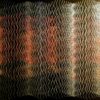
World Lines

Paul Friedlander is an artist who first trained as a physicist. He became fascinated by art involving the use of movement and light in the late 1960s. In 1983 he made an important discovery of the chaotic properties of spinning string and invented chromastrobic light – “light that changes colour faster than the human eye can see”. Many of his works make use of persistence of vision, a property of how light is perceived combined with movement to create a three-dimensional kinetic body of light in sculptural form. Friedlander applies his scientific knowledge to his art and is heavily influenced by chaos theory, string theory and cosmology. He continues to show his light sculptures around the world in art and science museums and festivals.

Unpacking a mystery of physics: Why processes in nature operate only in one direction

Tjaart Krüger is Associate Professor in Biophysics, University of Pretoria. His research interests include Biophysics: Quantum Biology; Primary Processes of Photosynthesis & Bio-Inspired Solar Cells
Biophotonics: Single-Molecule Spectroscopy, Ultrafast Spectroscopy.

Emil Roduner is Professor, University of Stuttgart
“I first graduated to become an elementary school teacher and worked teaching 1st to 6th grade before entering the University of Zürich to study chemistry. As an exchange student I obtained a Masters in Chemistry (1975) at the Rensselaer Polytechnic Institute in Troy, N.Y. I then returned to pursue my PhD degree. For my work on developing the muon spin resonance technique to detect and study muon substituted free radicals I was awarded the Werner Prize (1989). in 1995 I accepted a chair in Physical Chemistry at the University of Stuttgart. After my formal retirement (2012) I accepted a part-time post-retirement position at the University of Pretoria”.

Warp factor: we’ve observed a spinning star that drags the very fabric of space and time

Matthew Bailes is ARC Laureate Fellow, Swinburne University of Technology. In 2015 he was awarded an Australia Research Council Laureate Fellowship to work on the discovery of Fast Radio Bursts. He was the founding Director of the Centre for Astrophysics and Supercomputing at Swinburne University of Technology from its inception in 1998 until 2010. He is currently the Director of the ARC Centre of Excellence for Gravitational Wave Discovery (OzGrav).

Vivek Venkatraman Krishnan is part of the Scientific staff, Max Planck Institute for Radio Astronomy
“I am an Astrophysicist at the Max Planck Institute for Radio Astronomy. I use large radio telescopes to observe dead stars and understand gravity”.

Time might not exist, according to physicists and philosophers – but that’s okay

Sam Baron is Associate Professor, Australian Catholic University. His present research focuses on the connection between key topics in the philosophy of mathematics concerning mathematical ontology, and topics in the philosophy of time concerning temporal ontology. A central focus of this research is the role of truthmaking and non-causal explanation in arguments both for and against particular ontological views.
Dr Baron is currently investigating the role of non-causal explanation in the indispensability argument for the existence of mathematical objects, as well as timelessness in theories of quantum gravity and timelessness in metaphysics more generally.

Time Waves (II)

Artist and writer, Richard Bright, has addressed the relationship between art, science and consciousness for over 40 years. He studied Fine Art and Physics before founding The Interalia Centre in 1990. Since then, he has lectured extensively on art and science and written articles on James Turrell, Andy Goldsworthy and Susan Derges, among others. He has exhibited both nationally and internationally and was the recipient of the ‘Visions of Science’ Award, The Edge, Andrew Brownsward Gallery, University of Bath (Second Prize Winner). Co-author of ‘The Art of Science’ (Welbeck Publishers, 2021).

Absence in Cinema

Justin Remes is an associate professor of film studies at Iowa State University. He is the author of ‘Absence in Cinema: The Art of Showing Nothing’ (Columbia UP, 2020) and ‘Motion(less) Pictures: The Cinema of Stasis’ (Columbia UP, 2015). He has also written articles for JCMS: The Journal of Cinema and Media Studies, Cinema Journal, and Screen. His current book project is entitled ‘Found Footage Films: A Work of Experimental Scholarship’.