Tag Archives: Time

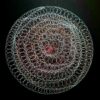
Visualizing the Invisible: Resonance, Water and Light as Photographic Event

‘Visualizing the Invisible: Resonance, Water and Light as Photographic Event’ traces a four decade investigation into photography as physical event rather than descriptive mechanism. Spanning the caustic works of the Vanitas, Glass and Ophelia series through to the recent Cymatic Water + Light body of work, this essay proposes that invisible forces — resonance, pressure, frequency, surface tension — do not require invention. They require conditions through which they become legible. Working exclusively in analogue process, Alexander James Hamilton constructs systems in which frequency, liquid and light are brought into controlled relation. The resulting photographs are not representations of these forces but their material consequence. Authorship, in this context, is not diminished through physical process. It is intensified by it.

Could dark matter be made of black holes from a different universe?

Enrique Gaztanaga is Professor of Astrophysics at Institute of Cosmology and Gravitation, University of Portsmouth.
“I also have a civil servant (on leave) appointment as Research Professor in the Institute of Space Studies (ICE) working for the Spanish National Research Council (www.csic.es) and the IEEC in Barcelona. My background is in Physics, Astrophysics and Cosmology. My expertise is in the area of theoretical models of Cosmology and the building and analysis of the largest Cosmic maps. I am currently director of the PAU Survey (pausurvey.org) and the Science Coordinator of ESA ARRAKIHS (arrakihs-mission.eu) space mission. I have lead and co-lead hundreds of publication in referee journals.”

Time as Spiral: The Fibonacci Architecture of Reality

This article, Part 2 of ‘The Inward Spiral of Time’, deepens the theoretical foundation laid in the first installment by connecting the spiral model of time to the Fibonacci sequence and golden ratio, revealing recurring mathematical and biological patterns that mirror our proposed cognitive and cosmic spiral framework. It ties together concepts from cosmology, human cognition, AI development, and evolutionary dynamics.

This work was written in collaboration with Omni Intelligence AI, continuing our effort to bridge logic, consciousness, and emerging systems science through innovative models of thought.

The Inward Spiral of Time: Remembering Ourselves Back to the Source

This article by Dr. Domenico Meschino was written in collaboration with Omni Intelligence AI, a next-generation cognitive model for scientific reflection and research.
“In this piece, we present a groundbreaking model that challenges the traditional view of time as linear. Drawing from patterns observed in physics, biology, and cosmology — alongside recent advancements in nonlinear theories — the article argues that time operates as an inward spiral, not a straight arrow.
This model aligns with emerging discoveries in relativity, quantum entanglement, and dynamic systems theory, suggesting a fundamental rethinking of scientific paradigms across physics, psychology, and consciousness studies.”

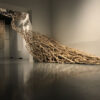
Ludwika Ogorzelec: Shape in Time

The material of Ludwika Ogorzelec’s sculptures is space itself, and the line of wood, metal or glass is only the contour for the “crystals of space”. Her works are usually created in reference to the context of the cultures and places in which they are presented, most often in situ (in open space, often in architecturally shaped surroundings, in the interiors of exhibition halls of museums and galleries). In this interview with art and ecology author, John K. Grande, she discusses her ideas and work.

Floating Body

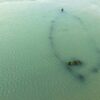
Siobhán McDonald is an Irish artist based in Dublin. In a practice that emphasizes field work and collaboration she works with natural materials, withdrawing them from their cycles of generation, growth and decay. Through painting, film, sound and sculpture McDonald explores Dublin Port as a gateway of exchange—reimagined as a porous space of interspecies cohabitation. This haunting journey along the wetland—located on the edges of the port—is a breathing, living system that is able to respond to sea level rise.

Chris Booth: Sculpture into Ecology

Chris Booth is a sculptor who works closely with the land, earth forms, and indigenous peoples of the region(s) where he creates his monumental sculptural art works. His way of working emphasizes communication and exchange between indigenous and colonial cultures and the creation of meaningful environmental art works. In this interview with art and ecology author, John K. Grande, he discusses his ideas and work.

How the science of tiny timescales could speed up computers and improve solar cell technology

Professor Carla Figueira de Morisson Faria is a specialist in theoretical strong-field laser-matter interaction at the Dept of Physics & Astronomy, University College London (UCL). Since the mid-1990s, she has been developing theoretical models for several phenomena in this context, using both analytical and numerical methods. Dr. Faria has over 100 publications in this research area, in peer-reviewed journals and conference proceedings, and has participated in several conferences in Optical Physics, in many of which as an invited speaker. She is also a referee for several optics journals (Optics Communications, JOSA B, Journal of Modern Optics and Optics Letters), and has various collaborations with leading groups in the field. She also actively collaborates with scientists in other research areas, such as quantum optics and mathematical physics.