Tag Archives: Mind

To what extent are we ruled by unconscious forces?

Magda Osman is a Reader in Experimental Psychology, Queen Mary University of London. She is the author of Future-Minded: The Psychology of Agency and Control, (Palgrave Macmillan, 2014).
“The ethos of my work has been to take a critical eye to well accepted views and challenge the status quo. As a result, my research interests cover a range of areas that include decision-making, learning, problem-solving, biases, risk and uncertainty, agency and control, and the unconscious. My research helps answer questions like: How do we make decisions in uncertain situation? Does our unconscious rule our behaviour?”
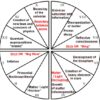

Alain Negre: Contemporary Cosmology and Traditional Representation of the Whole

The contemporary cosmological narrative is linked to a traditional symbolic representation of the whole. The number, in the qualitative sense, allows a link between the physically knowable reality and the imaginary World-Soul. Thus, the quaternary is reflected in four fundamental cosmological events, two of which are of the simple attractor type with the other two characterized by strong emergence. The ternary is revealed through a three-moment dialectic, chiseled into the cosmic becoming by the fundamental forces of physics. The reflections of these two archetypal numbers thus offer another glimpse of the universe and, from a perspective between different orders of reality, may also offer food for thought about certain new relationships between cosmological events.

Talent, you’re born with. Creativity, you can grow yourself

Jyoti Mishra is Assistant Professor in the Department of Psychiatry and the founder and director of the Neural Engineering & Translation Labs (NEATLabs) at University of California, San Diego. NEATLabs innovates neuro-technologies for scalable brain health mapping and precision therapeutics. At the intersection of neuroscience and digital tech, NEATLabs R&D is informing personalized mental healthcare, education as well as climate change resilience.

Cognitive Architectures for Artificial Consciousness

“Consciousness is what makes us human, and therefore, to build a human-like robot, it is inescapable to face the problem of consciousness.”

Antonio Chella is a Professor of Robotics and Director of RoboticsLab at the Department of Engineering, University of Palermo. He is the author of more than 200 publications and an editorial director of scientific journals and of book series in the fields of Robot Consciousness, Computational Creativity, Cognitive Science and Artificial Intelligence.

On ‘Being You’

Anil Seth is Professor of Cognitive and Computational Neuroscience at the University of Sussex, where he is also Co-Director of the Sackler Centre for Consciousness Science. He is also Co-Director of the Canadian Institute for Advanced Research (CIFAR) Program on Brain, Mind, and Consciousness, and of the Leverhulme Doctoral Scholarship Programme: From Sensation and Perception to Awareness. Editor-in-Chief of Neuroscience of Consciousness (Oxford University Press) and a Clarivate Highly Cited Researcher (2019, 2020, 2021), which recognizes the top 1% of researchers by field with sustained impact over a period of a decade.

His new book ‘Being You: A New Science of Consciousness’ is a Sunday Times Top 10 Bestseller, a New Statesman Book of the Year, a Guardian Book of the Week and a Guardian and Financial Times Science Book of the Year. His 2017 main-stage TED talk has more than 12 million views and is one of TED’s most popular science talks.

You Are Therefore I Am: From Dualism to Allocentrism (and What Any of It Has To Do With Art)

“Can we imagine a kind of art made, first, for the viewer, for a shift in her consciousness, but then in addition, a kind intended specifically to turn her in the direction of otherness – to draw her out beyond her ego-self and toward the immensity of not-me? In what way might this be achieved?”

Taney Roniger is a visual artist, writer, and educator based in New York. Since the late 90s she has been exploring the relationship between art, science, and the spirituality of immanence in both her work as an artist and in numerous essays and symposia.

How the brain builds a sense of self from the people around us – new research

Sam Ereira is a Postdoctoral researcher of Computational and Cognitive Neuroscience, UCL. Between 2015 and 2019 he did his PhD in computational and cognitive neuroscience at the Max Planck UCL Centre for Computational Psychiatry and Ageing Research and the Wellcome Centre for Human Neuroimaging. His research used behavioural modelling and brain imaging to try and understand how the human mind distinguishes between Self and Other, and how this process might go wrong in mental health disorders.

Better People Through Chemistry?

Many psychedelic proponents feel a need to ground their claims for the evaluative significance of chemically induced mystical experience in prior metaphysical claims about higher realities endowed with special moral authority. Herein, I recommend a shift in perspective according to which we need not posit moral supernature to justify the revelatory capacity of such experiences to tell us how to best act and be.

The Beautiful Brain

Katharine Dowson’s inspiration comes from nature, medicine and the scientific world as she often collaborates with scientists as part of her artistic practice. These include researchers investigating genetics, dyslexia and Parkinson’s disease, producing intricate casts of her own heart and brain from MRI scans. Her sculptures are made in various media but especially transparent materials and glass, which she uses as a metaphor for a membrane, a fragile yet robust skin that allows light to pass through and reveal the hidden interior within.