Almost Recognisable: Looking at machine images before meaning settles
Tan Liyuan reflects on images developed at Whispart Studio that invite recognition while resisting a settled description. Through close readings, enlarged details, a selection comparison and views of physical works, the article examines the encounter between generated forms and the familiar names viewers bring to them. Dreams and the inverted spectrum thought experiment offer ways of considering familiarity and the limits of shared descriptions. Grounded in the artist’s practice, the essay asks how a scene can convey an unsettling yet coherent mood while leaving its objects and events open to interpretation.
A place that will not quite become a place
In The Far Side of Waiting, the scene feels legible before I can say what it depicts. A large pale field opens above ochre ground, while horizontal bands establish distance and dark forms gather below. I can imagine being somewhere in it. As soon as I try to identify its inhabitants or work out what is happening, that confidence begins to shift.
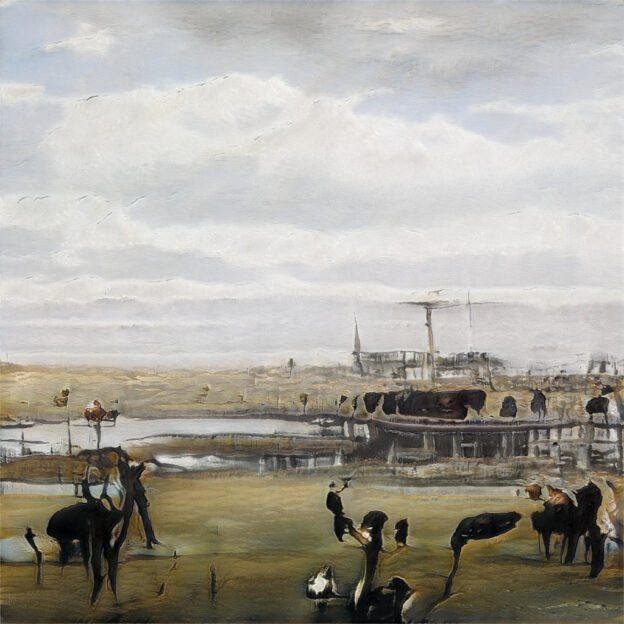
Figure 1: The Far Side of Waiting. Machine-learned image from the Whispart artwork archive, seed4254. Artwork and image credit: Whispart Studio.
In the lower-left detail, I sometimes see a rider and a horse; at another moment, I can imagine a golfer. The dark rounded body, thin supports and leaning upright offer pieces of each reading without securing either. A pale opening seems to separate one form from another, then makes their connection harder to explain. I follow the contour, and the name I began with starts to loosen.
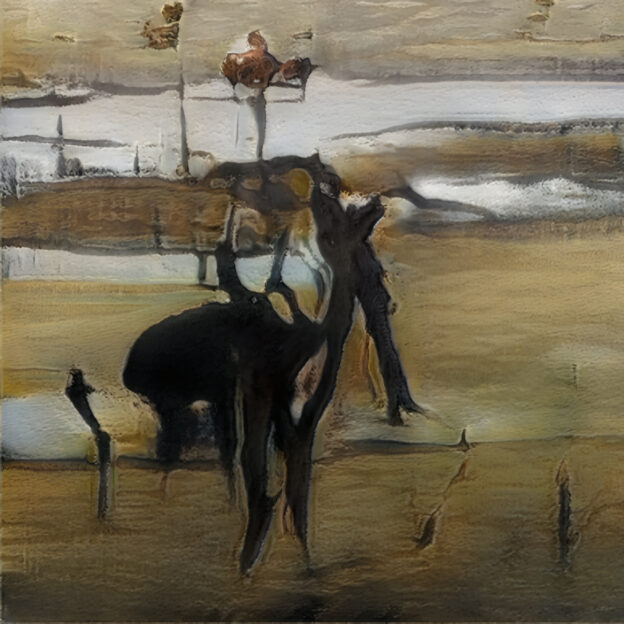
Figure 2: Detail of The Far Side of Waiting: the dark forms in the lower-left foreground. Resolution-enhanced detail of Figure 1 supplied by the studio. Artwork and image credit: Whispart Studio.
Towards the right-hand distance, the long horizontal arrangement could hold a gathering of spectators, or belong to a building. Half-closing my eyes, I can imagine people watching a horse race. I can even imagine a modern spectator wandering into an ancient Roman arena. These are associations that pass through my looking. The image offers no decisive event or date, and the possible stories begin to compete as soon as I inspect their details.
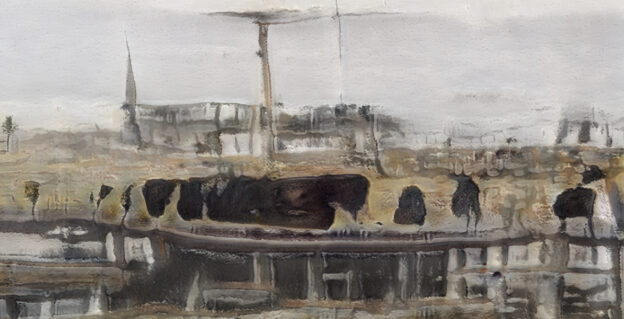
Figure 3: Detail of The Far Side of Waiting: the horizontal arrangement towards the right-hand distance. Resolution-enhanced detail of Figure 1 supplied by the studio. Artwork and image credit: Whispart Studio.
The pale grey bands are equally difficult to settle. I may read reflected light on water, or something of the sky repeated lower down. On the left, irregular hollows suggest pools. Above them stand brown marks on narrow uprights: people, trees, or shapes for which neither word is useful. Their broken contours and uneven intervals remain visible whatever I call them. Together they establish enough of a place for recognition to begin, while leaving its particular meaning uncertain.
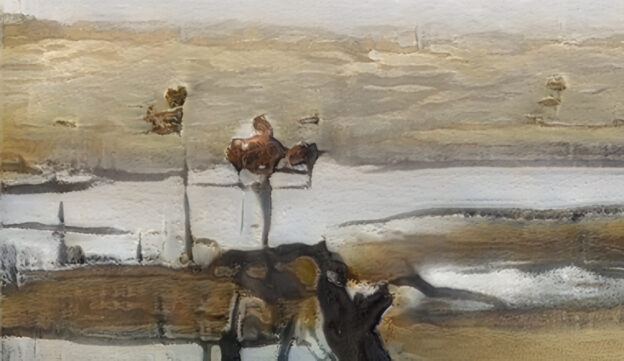
Figure 4: Detail of The Far Side of Waiting: pale bands and brown marks on narrow uprights towards the left. Resolution-enhanced detail of Figure 1 supplied by the studio. Artwork and image credit: Whispart Studio.
What reaches me most strongly is a mood: something strange and uncanny, yet held in an unexpectedly harmonious arrangement. The ochre ground, pale bands and recurring dark accents give that feeling a structure. I can sense a scene before I know its story. That mixture of coherence and hesitation has become central to my work at Whispart, a small studio in Kunming working with machine-learned images. I want looking to remain rewarding after the first surprise, even when it does not produce a final identification.
What the system produces
Our images develop through a generative adversarial network, or GAN. A generator learns to produce images while a discriminator learns to distinguish generated samples from training examples. Their competing objectives help the generator learn the distribution of images in the training data.[1] Relationships of colour, shape and position can recur in its outputs. We then have to decide which images deserve further work.
One archived Whispart training run used 7,615 images at 1024 by 1024 pixels, with a StyleGAN2 configuration using adaptive discriminator augmentation.[2] Saving model states at several points lets us return to earlier stages and compare their outputs. An earlier state may offer a balance of coherence and uncertainty that still interests us after training has progressed. The decision depends on the pictures we see.
These records give us a way to revisit possibilities, without establishing a rule about which training stage produces better art. The works discussed here come from our artwork archive; their value for this essay lies in what can be seen in them. I am interested in the point at which an output becomes a picture I want to keep looking at.
The names we bring to an image
When I try to understand an unfamiliar image, I notice how quickly I reach for a familiar definition. A dark mass becomes a stone; a vertical shape becomes a tree. Once I have found a name, I begin to organise the surrounding marks around it. Yet the name can arrive before the image has given me enough reason to trust it. To my mind, some of the uncertainty in these works arises in that encounter between a generated form and the definitions I bring to it.
Consider a simple imagined image: blue above, green below. I may immediately read it as sky over grass. A model learning from landscape images could reproduce such a relationship without every blue area in its output necessarily depicting sky, or every green area depicting a lawn. This is one possible visual relationship among many that a GAN can learn. The colours and their positions support my interpretation, while an unfamiliar edge or texture may unsettle it. ‘Sky’ and ‘grass’ connect the arrangement to categories I know. Naming gives me a way into the picture, but it does not account for every mark within it.
The inverted spectrum thought experiment poses a related question: could two people use the same colour words consistently while their experiences of those colours differed?[3] I borrow that question as a reminder of the limits of a shared description. Calling a passage ‘blue’, or agreeing that it resembles a sky, leaves much of another person’s encounter with it unspoken. The thought experiment concerns colour experience; the different associations a picture invites are a further question that matters to my practice.
I find beauty in the balance this leaves available. Colour, spacing and weight can hold an image together while its objects remain unsettled. Familiarity gives me a way in; the unresolved parts make me reconsider where I have arrived.
How much recognition is enough
What the Storm Kept offers a more concentrated difficulty. A dark form rises from a low band of pale, broken marks. Its left side extends into a long taper, while the heavier mass to the right might be a roof, a damaged tree or an outcrop. The surrounding greys provide weather and depth without explaining what occupies the centre. My reading keeps moving between something constructed, something growing and something left behind.
The pale band at the bottom matters as much as the central form. It gives the dark mass a place to meet the rest of the picture. Without that contact, I suspect the form would feel more like an isolated curiosity. With it, I begin to sense weight and exposure, even while the object’s identity remains uncertain.
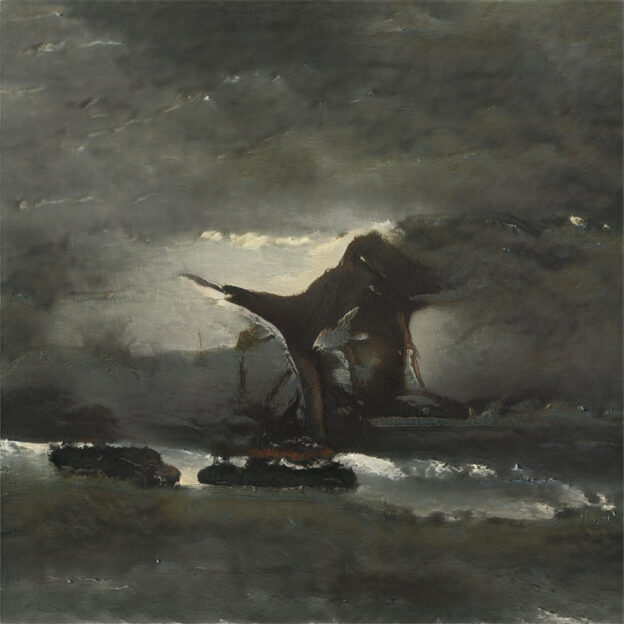
Figure 5: What the Storm Kept. Machine-learned image from the Whispart artwork archive, seed4390. Artwork and image credit: Whispart Studio.
I do not want to turn uncertainty into a value that excuses any image. If every area demands equal effort, I may find no reason to begin in one place rather than another. Conversely, a clearly recognisable tree can remain absorbing through the spacing of its branches, the pressure of surrounding colour or the way its silhouette divides the sky. Recognition can support sustained looking. It need not terminate it.
This is why the phrase almost recognisable describes an interest rather than a production formula. I cannot set a quantity of distortion and expect an engaging picture to follow. What matters is the relation between a stable impression and the details that disturb it. A scene may hold together at a distance, then become less certain as I look closely. Sometimes a single unresolved passage is enough to change the character of an otherwise familiar landscape.
A comparison that can be disagreed with
One of our documented selection cases makes this point unusually clear. Case A shows a group of branching trees against a pale ground. The trunks provide a strong vertical arrangement; the finer branches spread across it, breaking the light into small intervals. Beside it, Alternative 3 gathers its vegetation into a more compact, darker mass. Both images offer plausible ways of organising a landscape. The alternative is not included as a deliberately bad example.
The selected image gives my eye more opportunities to move between density and the light behind it. A branch can briefly appear as a boundary, then become part of a network whose openings matter just as much. The compact canopy in the alternative produces a different experience of weight. Someone who prefers that concentration may reasonably choose it. Showing the comparison makes my preference available for discussion.
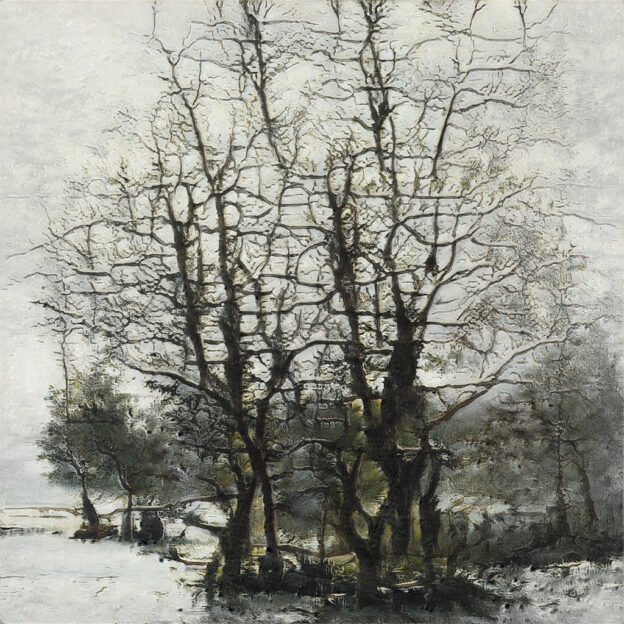
Figure 6: Case A, studio-selected output, seed2723. The studio describes its preference in terms of dense branching, vertical structure and pale ground. Selection reasoning is retrospective. Artwork and image credit: Whispart Studio.
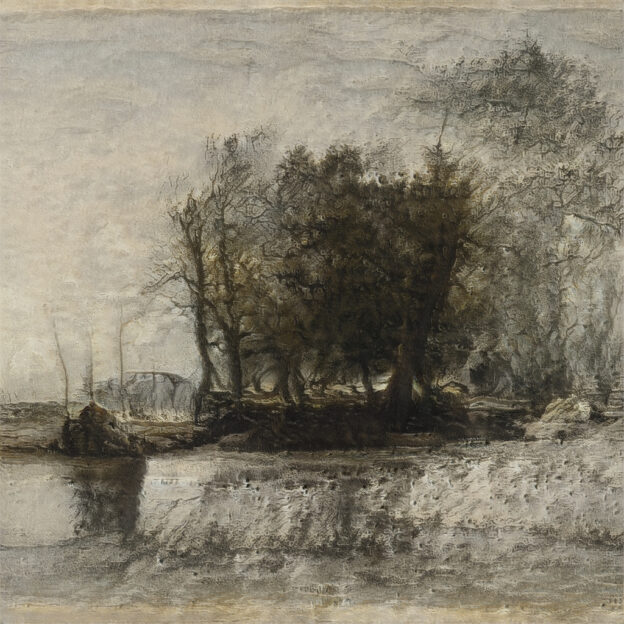
Figure 7: Case A, supplied Alternative 3, seed2998. Shown for comparison with Figure 6; this is one supplied alternative, not a random sample of all model output. Artwork and image credit: Whispart Studio.
Looking back at this selection, I can identify the spacing and movement that still draw me to it. These two images let a reader examine that preference and disagree with it; they represent a particular choice within a much larger body of output.
Case A complicates an easy story about our practice. The chosen image is readily recognisable as trees. Its interest does not depend on my being unable to name its subject. Looking at it alongside the stranger images reminds me that an artist’s stated preference can become too neat. I need the pictures to test the language I use about them. Otherwise, selection risks becoming an exercise in confirming a description I have already decided to believe.
Memory without a prescribed memory
In The Hour Without Footsteps, a narrow dark vertical divides an ochre sky and a greenish field. It could suggest a cypress, a pole or a spire. Its outline thins as it rises, while its lower part meets a dark strip that runs across the foreground. Smaller forms to the left hint at figures without giving me a secure account of their bodies or activity. The scene establishes stillness before it establishes an event.
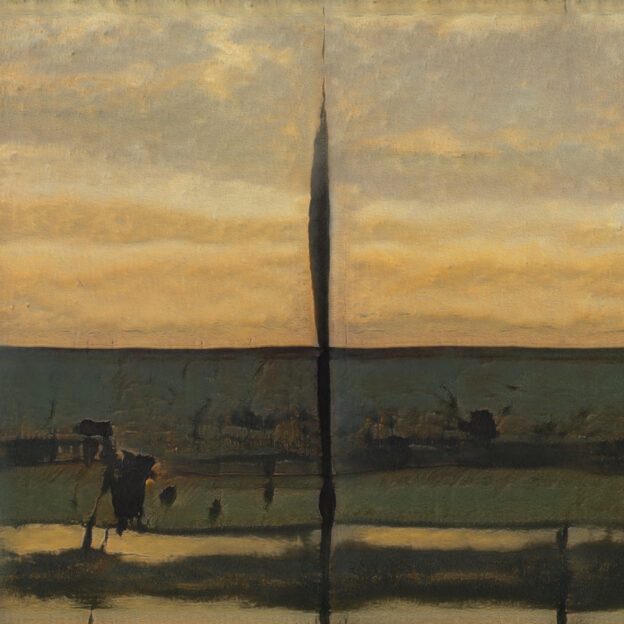
Figure 8: The Hour Without Footsteps. Machine-learned image from the Whispart artwork archive, seed4383. Artwork and image credit: Whispart Studio.
The title introduces time into that stillness. Footsteps make me consider an absent movement; an hour gives that absence duration. Yet neither word identifies the central form. This is the kind of work I want a title to do: make a relation available while leaving the visual difficulty intact. Titles come after looking in our practice. Their success depends on what they do to the image when I return to it.
A title can also narrow a picture too quickly. Calling the vertical form a tower would encourage me to recruit the surrounding marks into an architectural scene. Even a more open title directs attention, and I should not pretend otherwise. Naming establishes a suggestion that the viewer may accept, resist or overlook. The image needs to retain something that the suggestion does not explain.
Dreams give me another way to describe this mixture of familiarity and strangeness. I think of recognisable fragments seeming to come together in unexpected combinations: enough of a place remains for me to feel that I know it, while its relationships refuse the explanation I would usually give. Even an odd dark shape can prompt a search through things already known. This is the analogy I bring to these pictures, rather than an account of how the sleeping brain works. A generated image can make that search visible to me while I am awake. I recognise something, discover that the recognition is incomplete, and look again.
Looking with others
Joseph Nechvatal’s conversation with Chris Dorland in Interalia offers a useful point of contact. Discussing his drawings, Nechvatal describes dense figurative material that can initially appear as a relatively uniform field and disclose more through prolonged attention.[4] His account comes from a different practice and history. What interests me here is the attention it gives to the interval between an initial impression and later discovery.
I recognise that interval in paintings, photographs and ordinary shadows as well as generated images. Working with a GAN gives me particular forms to examine, but the experience of changing my mind while looking connects this practice to encounters far beyond the studio.
A viewer may recognise a familiar pictorial convention and feel no wish to investigate further. Another may find a malformed detail irritating. These possibilities matter to selection. My explanation can direct someone towards a feature, but their response may change my sense of how well the image holds together.
Looking becomes physical
The canvas detail of The Far Side of Waiting returns me to the forms discussed at the beginning. At this distance, the textured surface becomes conspicuous among the pale bands and dark marks. A shape that I approached as a possible figure now also holds my attention as an edge meeting that surface. Looking closely brings the material into the experience: I attend to the surface even as I continue trying to read the scene.
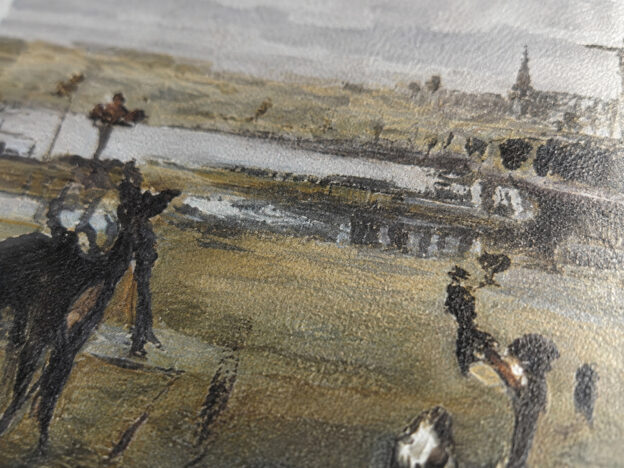
Figure 9: Canvas surface detail of The Far Side of Waiting, showing the pale bands and dark forms also visible in the digital image. Artwork and photograph credit: Whispart Studio.
Two photographs of another physical work extend this movement from whole to detail. In the frontal view, a dense red configuration spreads across a pale ground, held within a light mat and a narrow black frame. The enclosure is definite even where the image’s contours remain unsettled. The close-up shows the same work at an oblique angle, bringing small pale gaps, dark red passages and the visible surface texture into view.
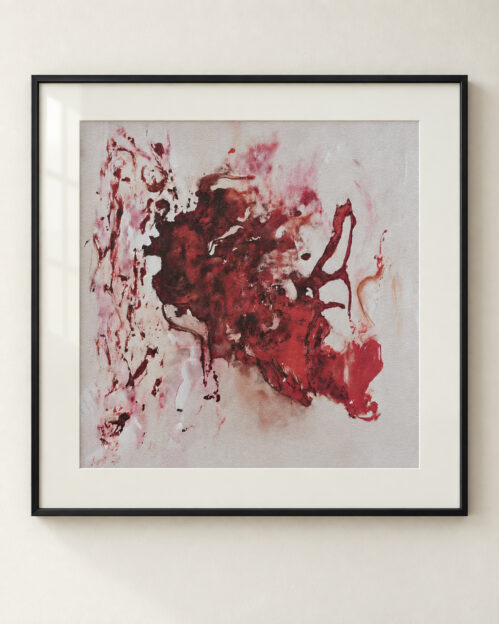
Figure 10: Frontal photograph of a separate physical work with red forms on a pale ground, presented within a light mat and black frame. Artwork and photograph credit: Whispart Studio.
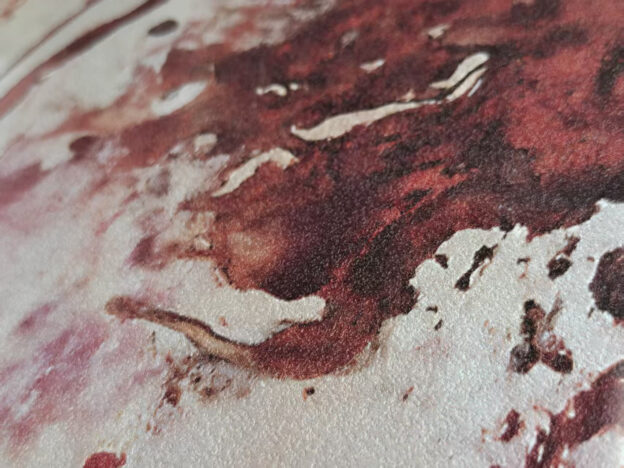
Figure 11: Close-up photograph of the same physical work shown in Figure 10, showing the red and dark forms, pale gaps and surface texture. Artwork and photograph credit: Whispart Studio.
A screen lets me enlarge a passage almost without thinking. A physical work asks me to change distance or position, and its surface becomes part of what I encounter. Here that movement carries my attention from the red form’s overall weight to the smaller relationships within it. I am interested in whether those relationships continue to hold together as the object of my attention changes. The photographs let a reader inspect particular views while leaving the experience of moving around the object open.
The frame gives the red image a definite edge, while the pale mat creates an interval between its scattered marks and the wall. Those decisions affect how I approach the work. From farther away I take in the red mass; up close, the pale gaps divide it into less stable forms. A physical presentation gives this change of attention a distance and a place.
Returning to the image
The recognisable trees in Case A complicate my preference for uncertain figures, while the canvas detail shifts attention towards a surface that is less conspicuous in the digital view. These encounters keep the phrase almost recognisable from becoming a fixed test of what I should select. Each picture asks me to look again at the terms of my preference.
The decisions about training material and its sources remain part of the studio’s responsibility. Here, in describing the finished images, I am also responsible for leaving room between my account and what another person may see.
I return to The Far Side of Waiting. The long structure still suggests several things, and the foreground forms still refuse to settle into a single event. The pale sky gives them room. I can point to these relationships, explain my preference and make the picture available. What happens after that belongs partly to someone else’s looking. The beauty I seek lies in that balance: an image holds together while the names we give it remain open to change.
…………………………………..
[1] Ian J. Goodfellow et al., Generative Adversarial Networks, 2014, arXiv:1406.2661. https://arxiv.org/abs/1406.2661. Cited for the generator and discriminator training framework.
[2] Tero Karras et al., Training Generative Adversarial Networks with Limited Data, 2020, arXiv:2006.06676. https://arxiv.org/abs/2006.06676. Cited for adaptive discriminator augmentation; the Whispart run details come from the studio’s archived Technical Record Summary, September 2026.
[3] Alex Byrne, Inverted Qualia, Stanford Encyclopedia of Philosophy, section 2. https://plato.stanford.edu/entries/qualia-inverted/. The inverted spectrum is discussed here as a philosophical thought experiment, not as an established difference between these viewers.
[4] Joseph Nechvatal interviewed by Chris Dorland, Interalia Magazine, April 2026. https://www.interaliamag.org/interviews/joseph-nechvatal-interviewed-by-chris-dorland/. See the discussion of the diptych drawings and prolonged looking.
……………………………………….
Website: https://whispart.com
All text and images copyright and courtesy of Tan Liyuan
Get the Full Experience
Read the rest of this article, and view all articles in full from just £10 for 3 months.


No comments yet.