Experiencing and Expressing Body Emotions vs Mind Feelings (VS2/VS3)
This illustrated practice-based essay explores how similar emotional experiences may emerge through different processing routes. Using two visual studies; VS2.1 Instantaneous Signal-Flight and VS3.1 Abandoned in Space; Alexander Nathan examines fear as an immediate body-driven response to a present external threat and anxiety as a mind-driven feeling that accumulates through interpretation, time, and anticipated future conditions. The works are considered through both their creation and viewing, revealing how attention, movement, visual detail, and meaning can produce similar surface experiences through markedly different underlying processes.
VS2: Contact: Signal Receipt (Body Emotions)
VS2.1 Instantaneous Signal–Flight
Acrylic and ink on canvas, 22 x 28 in.
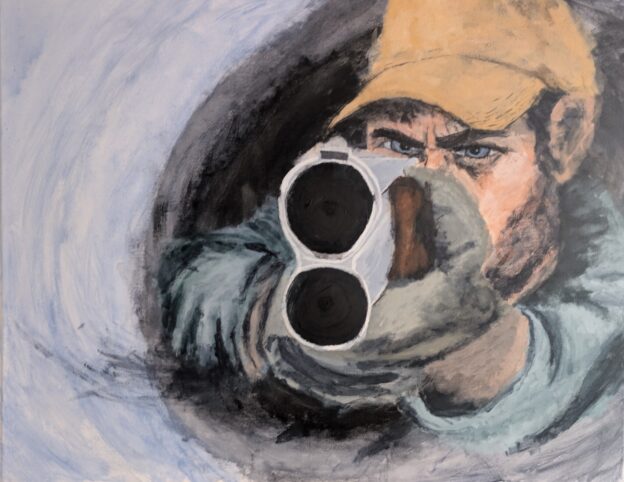
(Figure 1. VS2.1 Instantaneous Signal-Flight)
There is a gun aimed directly at you.
The image has already generated an emotion, before there is any explanation.
Attention has gone somewhere.
VS2.1 Instantaneous Signal-Flight was developed as part of a Visual Study (VS2) collection; a body-driving visual study centered on immediate signal receipt and the targeted experience of fear-flight.
The work began with a question that was much simpler than the painting that eventually answered it:
What remains available when something in the present environment suddenly matters more than everything around it?
I did not begin by asking what fear meant.
I began with what fear does.
The feeling, not the scene, and how it impacts attention.
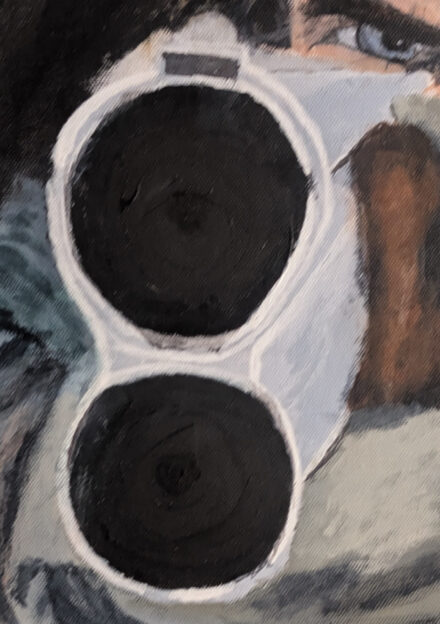
(Figure 2. Cropped view of VS2.1 showing the gun barrels)
Focus is shifted to the gun barrels first.
Perspective pushes it forward until it occupies more attention than its physical size should require. A face remains visible behind it. Clothing remains visible. Space remains visible.
Yet, all these pieces do not compete equally.
The threat does.
That imbalance became one of the earliest rules of the work. In my notes, fear repeatedly appeared as a condition in which the incoming threat became unusually detailed while the rest of the environment became blurred, unstable, or difficult to hold. Direction moved backward, towards retreat, while attention remained attached to what was coming in.
The barrel becomes clear.
Black and white ink were added to the acrylic paint, sparingly. Black to drown the viewer in the center of the barrels. White to highlight the gun sights and outer edges of the barrel.
That highly focused clarity changes everything around it.
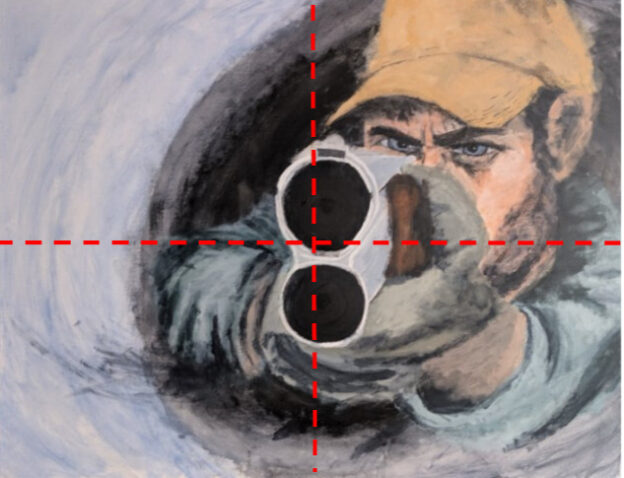
(Figure 3. Wide composition view of VS2.1 showing canvas edges)
The position of the threat changed the feeling again.
When the figure and barrel were too centered and too frontal, the confrontation felt strangely stable.
The gun was threatening, but I could remain squarely in front of it.
Moving the figure slightly away from center helped, but perspective changed the experience more dramatically. The person and gun entered the visual field diagonally rather than straight on.
The image developed a jolt.
The barrel no longer felt like something simply sitting in front of me.
Its direction created a pressure to move out of its path.
I was not trying to depict flight by showing someone running.
I wanted the composition to create the beginning of flight in the viewer.
The threat had captured attention.
Now, it had given that attention a direction.
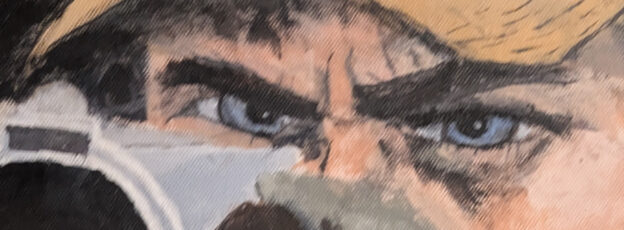
(Figure 4. Cropped view of VS2.1 highlighting the eyes with reference)
The eyes tighten the field.
Once movement becomes possible, the person holding the gun matters differently.
Then, the viewer can inspect:
Where are they looking?
Are they tracking me?
What will they do next?
What is their expression?
I did not want the entire face to become equally resolved. Instead, certain areas were allowed to sharpen while others remained soft enough to fall behind them.
The eyes became another one of those locations. Similar to the barrel.
Paint established most of the face.
Ink did something different.
I introduced black ink only at selected points: pupil, upper eyelid, iris edge, small directional accents, and the finest tension lines. In my process notes, I called the liner the “threat signal” brush and treated it almost surgically; minimal use at the places where attention needed to lock.
The surrounding paint could remain soft.
The ink could not.
It punctured the softness.
I was not deciding where the entire painting should become clear.
I was deciding where clarity would become unavoidable.
And once one area becomes unusually available, another area can begin to disappear.
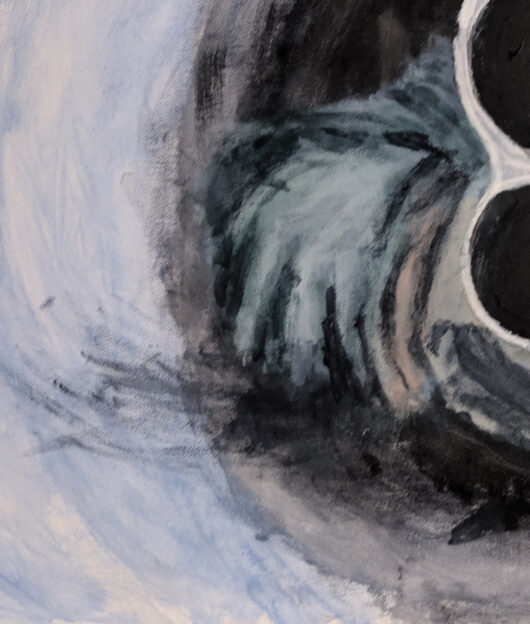
(Figure 5. Cropped view of VS2.1 peripheral area showing the looser, dissolving field around the focal areas.)
Around the threat, edges loosen.
Brushmarks become directional instead of descriptive.
The surrounding environment is still there, but less of it remains available for inspection.
That change had to happen carefully.
A larger brush established broad emotional mass.
A medium filbert shaped softer perceptual transitions.
Smaller brushes compressed tension around selected areas.
A round brush chose the few edges that needed to become more exact. No ink was used in this area.
The background needed to remain immersive without becoming overpowering. Forms could blend while the framework of the environment remained felt and not seen.
With the immediate threat present, attention was no longer freely available to inspect and sharpen every surrounding detail.
The background instead stabilized and grounded the painting, giving the viewer enough environmental structure to remain inside the experience while the threat emerged clearly from it.
If everything became sharp, the viewer could inspect the scene.
If everything remained vague, the viewer could lose grounding, drift, or bypass the experience altogether.
Fear required something less balanced.
The movement through the painting began to feel less voluntary, and more involuntary.
When the layers captured the movement correctly, attention was involuntarily drawn toward the threat areas described above.
One thing had to matter enough that everything else could become secondary.
That was true for the viewer.
It also became true for me while making it.
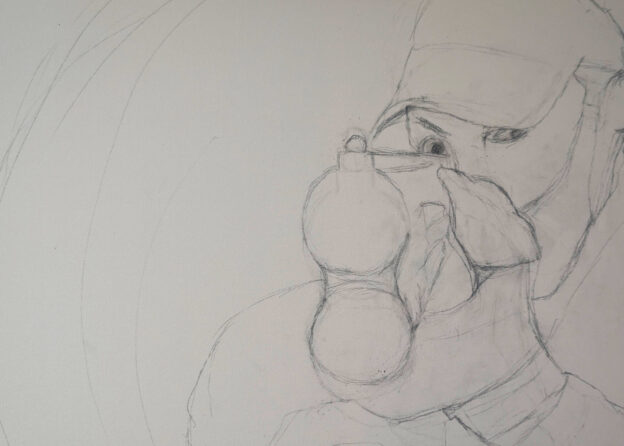
(Figure 6. Earlier process state of VS2.1)
My normal creative process begins very differently.
Usually, I know almost exactly what a finished work should look like before I buy the canvas.
The internal image comes first.
Painting then becomes a process of bringing the physical work toward something that is already available to me. Each layer is another pass. I can compare what is on the canvas with what I expected to see, make the adjustment, and continue.
The process is comfortable for me.
VS2.1 Instantaneous Signal–Flight did not allow it.
I knew there had to be a gun.
I knew there had to be the person operating it.
Beyond that, I did not know what the finished painting was supposed to look like.
This time, the reference was not an image.
The reference was fear.
That changed the role of every adjustment and the way I approached each layer.
Adding detail to one area did not simply improve that area. It changed its relationship with connected and adjacent elements, and I could feel the movement of the entire painting shift with it. This was very different from my typical process.
This time, a face could become too readable. A peripheral mark could become too interesting, drawing attention to a low-priority area. A transition could become too smooth. An object could suddenly ask for more attention that the feeling allowed it to have.
The painting behaved less like a set of independent layers and more like a connected field.
When one part became over-resolved, the effect did not stay there.
The entire feeling weakened.
So I would change it again.
Sometimes one small adjustment brought the feeling back immediately.
The experience would move through the work differently.
Attention would reorganize.
The painting would feel more like fear again.
For the first time in my practice, I could not ask only:
Does this look right?
I had to ask:
Does this still feel right?
That distinction made the process unusually sensitive.
A successful mark was not necessarily the most descriptive mark.
Sometimes more accurate rendering made the work less accurate to the experience.
Sometimes removing information strengthened it.
Sometimes sharpening one edge weakened the others.
The work felt only as strong as the weakest relationship in the perceptual field.
This made painting VS2 fundamentally different from constructing toward a known image.
There was no completed internal picture available for comparison.
The canvas itself had to tell me what happened next.
Make a change.
Feel the result.
Keep it, remove it, or redirect it.
Then make the next change from the condition that remained.
My working notes from the broader body-emotion study contained an instruction that now seems much more important than it did when I originally wrote it.
What am I feeling and seeing? Perception ONLY. No logic or interpretation from mind.
I was not attempting to claim that cognition literally disappears during fear.
It was a creative constraint.
Do not solve the image through explanation.
Do not make the viewer understand the entire scene before the scene can act upon them.
Keep the reference available in the present work.
That constraint eventually changed what creativity meant for me inside the VS2 collection.
Here, I had no internal finished image to follow.
I was following a condition.
The gun created one condition.
The eyes modified it.
The ink intensified selected points.
The surrounding blur changed what remained available.
Every addition inherited the state created by the previous one.
Nothing could be adjusted entirely alone.
That was unfamiliar.
It was also the first time I felt that I was creating from the body side rather than using an already-constructed image to represent a body experience.
I was not painting a picture of fear.
I was following fear until the image could hold it.
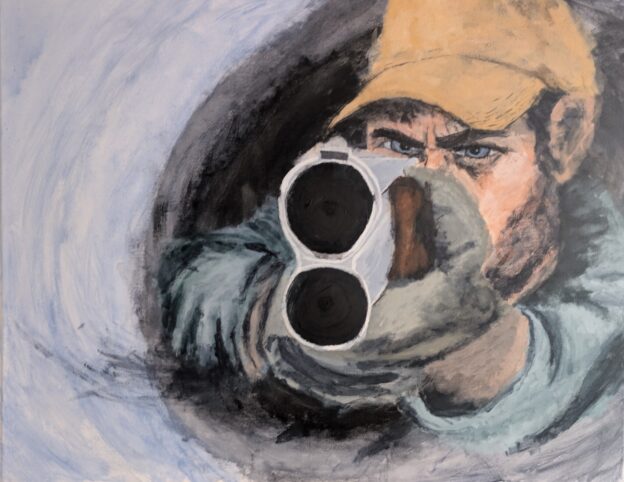
(Figure 7. Full view of VS2.1 Instantaneous Signal-Flight)
Seen again as a whole, the individual decisions become difficult to separate.
The barrel is not operating alone.
Neither are the eyes.
Neither is the blur.
Neither is the ink.
Together, they determine what remains available and what falls away.
There is enough information to orient.
Not enough equal information to wander.
Something is present.
Therefore, attention moves.
Attention moves.
Therefore, one region becomes clearer.
One region becomes clearer.
Therefore, another becomes less available.
The current condition becomes the starting point for the next condition.
There is no need to return to the beginning and reconstruct the experience.
The previous change is already present in the current field.
The painting carries it forward.
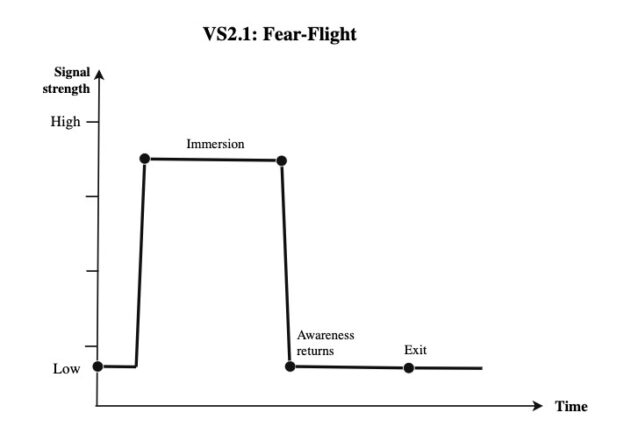
(Figure 8. VS2 signal-strength/time sketch.)
Only later did I try to draw the same experience through time.
In the VS2 sketch, fear rises rapidly into high immersion, remains dominant while the condition continues to hold attention, and then falls as awareness becomes more available again.
The drawing was not intended as a physiological measurement, but as a conceptual record of the temporal shape I experienced while making the work.
The important thing it revealed was simpler:
Fear did not need time to convince me.
It could arrive strong.
Something in the present environment could become immediately relevant, reorganize the available field around itself, and remain dominant until the condition changed.
That seems obvious when the object is a gun.
It becomes less obvious when we stop looking at the source and describe only the resulting feeling.
Fear can feel like tension.
Urgency.
A racing heart.
Narrowed attention.
Readiness to move.
Anxiety can feel remarkably similar.
At the surface, the two can become difficult to separate.
Which leaves a different question than the one that began this painting.
Not:
What does fear feel like?
But:
How did I get there? And where does this lead?
And if fear can arrive through something already present,
What happens when the feeling becomes just as real, but nothing in the immediate environment demands the same response?
What happens when the experience has to be built?
VS3: Signal Formation: Accumulation (Mind Feelings)
VS3.1 Abandoned in Space
Acrylic on canvas, 24 x 36 in.
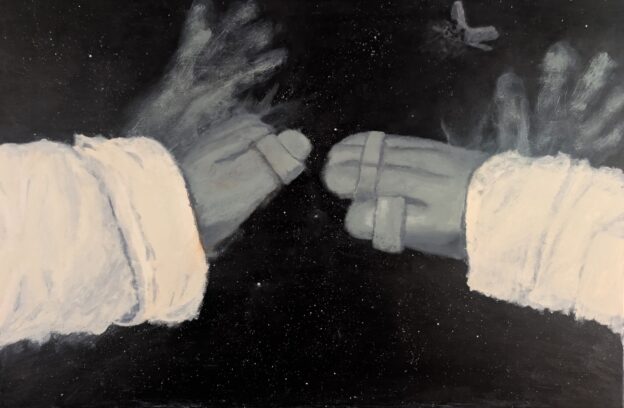
(Figure 9. VS3.1 Abandoned in Space, full artwork)
Abandoned in Space.
The title already changes the image.
There are hands.
There is darkness.
There is distance.
There is a shuttle.
But the term “abandoned” introduces something that is not directly visible.
Someone has been left.
Something happened before this moment.
Something may happen after it.
The shuttle may be leaving.
It may return.
Someone may have seen us.
No one may know we are here.
The image does not answer any of those questions.
It does not need to.
It has already given the thought somewhere to begin.
VS3.1 was developed as part of the VS3 collection, a mind-driving study of signal generation and accumulation.
VS3.1 targeted the experience of anxiety specifically.
That required a very different condition from VS2.
Nothing in the immediate environment could become so overpowering that it interrupted the process already underway.
The viewer needed enough calm to remain inside the scene.
Enough space to get into the suit.
Enough stability to keep looking.
Enough safety to keep thinking.
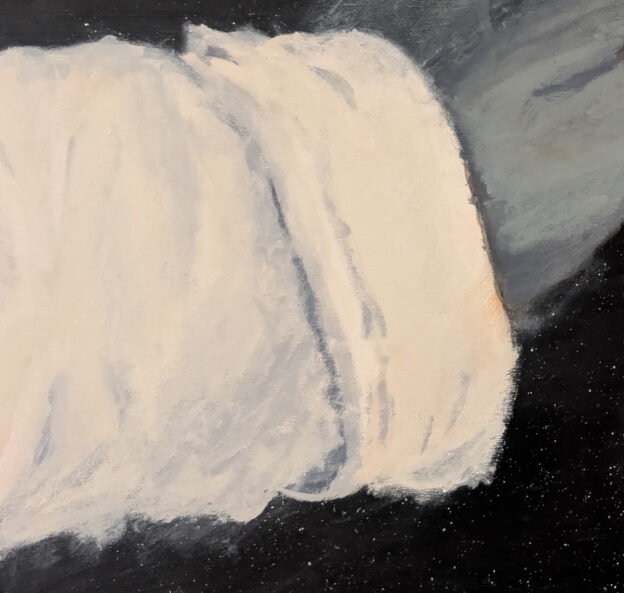
(Figure 10. Crop or wider detail showing the astronaut suit and surrounding calm field.)
The suit helps establish that condition.
Space itself is not immediately survivable.
But the viewer is wearing the correct equipment for the environment.
The suit contains air.
It protects the body.
At the present moment, the environment can be tolerated.
That matters because the painting cannot begin with the same demand as the gun in VS2.1.
If the current environment becomes obviously unsafe, the internal build is interrupted by something stronger:
The present would take over.
Instead, the suit gives the viewer something quieter:
I can breathe.
And almost immediately, another question becomes available.
For how long?
There is no oxygen gauge visible.
No countdown.
No obvious equipment failure.
Nothing in the painting confirms that oxygen is running out.
But the possibility is now available.
The suit therefore does two things at once.
The suit preserves and stabilizes the present.
It does not guarantee the future.
That uncertainty gives the internal signal room to continue and grow.
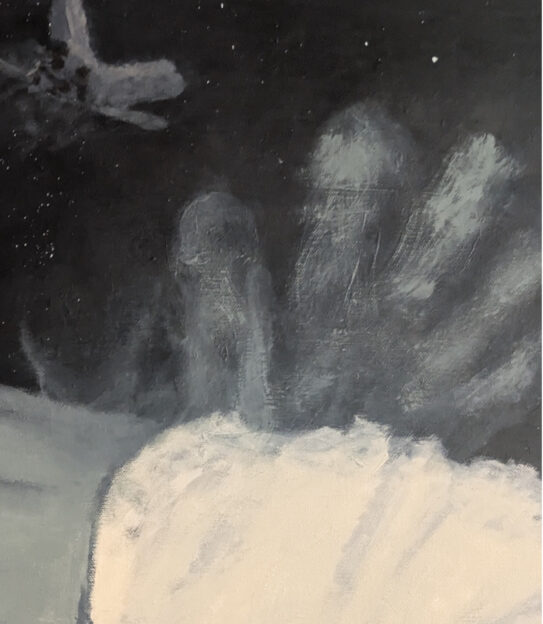
(Figure 11. Close view of the ghosted hands (repeated arm positions.)
The hands give the signal time. They also carry its history.
Their calmness reinforces the stability of the present environment.
Earlier positions remain visible alongside the present.
Yet the earlier positions do not overpower the present one.
The body has already been reaching.
Then reaching again.
The previous attempt does not disappear when the next one arrives.
It remains in the field.
Time has passed.
The hands are not simply showing movement.
They are showing previous attempts.
The viewer no longer sees only:
I am reaching.
The image begins to say:
I have been reaching.
That small change adds history without disturbing the calm of the present environment.
Nothing explodes.
Nothing attacks.
Nothing suddenly becomes louder than the process already underway.
The previous information simply remains available while the next piece is added.
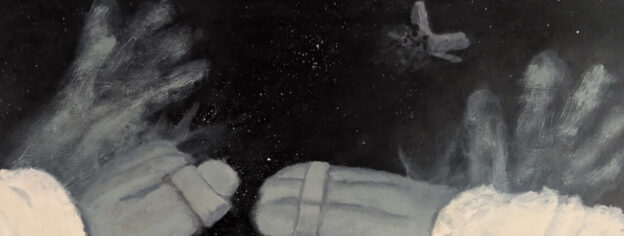
(Figure 12. wider crop showing the arms reaching toward the shuttle, with the shuttle’s opposing direction visible.)
Then direction adds another clue.
The arms reach toward the shuttle.
The shuttle moves away.
The body is trying to close distance.
The distance continues to open.
Again, the painting does not need to explain what that means.
The relationship is already visible.
The hands can reach.
They can signal.
They can attempt to be noticed.
But they cannot physically make the shuttle turn around.
That limitation matters.
The body is active, but its movement cannot directly resolve the condition.
It can express demand.
It cannot create rescue.
So the same action that gives the viewer something to do also reveals how little control that action provides.
Another piece is added.
The signal grows.
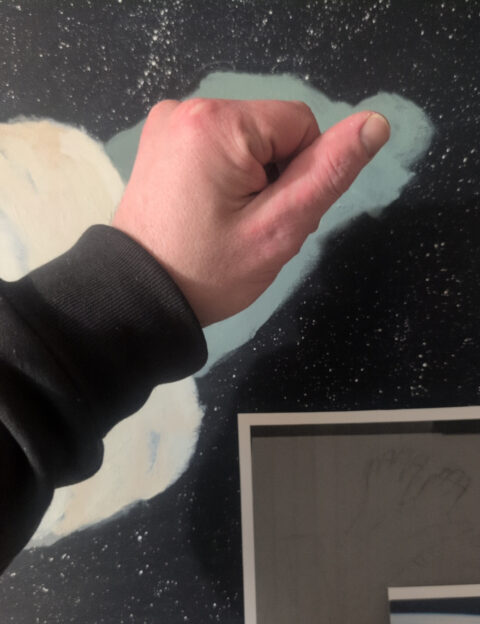
(Figure 13. Early process image of VS3.1)
This way of building was much closer to how I normally create.
I usually begin with an internally available image and know almost exactly what the finished result should look like before I buy the canvas.
Each layer then becomes another pass through a printer: I know what the next pass should add, compare the result with the image I already hold, and continue.
VS3 worked naturally in that direction.
The repeated hands were not discovered because a brushmark suddenly produced the correct feeling.
I knew I wanted time to remain visible.
I knew previous movement needed to stay available.
I knew the shuttle needed to remain distant.
I knew the surrounding environment needed enough calm that the internal scene could continue developing without interruption.
Each layer could therefore add another part of an image whose larger direction was already available to me.
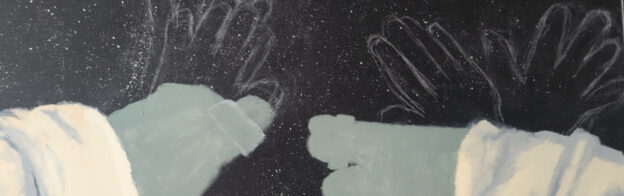
(Figure 14. Later process image showing additional ghosted hands and accumulated layers.)
With each pass, the image gains more history.
The first hand becomes an earlier position.
The next establishes movement.
Another adds duration.
The shuttle remains distant.
The environment remains quiet.
Nothing in the current scene has suddenly changed enough to demand a new process.
But the meaning of the scene keeps changing.
One clue remains.
The next clue arrives.
The previous information becomes part of how the new information is received.
Then another clue arrives into that already-changed condition.
The image builds the way a thought stream can build.
Not by restarting.
By inheriting.
The viewer is still in the same space.
Still protected by the same suit.
Still looking at the same distant shuttle.
But the internal threat increasingly demands more attention.
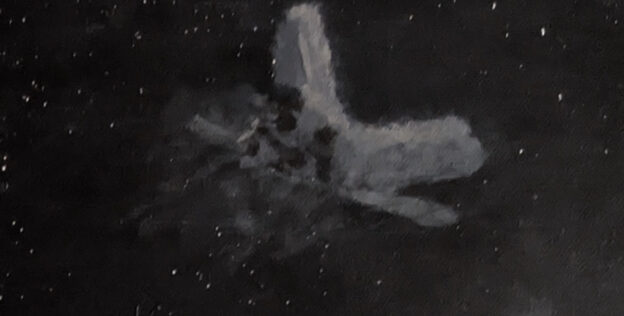
(Figure 15. Shuttle detail, preserving enough surrounding empty space that the shuttle remains small and passive.)
The shuttle could not become too visually dominant too early.
If it did, it would create a new focal event.
The viewer might simply orient toward it and leave the internal process that had been building.
So it remains small.
Distant.
Available, but not overpowering.
My original process notes treated the shuttle as something that should become more noticeable only after the internal signal had already accumulated; a possible point of hope, relief, or release rather than the first thing that organizes the work.
That timing was important.
The shuttle may be the only thing capable of materially changing the condition.
But the viewer cannot control it.
The hands can reach toward it.
The body can signal.
The body cannot make it return.
Someone else has to act.
Until then, the mind can continue inspecting the present scene for clues about what the future may become.
Did anyone see the signal?
How much oxygen remains?
How long can the suit preserve the current condition?
None of these questions require the present environment to become unsafe.
They only require the viewer to remain in it long enough to keep asking.
That became one of the central visual constraints of VS3.
The painting needed to sustain internal demand without generating a stronger external one.
If the background became too visually aggressive, attention could be redirected toward the new event.
If the environment became obviously dangerous, the viewer would no longer need to imagine a possible future threat.
The future would have arrived.
The space therefore needed to remain calm enough to preserve the present, while the hands carried time, the shuttle remained available without overpowering the scene, and the suit kept the viewer safe enough for the internal process to continue building.
This was the opposite of what I experienced while making VS2.
VS3 returned me to a more familiar creative direction.
The image existed first.
The layers moved toward it.
The feeling accumulated through the relationships I already intended to construct.
With VS2, I followed the feeling until the image could hold it.
With VS3, I followed the image until the feeling accumulated inside it.
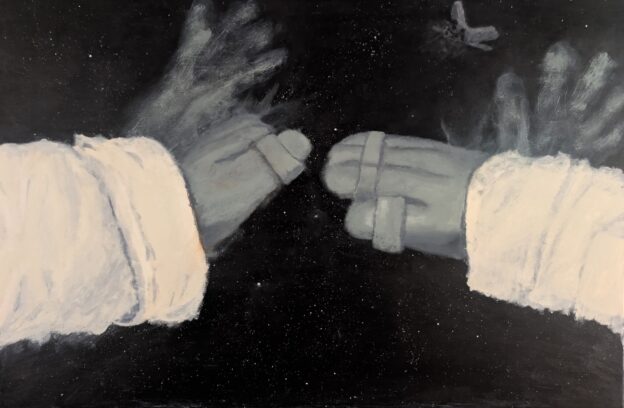
(Figure 16. VS3.1 Abandoned in Space)
Seen again as a whole, very little in Abandoned in Space is immediately threatening by itself.
A suit.
Hands.
Darkness.
Distance.
A shuttle.
Yet, each piece changes the meaning of the next one.
The title provides context.
The suit stabilizes the present.
The past positions of the hands show that time has passed.
The current position reinforces stability and calm.
Their repeated reach shows that something has already been attempted.
The shuttle continues away.
The body can signal but cannot resolve the condition.
The unknown oxygen supply introduces a future boundary that cannot currently be inspected.
Nothing has to attack.
Nothing has to explode.
Nothing has to become immediately unsafe.
The threat can continue forming internally while the current environment remains survivable.
And that creates an important threshold.
If the oxygen actually runs out, the condition changes.
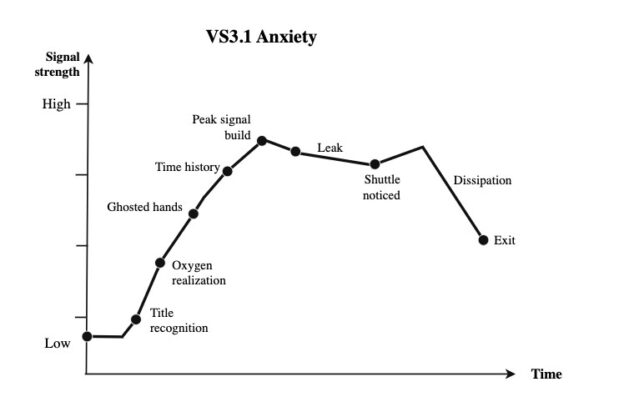
(Figure 17. VS3.1 Anxiety signal plot of signal strength vs. time)
The question is no longer:
How long will I remain safe?
It becomes:
I am not safe now.
What had been interpreted as a future threat has become a present condition.
The internal build no longer has to do the same work.
Fear has somewhere immediate to begin.
The earlier Body Emotions vs. Mind Feelings case study was built around this broader problem: similar felt language can emerge from experiences grounded in immediate external conditions and experiences constructed through internal anticipation or projection. Fear and anxiety were paired precisely because their surface effects can resemble one another while their routes into experience differ.
And once the two paintings are placed together, that difference becomes easier to see.
Validation: Same Surface, Different Route
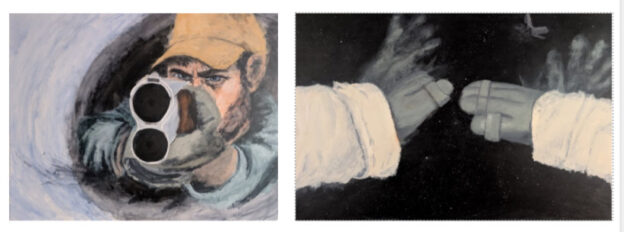
(Figure 18. VS2.1 Instantaneous Signal-Flight and VS3.1 Abandoned in Space side by side)
Look at them together.
Both paintings can produce tension.
Both can create urgency.
Both can make escape feel relevant.
Both can narrow what the viewer cares about.
At the surface, fear and anxiety can become close enough that the same language may describe both.
But the scenes do not arrive there in the same way.
In VS2.1 Instantaneous Signal-Flight, another operator changes the external environment.
A person points a gun.
Whatever the environment was one moment earlier, the person pointing the gun changes the present condition immediately.
The threat is active in the present moment.
The viewer does not need to build it.
And despite the danger, the viewer still retains a form of first-person intervention.
The body can move.
The composition itself was designed to create that impulse. The slightly offset placement and diagonal perspective of the gun introduce a directional-jolt rather than a perfectly stable frontal confrontation.
Flight becomes available.
The viewer may not know whether movement will succeed.
But movement can change their relationship to the threat.
Another operator created the danger.
I may still be able to move.
In VS3.1 Abandoned in Space, no operator is presently attacking the viewer.
The current environment is survivable.
The suit works.
The body can remain where it is.
But inspection of the present scene begins producing a different problem.
The shuttle is moving away.
Previous attempts to reach it remain visible.
The amount of oxygen is unknown.
Time is passing.
The body can continue signaling, but movement alone cannot return the shuttle.
The first-person operator has very little ability to directly change the larger condition.
Someone else must see the signal.
Someone else must turn around.
Someone else must return.
No one is presently attacking me.
But movement alone cannot bring safety back.
The contrast changes where control appears to live.
In VS2.1, another operator creates the immediate unsafe condition while the viewer still has a body-level intervention available.
Move.
In VS3.1, the environment supports an interpretation of a possible future unsafe condition while meaningful resolution increasingly depends on another operator.
Signal. Wait. Keep checking.
One gives the body something it can attempt to do.
The other gives the mind something it must continue trying to solve.
And the resulting surface experience can still become remarkably similar.
Tension.
Urgency.
Heightened attention.
Desire to escape.
A body preparing for something.
That similarity is what makes the distinction easy to miss.
At the surface, the outputs can look remarkably similar.
Only after following each route does the difference in process become visible.
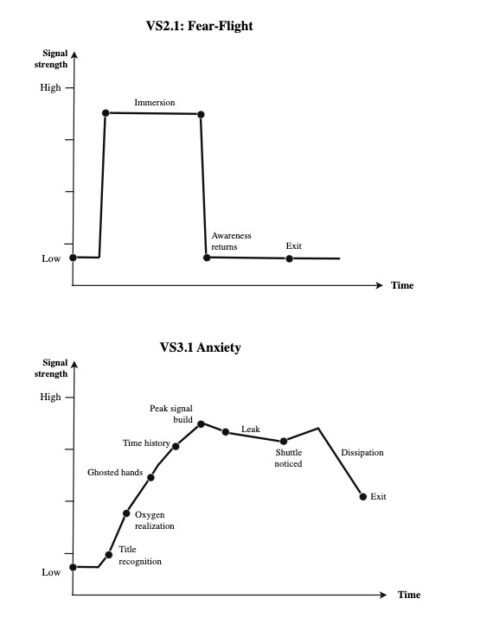
(Figure 19. VS2.1 and VS3.1 temporal sketches together.)
The temporal sketches made the contrast visible after the paintings had already exposed it.
VS2 rises rapidly.
The present condition arrives with enough demand to organize the experience immediately.
VS3 builds.
The current environment remains stable enough for one clue to be added to another until the internally constructed threat itself begins demanding more attention.
One feeling arrives with the condition.
The other grows through what the condition may become.
And neither process needs to be treated as less real because it begins differently.
The important question becomes less:
What am I feeling?
And more:
How did this feeling arrive?
That is the distinction the two paintings finally allowed me to recognize from inside the experience.
…………………………………………..
All test and images copyright and courtesy of Alexander Nathan
Get the Full Experience
Read the rest of this article, and view all articles in full from just £10 for 3 months.


No comments yet.