Being Us
Issue 69 January 2022
On ‘Being You’
Anil Seth is Professor of Cognitive and Computational Neuroscience at the University of Sussex, where he is also Co-Director of the Sackler Centre for Consciousness Science. He is also Co-Director of the Canadian Institute for Advanced Research (CIFAR) Program on Brain, Mind, and Consciousness, and of the Leverhulme Doctoral Scholarship Programme: From Sensation and Perception to Awareness. Editor-in-Chief of Neuroscience of Consciousness (Oxford University Press) and a Clarivate Highly Cited Researcher (2019, 2020, 2021), which recognizes the top 1% of researchers by field with sustained impact over a period of a decade.
His new book ‘Being You: A New Science of Consciousness’ is a Sunday Times Top 10 Bestseller, a New Statesman Book of the Year, a Guardian Book of the Week and a Guardian and Financial Times Science Book of the Year. His 2017 main-stage TED talk has more than 12 million views and is one of TED’s most popular science talks.
Cognitive Architectures for Artificial Consciousness
“Consciousness is what makes us human, and therefore, to build a human-like robot, it is inescapable to face the problem of consciousness.”
Antonio Chella is a Professor of Robotics and Director of RoboticsLab at the Department of Engineering, University of Palermo. He is the author of more than 200 publications and an editorial director of scientific journals and of book series in the fields of Robot Consciousness, Computational Creativity, Cognitive Science and Artificial Intelligence.
You Are Therefore I Am: From Dualism to Allocentrism (and What Any of It Has To Do With Art)
“Can we imagine a kind of art made, first, for the viewer, for a shift in her consciousness, but then in addition, a kind intended specifically to turn her in the direction of otherness – to draw her out beyond her ego-self and toward the immensity of not-me? In what way might this be achieved?”
Taney Roniger is a visual artist, writer, and educator based in New York. Since the late 90s she has been exploring the relationship between art, science, and the spirituality of immanence in both her work as an artist and in numerous essays and symposia.

People-Identities
Alexa Wright is London-based artist working across a range of media including photography, video, interactive installation and book works. She has worked at the intersection of art and medical science since the late-1990s and often works with people with mental and physical differences to make works that address questions of human identity and otherness through qualities like vulnerability and empathy. She has been involved in several long term inter-disciplinary collaborations, for example with Alf Linney, Professor of Medical Physics and computer scientists at UCL (1999-2010) and Hybrid Bodies, a unique international, interdisciplinary project based in Toronto, Canada that brought together medics, visual artists, a philosopher and social scientists to explore the emotional and psychological effects of heart transplantation (2007-19).
Science as we know it can’t explain consciousness – but a revolution is coming
Philip Goff is Associate Professor of Philosophy, Durham University. His research focuses on how to integrate consciousness into our scientific worldview. His first academic book, ‘Consciousness and Fundamental Reality’ (Oxford University Press), was published in 2017 and his first book aimed at a general audience, ‘Galileo’s Error: Foundations for a New Science of Consciousness’ (Rider in UK, Pantheon in US), was published in2019.
“I argue that the traditional approaches of materialism (consciousness can be explained in terms of physical processes in the brain) and dualism (consciousness is separate from the body and brain) face insuperable difficulties. On the basis of this I defend a form of panpsychism, the view that consciousness is a fundamental and ubiquitous feature of the physical world. It sounds a bit crazy, but I try to show that it avoids the difficulties faced by its rivals.”
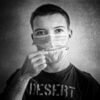
COVID-19: Thinking with Art
Matej Peljhan is a clinical psychologist by profession and works as a psychotherapist. He holds the title ‘Master of Photography’, which is the highest title you can obtain in Slovene photography. He has presented his work at 20 independent exhibitions in Slovenia and abroad, and has received over a hundred prizes.
In his photographic series, COVID-19: THINKING WITH ART, he closely monitored the changes and consequences that occur in the mental and social life of people during a pandemic.

Mediating our relationship to the molecular world
Laura Splan is a transdisciplinary artist working at the intersections of science, technology, and culture. Her research-driven projects connect hidden artifacts of biotechnology to everyday lives through embodied interactions and sensory engagement. Her recent exhibitions featuring molecular animations and material artifacts of laboratory animals include her large-scale immersive installation in the Brooklyn Army Terminal at BioBAT Art Space, NYC.
Terras Lux Project
“Consciousness is evoked by a vision of a simultaneous view of the micro scale, the human scale, and the macrocosm. Terras Lux Project is an interdisciplinary ongoing project that enquiries into the biological realm of microbiology, microbiotechnology, astrobiology, physics, and spirituality. Guiding the spectator through photography, installations, projections, sculptures, and research, it proposes the experience of approaching, through art and science, a connection with the energy that unifies microbial ecosystems, energy in the human body and cosmic rays. Wishing to provide a link through speculative systems, with a dimension where spirituality, art and science evolves humanity into civilization and the experience of cosmos.”
Audrey Rangel Aguirre is an interdisciplinary artist working at the intersection of art and science. She completed a Master in Art & Science at Central Saint Martins, University of the Arts London, 2021. She is currently working in a collaboration with scientist Marta Filipa Simões, astrobiologist and microbiologist researching at State Key Laboratory of Lunar and Planetary Sciences, Macau University of Science and Technology, Macau, China.
Co-Genesis: New Sea Morphologies
Elena Soterakis is an artist exploring themes of environmental degradation and our relationship with technology and nature, through painting, sculpture, and large-scale creative productions. She is a founding member and artist at Beyond Earth, a women-led international transdisciplinary artist collective, exploring the frontiers of art, space, and biology. She is also the Co-Founder and Director of BioBAT Art Space, NYC, a gallery dedicated to the intersection of Science, Art, and Technology.

ART FOR YOUR WORLD
Art For Your World is a new campaign for WWF, led by curatorial practice Artwise, to mobilise and unite the art world in the fight against the climate crisis. From practising artists to commercial galleries, cultural centres to museums and beyond, this is a wide call to action for the cultural sector to come together with a united voice to say that climate change matters and we must act now. As part of the Art For Your World campaign, WWF commissioned three limited edition prints from acclaimed artists Chila Kumari Singh Burman, Heather Phillipson and Bob and Roberta Smith.
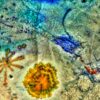
Exploring the Invisible – Simon Park (1964-2021)
Interalia pays tribute to Dr Simon Park (1964-2021), the passionate naturalist whose work revealed the wonders of the microbial world and whose approach challenged easy disciplinary definitions. Through microphotography, videography and writing Simon opened up invisible worlds to others and provided a space for learning, for wonder and for speculation.
Would we still see ourselves as ‘human’ if other hominin species hadn’t gone extinct?
Nicholas R. Longrich is a Senior Lecturer in Paleontology and Evolutionary Biology, University of Bath.
“I’m interested in how the world came to be and why it’s the way it is, and not some other way. I study dinosaurs, among other things – pterosaurs, fossil birds, lizards and snakes. I’m especially interested in understanding macroevolution- large-scale evolutionary patterns and processes. The evolution of organisms and ecosystems over millions and billions of years, the evolution of complex adaptations like bird flight, the snake body plan, and the human mind.
I’m particularly interested in the idea that macroevolution is more than just lots of microevolution- that over long periods of time, at large scales, and in the evolution of complex structures, different dynamics come into play; that over time, the processes of evolution itself have evolved. Recently, I’ve become interested in the human species.”
Consciousness: how the brain chemical ‘dopamine’ plays a key role – new research
Professor Barbara J Sahakian is based at the University of Cambridge Department of Psychiatry and Behavioural and Clinical Neuroscience Institute. Sahakian is also an Honorary Clinical Psychologist at Addenbrooke’s Hospital and a Fellow of Clare Hall, Cambridge. She is a Fellow of the British Academy and the Academy of Medical Sciences.
Dr Christelle Langley is a Cognitive Neuroscientist, she received her PhD from the University of Bristol in 2018. Her PhD focused on understanding the relationship between fatigue and cognition in Multiple Sclerosis, with particular emphasis on the neural mechanisms. She joined the University of Cambridge Department of Psychiatry in Professor Barbara J Sahakian’s lab in early 2019.
Emmanuel A Stamatakis is Lead, Cognition and Consciousness Imaging Group, Division of Anaesthesia, University of Cambridge.
Lennart Spindler is a PhD Candidate of Neuroscience, University of Cambridge.
Visual illusion that may help explain consciousness – new study
Henry Taylor is Birmingham Fellow in Philosophy, University of Birmingham. “I am interested in the intersection of philosophy of cognitive science, philosophy of mind and metaphysics. Currently, I work on colour, and in bringing insights from both the metaphysics of properties, and from empirical work on colour together to develop a robust view of the nature of colour.”
Bilge Sayim is Research Scientist in Psychology, Université de Lille. He studies peripheral vision, crowding, intersections of vision science and art, contextual modulation, visual appearance and appearance-based methods.