Conscious
Issue 71 May 2022
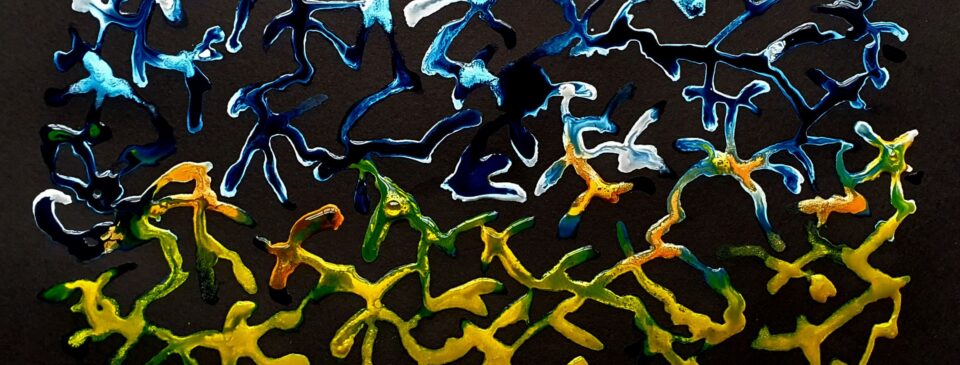
Suki Chan: CONSCIOUS
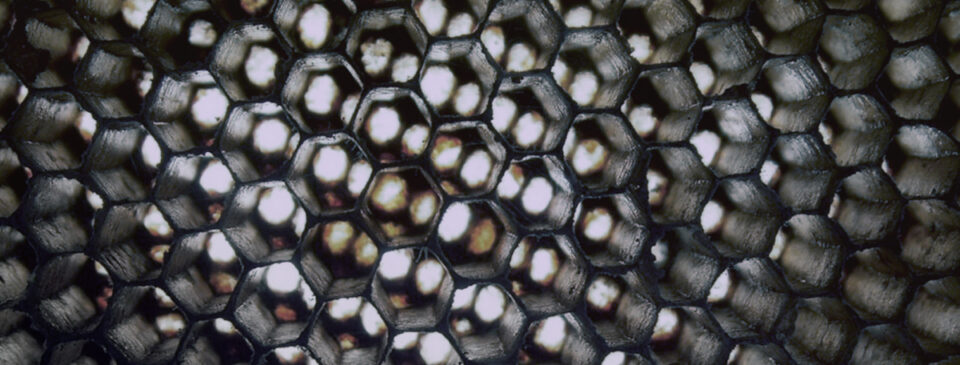
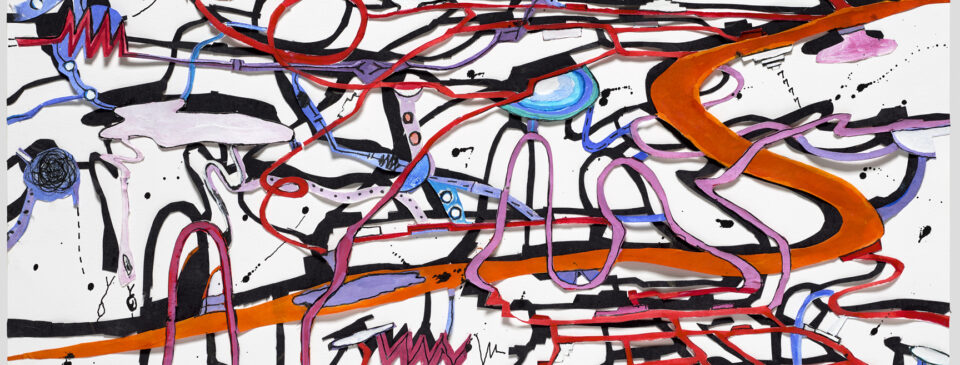
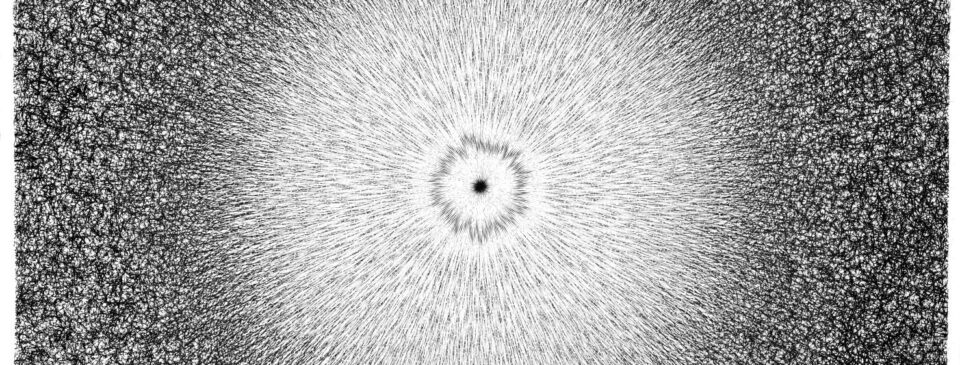
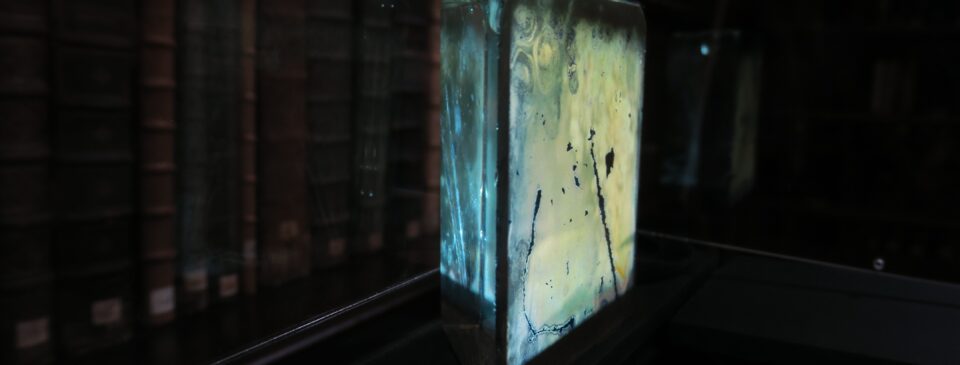
Suki Chan is a London based artist and film director. Her films take audiences on an immersive journey and shines a light on subjects that are under-represented across the human condition: from dementia, sight-loss, identity to belonging. Dr Marius Kwint, Reader in Visual Culture at the University of Portsmouth, discusses her recent installation, ‘CONSCIOUS’, which explores the future of our individual and collective consciousness, weaving a narrative through the secret lives of bees, humans and artificial intelligence. The multi-platform project brings together the diverse, subjective perspectives of scientists and ordinary people, whose stories unwrap layers of thinking and preconceptions about individual and collective consciousness.

Talking about the Mind
Jack Symes is a public philosopher and writer. He is currently a teacher and researcher at the University of Liverpool and is best known as the producer of ‘The Panpsycast Philosophy Podcast’. The podcast, in which Jack discusses philosophy with the world’s leading thinkers, has over 75,000 regular listeners. He is also the editor of ‘Talking about Philosophy’, a series of introductory philosophy books for the general public. Jack’s first book, ‘Philosophers on Consciousness: Talking about the Mind’, was published by Bloomsbury in February 2022.

Brainstorms, Terrains and Mental Mapping
Heidi Whitman’s installations, constructions, paintings, and drawings are invented terrains or mental maps. Her installation, ‘New World’, was included in Wayfinding: Contemporary Artists, Critical Dialogues, and the Sidney R. Knafel Map Collection at the Addison Gallery of American Art in 2020-21. She has exhibited internationally, most recently in ‘The Art of Mapping’ at TAG Fine Arts in London.

Revelations
An American who has lived in Prague since 1991, Robert Horvitz believes that what you do defines who you are. He currently spends 29.4% of his time sleeping, dreaming and snoring; 9.0% of his time writing about communication policy issues; 8.4% of his time watching television; 7.2% of his time shopping for, preparing and eating food; 4.8% of his time drawing; 3.8% of his time teaching drawing; and 3.6% of his time looking at Facebook waiting for someone to “like” something he posted. In the 1970s he wrote for Artforum magazine, in the 1970s and 80s he was the art editor of CoEvolution Quarterly and the Whole Earth Review. In the 1990s he advised George Soros on electronic media and the development of journalism in post-communist societies. In the 2000s he created and managed the Open Spectrum Foundation.

FlowDancing
Artist and writer, Richard Bright, has addressed the relationship between art, science and consciousness for over 30 years. He studied Fine Art and Physics before founding The Interalia Centre in 1990. Since then, he has lectured extensively on art and science and written articles on James Turrell, Andy Goldsworthy and Susan Derges, among others. He has exhibited both nationally and internationally and was the recipient of the ‘Visions of Science’ Award, The Edge, Andrew Brownsward Gallery, University of Bath (Second Prize Winner). Co-author of ‘The Art of Science’ (Welbeck Publishers, 2021).

The week the sun touched the earth
Siobhán McDonald’s practice draws attention to contemporary topics dealing with air, breath and atmospheric phenomena, weaving scientific knowledge into her art in a poetic and thoughtful manner. Siobhán is working with world-leading research facilities such as The European Space Agency (ESA) and The JRC European Commission to explore ecology in light of current ecological concerns. Across research labs, she pursues knowledge to ask questions about the structure and history of the earth. She calls on notions of what is still unknown to science, exploring the Anthropocene and the recent consequences of our treatment of nature. Her work with glaciers and other natural phenomena deploys a unique artistic language that gives form to intangible and richly varied processes including painting, drawing, film and sound.

The Human Brain Project: six achievements of Europe’s largest neuroscience programme
Professor Barbara J Sahakian is based at the University of Cambridge Department of Psychiatry and Behavioural and Clinical Neuroscience Institute. Sahakian is also an Honorary Clinical Psychologist at Addenbrooke’s Hospital and a Fellow of Clare Hall, Cambridge. She is a Fellow of the British Academy and the Academy of Medical Sciences. She has an international reputation in the fields of psychopharmacology, neuropsychology, neuropsychiatry, neuroimaging and neuroethics. She is best known for her work on problems of cognition and motivation in brain injury, ‘hot’ and ‘cold’ cognitive deficits in depression and early detection and early treatment with cholinesterase inhibitors in Alzheimer’s disease. She has over 475 publications in high impact scientific journals.
Dr Christelle Langley is a Postdoctoral Research Associate, Cognitive Neuroscience, University of Cambridge. She joined the University of Cambridge Department of Psychiatry in Professor Barbara J Sahakian’s lab in early 2019. In collaboration with UCL she has been examining cognitive impairment in young premanifest Huntington’s Disease patients and with the University of Copenhagen is examining the role of serotonin in cognition.
Katrin Amunts is Professor of Neuroscience, Forschungszentrum Jülich. She is a full professor for Brain Research, and director of the C. and O. Vogt Institute of Brain Research, Heinrich Heine University Duesseldorf (since 2013), and director of the Institute of Neuroscience and Medicine (INM-1), Research Center Juelich. Since 2016, she is the Scientific research director of the European flagship, the Human Brain Project.
Brain wrinkles and folds matter – researchers are studying the mechanics of how they form
Mir Jalil Razavi is Assistant Professor of Mechanical Engineering, Binghamton University, State University of New York. His research interests include solid mechanics, mechanics of soft/bio materials, fracture and fatigue mechanics. He develops analytical and computational models to study mechanical behavior of solid structures. The goal of his research is developing innovative and cutting-edge computational and technological approaches to study the links between brain growth and post-instability morphogenesis. This effort will lead to new insights into topics such as fundamental mechanisms for development and organization of cerebral cortex.
Weiying Dai is Assistant Professor of Computer Science, Binghamton University, State University of New York. Her research interests include brain mapping, neuroimaging, blood flow imaging, biomedical image processing, pattern recognition, computer vision and information retrieval. She, together with her collaborators, invented and advanced a Magnetic Resonance Imaging (MRI) technique that has been implemented on GE MRI scanners and become a popular clinical imaging tool for quantitatively measuring blood flow as it moves through the body.
Can consciousness be explained by quantum physics? My research takes us a step closer to finding out
Cristiane de Morais Smith is Professor of Theoretical Physics, Utrecht University.
“I work on condensed matter physics, more specifically on strongly correlated systems. My research spans a large variety of lowdimensional quantum systems, ranging from high-temperature superconductors to quantum Hall systems, graphene, and carbon nanotubes. More recently, I became interested in cold atoms physics. When loaded into optical lattices, ultracold quantum gases allow us to emulate condensed matter systems. The emphasis of my research resides in the connections between different physical systems, and how the knowledge of one system can be used to help the understanding of a more complex one.”
To what extent are we ruled by unconscious forces?
Magda Osman is a Reader in Experimental Psychology, Queen Mary University of London. She is the author of Future-Minded: The Psychology of Agency and Control, (Palgrave Macmillan, 2014).
“The ethos of my work has been to take a critical eye to well accepted views and challenge the status quo. As a result, my research interests cover a range of areas that include decision-making, learning, problem-solving, biases, risk and uncertainty, agency and control, and the unconscious. My research helps answer questions like: How do we make decisions in uncertain situation? Does our unconscious rule our behaviour?”