Talking about the Mind
Jack Symes is a public philosopher and writer. He is currently a teacher and researcher at the University of Liverpool and is best known as the producer of ‘The Panpsycast Philosophy Podcast’. The podcast, in which Jack discusses philosophy with the world’s leading thinkers, has over 75,000 regular listeners. He is also the editor of ‘Talking about Philosophy’, a series of introductory philosophy books for the general public. Jack’s first book, ‘Philosophers on Consciousness: Talking about the Mind’, was published by Bloomsbury in February 2022.
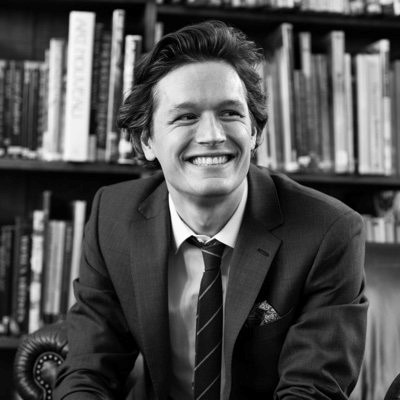
Jack Symes
Richard Bright: Can we begin by you saying something about your background?
Jack Symes: Of course. I was born in Lichfield, England and grew up in the nearby town of Tamworth. My father is an engineer, my mother’s a midwife, my two sisters work in psychology, and my younger brother (for his sins) studies philosophy.
As a kid, I just wanted to make people laugh. My jester hats did most of the heavy lifting. Unfortunately for my teachers, the jester grew up to be the class clown, which resulted in several suspensions and some very awkward parents’ evenings. When I was sixteen, however, I fell in love with philosophy in the form of a high school class, and I didn’t look back – I became obsessed with questions of metaphysics, ethics, and religion. Like most people, I’d always been bothered by philosophical questions – particularly the meaning of life and why anything exists – but that course opened my mind to topics I’d never considered (questions of morality, social structures, and the like). So, with the support of my family, I did everything I could to ensure I’d spend my life working in philosophy.
I went on to complete my undergraduate and masters degrees at the University of Liverpool, before I studied for a postgraduate diploma in teaching at the University of Birmingham. I then spent a few years teaching at King Edward VI High School for Girls in Birmingham and returned to Liverpool to teach philosophy alongside my PhD.
These days, a big part of my work is public philosophy. I’ve been producing The Panpsycast Philosophy Podcast for almost six years now and, more recently, have started editing a series of books: Talking about Philosophy. Both projects aim to support and inspire people – inside and outside of formal education – in the study of philosophy.
RB: Have there been any particular thinkers who have influenced your own philosophy?
JS: Regarding my own philosophical interests, the biggest influences are my mentors. At the moment, my main area of research is philosophy of religion. My PhD supervisor, Daniel Hill – who I first met back in 2011 – is exceptionally thorough. I owe most of my philosophical skills to Daniel, who was also the person that inspired me to spend so much time exploring the nature and attributes of God. I don’t share many of his views, but he’s always pushing me to broaden my perspective and strengthen my arguments. Again, in terms of philosophy of religion, I have great admiration for Yujin Nagasawa. His progressive research projects and clear writing make him a role model in his own right, but – on a personal level – I’m in awe of his intellectual honesty. Yujin, who was converted to theism through the ontological argument, has inspired me to be more open-minded and go where the arguments take me.
In terms of philosophy of mind, Philip Goff, who I met back in 2011 when I was an undergraduate, had a big influence. His was the first lecture I recall attending. As many others would say, it was Philip who stirred my interest in the hard problem of consciousness (the question of how and why brain processes give rise to subjective experience). I find Philip’s solution to the hard problem (panpsychism) compelling, and he’s a great teacher and mentor. In fact, I spent this morning reading the manuscript of his upcoming book, The Purpose of Existence: Between God and Atheism. Needless to say, it’s brilliant – the ideas are super interesting and there’s a lovely rhythm (and personal feel) to his writing. Finally, Philip’s teacher, Galen Strawson, sent me further down the consciousness rabbit hole. Like the other thinkers I’ve mentioned, Strawson’s a really kind and supportive person. Sure, philosophy’s interesting, but there’s something special about working with friendly, enthusiastic people – and this is especially true of Galen. I’m a big fan of his argument against moral responsibility (which says that, ultimately, nobody is responsible for their actions). I love the simplicity of his arguments; but, then again, perhaps I shouldn’t praise him – after all, he’s not responsible for his virtues!
RB: What is the underlying focus of your work?
JS: There are a few different aspects to my work – research, public philosophy, teaching. I suppose the overall goal is to discover the best answers to the big questions and inspire and support others on the same journey.
At the moment, a lot of my research focuses on what the kids are calling ‘the evil-god challenge’. In a word, the evil-god challenge asks why belief in a maximally good-god (the God of traditional monotheism) is significantly more reasonable than belief in a maximally evil-god. I’ve been wrestling with the challenge for a few years now and, whilst I used to consider it one of the best objections to theism, I’ve come to think that the challenge can be solved; in a word, this is because it’s more reasonable to attribute goodness (and not evil) to the concept of God. Outside of the evil-god challenge, I’m interested in exploring alternative concepts of God (in particular, pantheistic conceptions) and keep my eyes peeled for work coming out of the University of Birmingham’s Global Philosophy of Religion Project.
In terms of public philosophy, most fundamentally, the hope is that our projects – the podcast, books, and live events – can support people of all backgrounds in the study of philosophy. I think that the podcast, which is freely available to everybody, can help overcome geographical and financial barriers. I’m really proud of how many downloads we’ve received and that people from every country have listened to the show. Our message: if you have a pair of headphones, an internet connection, and a kooky sense of humour, we’re there for you. Like the podcasts, the book series and live events look to disseminate the best ideas in contemporary philosophy to the general public and do so in a way that allows our audience to develop their own analysis of the content. I think these are worthwhile goals, and I enjoy pursuing them.
RB: You describe your podcast The Panpsycast as being ‘informal and informative’. Can you say something about its aims and why you decided to use the podcast format to discuss philosophy?
JS: These days I’m reluctant to describe the podcast as ‘informal’. I worry that the word has some negative connotations; it can give the impression that the show, like a lot of podcasts, is unplanned and unedited. My co-hosts (Andrew Horton and Oliver Marley) and I spend a lot of time preparing for episodes – researching the ideas and discussing how we should present them – and the editing process can be intense. So, these days, I prefer to describe The Panpsycast as offering ‘engaging and accessible’ guides to the big questions and the big thinkers working on them.
We started the podcast back in 2016 when new UK-wide specifications were released for teaching religious studies (ethics and philosophy of religion). We saw a gap in the market for a podcast that would appeal to students and teachers – something informative and personal – which would also be of interest to the public more generally. No matter where a student goes to school, we thought, they should be able to access the same support and, moreover, we should aim to offer teachers engaging professional development without costing them time or money. As the project developed, we found that more and more people outside of education were listening to the show, and we soon realised just how many people wanted to immerse themselves within dynamic, engaging philosophical discussions. Six years on, we continue to bring that (hopefully) accessible and engaging teaching style to people of all backgrounds on a range of philosophical topics.
To answer your second question, I see philosophy as a dialogue: a conversation with ourselves and others. The medium of podcasting goes hand-in-hand with this conception of philosophy: the listener can immerse themselves within a conversation in which all of the participants are prepared and happy to be there. I could speak about the benefits of presenting philosophy as a dialogue – of which there are many – but this can also be achieved through other mediums, such as books. What podcasts offer is personality. We’ve cultivated a great community with our listeners – responding to their questions and suggestions, joining them for online discussions, meeting them at in-person events – and that’s a wonderful thing to be a part of.
RB: Are there particular episodes of The Panpsycast that are your favourites?
JS: I’ve been asked this question quite a few times and my answer’s always changing. At this point, each episode has ideas and memories attached to it that I feel a personal connection to.
One of my all-time favourites is our episode on Albert Camus’s The Fall. The series consists of five instalments: the first gives Camus’s background, the middle is our ‘creative retelling’ of the story, and in the final instalment we give our analysis. I think we did a brilliant job of narrating the story. With a lot of editing and sound effects, I think the series places the listener firmly in the shoes of the book’s nameless protagonist. On a personal level, the book’s themes resonate with me quite deeply. Camus’s message is a profound one: in the absence of God, there is no salvation and no (ultimate) forgiveness. Illustrating the absurdity of our existential situation, the imagery of Godless men spiralling through Amsterdam’s cyclical canal system, as if they were Dantean circles of hell, drives home the secular realisation that atheists are forced to live with the guilt of their pasts – that no cosmic lawgiver can absolve us of our sins. Cheery stuff!
More recently, we produced a roundtable discussion episode on ‘pride and anger’, based on Melissa Shew and Kimberly Garchar’s collection of essays, Philosophy for Girls: an invitation to the life of thought. Emotions like pride and anger are important features of our lives, but, unusually, very few philosophy courses explore the nature of these concepts. Guided by some of the world’s best female philosophers, our series unpacks the competing views on the origin, descriptive nature, and normative function of these emotions.
So far, I’ve recommended one story and one roundtable discussion. For my final pick, I’d like to pick out an interview. In episode seventy-five, we discussed Christian veganism with David Clough of Chester University. The interview came about in a funny way. Back in 2019, I had given a presentation at the Religious Education Council for England and Wales, and – after the talk – one of David’s colleagues approached me, asking if we’d consider inviting David onto the show. I was pretty hesitant. His work focuses on Christian theology – we’ve covered lots of theology on the show and, speaking from experience, it’s not our listeners’ favourite topic. I started reading some of David’s work and my mindset changed completely: I couldn’t wait to speak with him. In the interview, we discuss his (radical) systematic theology, the conclusion of which is that all Christians should adopt veganism. His ideas are drastic, the interview is funny, and it’s packed with great examples and philosophical insights.
RB: Your recent book, Philosophers on Consciousness, includes remastered interviews and original essays based on conversations from The Panpsycast. Can you say more about this and the book’s philosophical approach to understanding consciousness?
JS: I’d love to. The first book, Philosophers on Consciousness: Talking about the Mind, features contributions from the world’s leading philosophers of mind. Yes, the interviews are based on those from the podcast, but they’ve been (completely) remastered for the written page. The essays, on the other hand, are original to the book and all of the contributors worked hard to ensure their ideas were explained in simple terms. The goal was to ensure that the reader, no matter who they are, can access (and enjoy) the latest, most influential ideas in the field. Each chapter also includes a range of pedagogical features (such as info-boxes and guided readings) to differentiate the content to non-experts and support readers in developing their own views.
The book’s approach to understanding consciousness is diverse. Greg Miller opens with an account of why consciousness matters, and the book proceeds – through contributions from Sue Blackmore, Dave Chalmers, Frank Jackson, and Michelle Montague – to explore the problem of consciousness and the nature of experience. We then see two deflationary accounts (‘the hard problem isn’t that hard’) from Massimo Pigliucci and Pat Churchland, two arguments for illusionism (‘consciousness is just a physical trick of the brain’) from Keith Frankish and Dan Dennett, and the book concludes with three versions of panpsychism (‘consciousness is everywhere’), with chapters from Galen Strawson, Philip Goff, and Miri Albahari.
I see the book as a journey – a journey in which the reader is invited to take part in a discussion with the major thinkers of our time. I narrate the contributions, serve as interlocutor with the interviewees and reader, offer my analysis, and co-author the final piece alongside Miri Albahari, so you might read the book and think I have a bias. However, in reality, I don’t have a horse in the race. Except for boring old physicalism (which just says, ‘here are the physical brain states, problem solved’), I don’t rule out any answer to the hard problem. That’s not my job. My job is to bring the ideas to the public, to encourage people to develop their own views, and to bring these thinkers into conversation with one another.
I think we’ve accomplished something quite unique with Philosophers on Consciousness. It’s only been out for a couple of months, but the reception has been wonderful. We’ve had some lovely reviews from the public, and several universities are already using the book as their core text for teaching philosophy of mind. Continuing on from the book, we’re putting on a live show on 20th May 2022 at Liverpool’s newly opened Yoko Ono Lennon Centre. The event, titled ‘The Mystery of Consciousness’, is set to feature Rowan Williams (the former Archbishop of Canterbury) in conversation with Anil Seth, Philip Goff, and Laura Gow. Shameless plug: there are still some tickets available!
RB: Why should we care about consciousness? Why, in your opinion, does consciousness matter?
JS: In Camus’s famous essay, The Myth of Sisyphus, he tells us that the first question we should ask is whether or not life is worth living. This might not be the most important philosophical question, but it’s certainly up there. I think consciousness matters because our lives consist of conscious experiences. When we think about the relationships we cherish, the projects that fulfil us, or the Adam Sandler movies that detract from our happiness, they are conscious experiences. Everything we know – our past, present, and future – exists within consciousness; consciousness is life. If we want to get a better view of our lives, their value, and whether they matter, then we need to study the lens by which we experience the world.
Secondly, and more pragmatically, I’m inclined think that consciousness is intimately connected with moral value. If a moral agent is one that has the capacity for happiness, suffering, pleasure, and pain, then we need to think about what sorts of creatures can have these experiences. To take one example, if consciousness is everywhere (as panpsychism claims), then maybe plant life can experience pleasure and pain. If, on the other hand, consciousness is nothing more than a physical illusion, what does that say about the reality and value of our lives?
RB: Does consciousness require embodiment?
JS: As I said, I’m not married to any theory of consciousness. However, if you pushed me, I’d say the following: I can see why somebody might think, following Descartes, that the mind could exist without the body and, following idealist panpsychism and the Eastern traditions, that only consciousness exists – that there is no physical reality. These views are alive and well. My job is to explain them, point out their strengths and weaknesses, and compare them with alternative views.
RB: Let me push you on this: in the study of consciousness which of the various metaphysical ‘isms’ could you see yourself subscribing to?
JS: I see no reason for thinking that physical science will be able to explain the hard problem on its own. To solve the problem, we’re going to need a philosophical solution. If you really pushed me – that is, if you forced me to place a wager – I’d put my chips down on a form of panpsychism. I wouldn’t, however, go about town describing myself as a panpsychist. I feel its pull (it tells us how consciousness fits into our picture of reality), I like its implications (it adds more value to the world than competing theories), and there’s an interesting research project on the horizon for its disciples (exploring questions such as how experiences de/combine to form other subjects of experience).
In terms of the resources we need to answer the hard problem, I’m inclined to describe consciousness as a natural phenomenon, and I’d avoid following the theists in positing a second substance or immaterial soul. One interesting approach, following Albahari, is to avoid opening up the mind–body explanatory gap in the first place. ‘Let’s close the gap,’ she says, ‘by embracing idealism and rejecting the existence of the physical world.’ That might be the best philosophical theory, but I doubt many Western thinkers will be prepared to renounce the physical world in the name of consciousness.
RB: William James proposed that the mind should be studied not only by way of behaviour and brain functions but should include introspection. Scientists have taken up the first two very keenly but have been reluctant to take up the method of introspection. Recently, the practice of what is called ‘contemplative science’ has been called for, a coming together of ‘contemplative’ and ‘scientific’ methods of inquiry. How might science and contemplative practice collaborate in the study of consciousness and what, if any, do you see as the benefits of such a collaboration?
JS: I think James is probably right. If we want a complete theory of consciousness, then we need more than the objective data: we need to incorporate first-person data as well. I don’t see that conception of contemplative science to be controversial. (Of course, there are kookier kinds of contemplative science, but such practices go above my pay grade). What I will say is that philosophers on both sides of the physicalist–anti-physicalist divide agree that first-person data, such as introspection, is important. So yes, let’s find the neural correlates of consciousness (‘this brain state correlates with this introspective state’), develop consciousness-meters (‘the unresponsive patient is in this brain state, so they’re probably having this experience’), and map out the different types of experiences we think we can have (evaluative, cognitive, sensory, and so forth).
RB: What would you say is the biggest problem or challenge of understanding consciousness?
JS: There’s the obvious problem – we have access to our own conscious states, but not other people’s – but I guess you’re looking for something less obvious! I suppose the biggest problem in our search for the best theory of consciousness is knowing where to start from. It’s at the starting line where philosophers become (radically) divided on the hard problem.
The question is as follows: which should we take to be epistemically superior: the mind or the brain? The anti-physicalists follow Descartes in believing that the reality of consciousness is undoubtable. The mind is our greatest certainty – ‘I think, therefore I am’ – from which we should construct our understanding of reality. The physicalists, on the other hand, mock Descartes’s project. ‘If we want to make progress with the hard problem of consciousness,’ they say, ‘we must abandon speculative metaphysics and study the brain.’ For the physicalist, the physical world takes priority over Descartes’s dictum. The non-physicalists have got it the wrong away around. It’s not ‘I think, therefore I am’; as Keith Frankish puts it, it’s ‘I am, therefore I think.’
This is no small division; it’s a great chasm. Our best theories of the mind and matter break away at the starting point: a point that determines our understanding of consciousness, ethics, and fundamental reality.
…………………………..
www.talkingaboutphilosophy.com

Get the Full Experience
Read the rest of this article, and view all articles in full from just £10 for 3 months.


No comments yet.