Art and a Sense of Being
Primarily a visual artist, Paul Forte also writes essays and poetry. Forte’s career as an artist began in the San Francisco Bay Area in the early 1970’s. Influenced early on by Conceptual art, Forte has employed a variety of media over the years to realize ideas, including making and self-publishing artist’s books and related objects.
“An experimental approach to art making coupled with an abiding sense of the poetic are the hallmarks of my art. It is an art that has explored this approach and sensibility through a variety of media and artforms over the years: Word works and poetry, artist’s books and book works, performance art, drawings, collage, montage, and assemblage. Central to much of this work is the use of found or appropriated material.”
In ‘Art and a Sense of Being’, discusses various forms of visual art that are dependent upon presenting images of their work via digital media, with the argument there is no substitute for an immediate, physical engagement with art.
Many artists today working in various forms of visual art are, for better or worse, dependent upon presenting images of their work via digital media. From a practical viewpoint, websites and other platforms serve a useful purpose in providing “exhibition” opportunities to countless artists regardless of social identity, education, artistic ability and/or merit. For artists with access to a computer and a basic understanding of digital technology as well as the wherewithal to make a modest financial investment, it is theoretically possible to expose one’s art to the world. 1 For those who can afford it, this nominally democratic technology seems to level the cultural playing field, enabling thousands of artists to share images of their art with others. The internet is teeming with the personal websites of artists as well as those of countless physical galleries and museums with a digital footprint. Having a personal website is no guarantee that an artist will garner serious attention, as attention itself is often at a premium, which is one of the pitfalls of an overcrowded field as well as the nature of the digital media itself. So, this pay to play arrangement is a devil’s bargain in this regard, but it is problematic in an even deeper way. Many artists accept online exposure as better than nothing, perhaps unaware that this acceptance is inadvertently contributing to a subtle undermining of human cognition and a deeper sense of being. Digital technology has played a major role in both the advancement of human culture and paradoxically its devolvement. This technology has now reached a stage where it seems capable of directing almost all manner of human affairs, even to the extent of transforming consciousness. With so many people now dependent upon digital technology, the growing power and autonomy of one of its principal developments, Artificial Intelligence, has raised concerns if not alarm as witnessed in recent Congressional testimony about the harmful effects of the new technology. 2
The Orwellian prospect of our machines manipulating human consciousness is no longer science fiction. While the new technology has allowed us to chart the course of many aspects of contemporary life, and even design possible solutions to existential problems like climate change, the downside of digital technology, particularly when it comes to AI, lies in its potential to dehumanize people by directing and even changing consciousness in ways that might deaden a sense of being and distort reality. It is here that the dark underside of digital technology makes its presence felt.
Consider, for example, the proliferation of various social media sites and their contribution to misinformation, disinformation and the hallucinatory spread of hate and intolerance and just plain wacky notions. No other media in history, including radio and television, has had the power to penetrate the human soul like digital media. What exactly is it about this media that lends itself to these perversions? Is there something inherent in the experience of digital media that drives people to act in dangerous and irrational ways?
While I can appreciate the apparently positive contributions to human culture made by digital technology, including the however limited utility of digital media in serving the needs of artists, I am deeply concerned about the personal and/or subjective consequences of this technology in other than its blatantly negative social effects. I believe that digital technology has also had a subtle impact on human consciousness and our humanity, and the increasingly sophisticated advance of AI portends a further erosion of our humanness. A wary skeptic of AI, I believe that this new technology not only has the potential to dehumanize people, but that the dehumanization is ultimately contradictory if not paradoxical. The contradiction of AI is that in striving to create machines that have “cognitive abilities” and features indistinguishable from us we are somehow “advancing humanity.” This contradiction also creates a grand illusion. AI has advanced to the point where it can now seemingly imitate or replicate life. This has led to the development of so-called “living” images and/or objects; things that seem to have a will of their own. But however realistic as they may seem these things are not actually alive for the simple reason that they are incapable of communicating a true sense of being, a consciousness of self. Ultimately, they are virtually empty save for a series of self-replicating instructions. Imitating a self, however convincingly, is not the same as being a self. An organic sense of self requires more than a series of calculations, however deep and seemingly profound. Contrary to Rene Descarte’s Cogito ergo sum (“I think, therefore I am”), thinking is not the fundamental basis of being, an assumption that has inexorably led to the notion that the machines we have created can almost flawlessly duplicate human thought, thereby creating the possibility of “living machines.” Being human involves far more than an ability to think or feel; we have bodies that sense the world and contribute significantly to how we know and understand it. Moreover, our sense of being is ultimately rooted in the mystery of life itself. Our sense of being, or of having an inner life, is not something that we can replicate with our technology because the essence of being is more than the sum of materialist and/or electrical/chemical processes. Our ideas of an inner life are, of course, partly the result of a reflexive consciousness and reason, but even here the essence of being eludes us because much like the essence of light, it is ineffable. AI will never achieve a sense of being comparable to a human’s. But it doesn’t need to. It only needs to appear alive in order to delude people and ultimately disorient their sense of self.
Artificial Intelligence is inseparable from any discussion of the culpability of social media in the influencing or changing of human consciousness, particularly as this relates to how AI impacts social, cognitive, and ecological dimensions of being, both globally and individually. Careful investigation into the ways that digital technology and particularly AI potentially disconnects us from our sense of being and the actual, physical world that we inhabit is needed more than ever. It seems that many visual artists, working with physical media and capable of sound aesthetic judgment and critical insight, are in an ideal position to undertake such an investigation, both through their artwork and, when appropriate, their writing. However, the basic challenge facing artists with only online representation is to somehow convince the occasional visitor to one’s website that the art is legitimate, original and worth seeing first-hand. The challenge is related to the very problem underlying much of the disinformation and misinformation encountered online: how to distinguish AI produced content or what is digitally enhanced from actual art. Distinguishing between fact and fiction necessitates thoughtfulness and a good sense of what’s physically possible. It is a balancing act that cannot be artificially induced.
A clue to unraveling this difficulty might be found in non-western ways of understanding and relating to the natural world. The consciousness of, for example, indigenous peoples who live in harmony with nature seems qualitatively different from the consciousness of most westerners, in that presumably the perceptions of these people are not radically divorced from their environments.
Animistic beliefs are often a way of intimately connecting people with the natural world around them, beliefs that do not spring from consciousness but from the unconscious and an immediate sense of one’s being of nature. The rational western mind is largely dominated by the fruits of logic and reason, a domination that has led to an apparently large scale diminishing or repression of the nature within. It is not unreasonable to assume that a deeper appreciation of the natural world begins with a reverence for all living things and respect for the physical environment, that and the sense of a real connection, a sense of being in the world. The art of non-western artists might help us to better envision our place in the world without the obscuring shadow of modern technology, provided that we have an opportunity to experience their art first-hand. But even western artists that recognize the cognitive importance of the first-hand experience of art might contribute something of significance, if in either case that art issues from and addresses the embodiment of cognition.
The creativity of non-western approaches to life, orientations based on the interconnection of everything, has the potential to enliven our engagement with the actual world, particularly the natural world, and mitigate or even counter our growing digital disengagement from the real world of people, places, and things. This disengagement, and in extreme cases, alienation, is largely driven by social media, often resulting in pathological behavior that affects the real world. Social media and AI can add significantly to this estrangement through distorting perceptions of ourselves and the world, leading to a kind of collective madness. One of the biggest threats we face as human beings involves the illusion of togetherness and connection to the real world; an illusion exacerbated by the accelerating advances of AI. Falling under the spell of AI, or even becoming uncertain as to whether it represents or portends anything real, is having a subtle effect on our consciousness. Even if we know better, we sometimes think nothing of a digital world substituting for or even replacing the real one. Our complacency in this regard is contributing to the psychological problems of the most vulnerable among us and eroding the fabric of society.
Our senses are central to embodied cognition, organic ways of apprehending reality that can only be approximated by our technology. Thus, while our senses are sharpened and extended by technology, their embodiment is always at one remove, which is an effect of all media. But due primarily to how the new technology magnifies this effect, it has a greater potential to undermine our sense of reality. Convincing simulations of things and events by the new media have already made an impact, lending weight to far-fetched theories and conspiracies. And as AI gains more autonomy and power and an ability to affect what actually happens in the world, human beings may very well lose control of their creation, unleashing a monster.
I am sympathetic to non-western relationships to nature, which often include an organic sense of being; a connectedness to nature that many in the west have apparently lost. It might be argued that modern science and its highest technological achievements have contributed to this loss, which is no doubt true. If non-western approaches to life can teach us anything it is that human beings need more than an objective, materialist orientation to the world. We humans also need to maintain a spiritual sense of being in the world. The quandary is that we also need a science as independent of subjective concerns as possible. We must therefore thread the needle: somehow continuously make room for various forms of spirituality and art that explores the fullness of our cognitive nature as well as paying heed to science that is as independent and objective as possible. For those of us concerned with the human spirit, art, and responsible science, the road ahead will not be easy. For one thing, whatever our path: religion, art, or science, we will have to deal with ignorance and superstition in all its guises. If our species and something of the natural world survive the current climate crisis, brought on by our technology and political ineptness, one day spiritual, artistic, and scientific concerns might converge. For now, much like science and ideology, we must separate art, spirituality, and science, allowing each to flourish on its own merits.
What I find most significant about non-western approaches to the natural world, which incidentally, are sometimes beyond the pale of media influence, for example, some isolated indigenous peoples in the Amazon, is that these groups seem unaffected by a western metaphysical orientation to reality. I hasten to add that animistic beliefs might seem metaphysical to us, for obvious reasons, but they are not metaphysical to many of these communities, but constitute a way of navigating life, a way of being that is largely centered in the moment. From the point of view of these isolated people, life is based on an immediate and concrete non-metaphysical engagement with the world and being. And this is precisely where we might learn something from not just the lifestyles of these people but their embrace of non-metaphysical approaches to life; a stance that is ironically buried in the history of western philosophy. Before a measuring, calculating, and ordering orientation to life gained prominence with the Socratic method and the nascent science it harbored, a more organic or spiritual way of living in the world prevailed in the west. Of course, we cannot return to this way of life, but to regain something of its vitality might enable us – in addition to the contributions of art, spirituality and a more wholistic science – to find the psychic balance necessary to develop a more positive relationship to nature and ourselves and avert the worst outcomes of self-indulgence and indifference to the world that we live in. And this is where the arts might play an important role.
It seems that any thoroughgoing ecology would necessarily include maintaining our sense of being in the world and the reality of our embodied connection to it, particularly the natural world. Science and technology have contributed to the well-being of billions of people, particularly in the west, and yet these gifts of human ingenuity and intellect have also led to a separation from nature. We might recognize the importance of the natural world, but we seem to have lost touch with something essential: a deeper connection, a sense of continuity, again, the reality of being of nature, as opposed to the illusion of somehow transcending nature. Our ideas of ecology require more than an understanding and sensitivity to our place “in nature” (and acting as if we are above it); we need to somehow regain a sense of nature as that which permeates us and helps to renew our biological heritage. The walls that we have built between ourselves, and the natural world must, at the very least, be made more porous, open to the senses and the immediacy of human experience.
The arts can play an important role in preserving the immediacy of human experience by more fully engaging the senses in ways that enrich our thoughts, feelings, and imaginations. This cognitive engagement has the potential to renew or revitalize that which essentially makes us human, the nature buried within us. The arts offer what they have always offered: a more wholistic sense of being and an alternative to a limiting metaphysical approach to life. An approach that has, frankly, led to the most destructive aspects of technology and the dehumanization it has helped to spawn, including the deleterious effects of the most advanced or highest expression of western metaphysics: digital technology. It bears repeating that our technology has created a growing rift between ourselves and the natural world, a separation that has seeped into our psyches to the extent of not only alienating us from the real world and others, but most alarmingly from ourselves. Regaining a sense of our embodied nature is imperative. Artists have the potential to meet the challenge posed by this new technology by answering its alienating effects with art that returns embodied cognition to the sphere of aesthetics, thus also returning experience to a human scale. This might include art that offers an explicit engagement with the reality of the existential crises facing humanity and the flora and fauna that we share the world with. Climate change, species extinction, war, and the eclipse of democracy are among the greatest threats to the planet.
Many artists are rightly deeply concerned with these threats and are responding. However, even art that doesn’t seem to engage its audience in this way might still be ecologically valuable from the point of view of enhancing our cognitive capabilities. A thoroughgoing ecology as outlined above needn’t be anthropocentric, and yet it must at the same time encompass the fuller well-being of people, reminding us of how our thoughts and feelings are intertwined and how our sense of being is largely determined by our thinking, feeling, and sensing bodies. Human experience cannot, nor will it ever be reduced to sets of algorithms. Obviously, artists alone cannot solve our existential problems; we will need the input of both the spiritual and scientific communities, but artists can lay the groundwork for a deeper understanding of what’s at stake by making art that engages our being more comprehensively and reminds us of the vital nature of cognitive embodiment and in turn our connection to the planet that we inhabit with our fellow creatures.
It should now be clear as to why there is no substitute for an immediate, physical engagement with art. Those artists, myself included, who embrace the new technology as the only option for showing art in an era of proliferation are implicit in the ongoing advancement of digital media and the experiential impoverishment of the art viewing public. Any comprehensive eco-criticism must consider the limitations and possibly alienating effects of digital media, certainly as this applies to the art experience. Some might feel that any critique of digital media and AI falls flat when that critique is dependent upon the very thing that it criticizes. But there is no reason why artists or anyone else should not critique the medium in which they are working, or showing work. Wide ranging and thoughtful criticism seem essential to progress in the arts and sciences.
Like many thoughtful people, I remain ambivalent about digital technology and wary of AI. I recognize how the new technology has provided many artists with a means by which to share a semblance of their art with an audience, but at the same time I’m concerned with the cognitive tradeoffs and how the effects of this technology have undermined our sense of being and reality. Digital exposure presents an insurmountable contradiction for those artists whose art attempts to advance an awareness of embodied cognition. The sad irony is that many of us end up alone in our studios with our art, not unlike the loneliness of the visitor to virtual galleries.
A few thoughts in closing about my work as a visual artist. It is art that often attempts to address social issues through what are now traditional means: the use of found material, the detritus of modern culture, repurposed in collages, montages, and assemblage works. These artworks are visually metaphorical reflections that hint at the realities of existential issues like climate change and the impact of our technology. But most importantly, underlying these metaphorical reflections is a primary focus on renewing or reanimating our cognitive abilities, particularly in terms of the interrelations of thought, imagination, and sense perception. The physical reality of my art might very well disappear beyond its digital trace, which in turn might also eventually vanish. These possibilities will not discourage my faith that artwork focused on the embodiment of knowing and understanding is highly relevant at a time when digital technology has so many in its thrall. Our humanity requires a fuller grasp of our being, a sense that is certainly tied to any expanded ecology. Many of us will continue to work with this in mind, come what may.
Notes
- The practice of mounting virtual exhibitions of art is not entirely new. In the 1960s and 70s artist’s books and other forms of print material as well as video installations were sometimes deployed as “exhibition” venues. But these strategies often involved a physical exhibition space such as a gallery or museum. And where print material and/or video was the vehicle for a personal or private “exhibition,” experiencing the art required some manner of bodily interaction, turning pages or interacting with monitors, etc. Such actions with older forms of media are qualitatively different from, for example, scrolling on a computer screen and navigating virtual space.
- The Senate Judiciary Subcommittee on Privacy, Technology, and the Law, May 16, 2023. Open AI’s CEO Sam Altman testified about some of the harmful ramifications of Generative AI, including the creation of false narratives, fake videos, and the dissemination of racist and bigoted views. Perhaps even more concerning, some in the industry have recently warned that AI might pose a real threat in the future to human existence. One thing is certain: The power and autonomy of AI are increasing exponentially. Could a planetary wide AI “mind” eradicate the human species by sparking a nuclear conflagration or engineering a virulent and deadly virus?
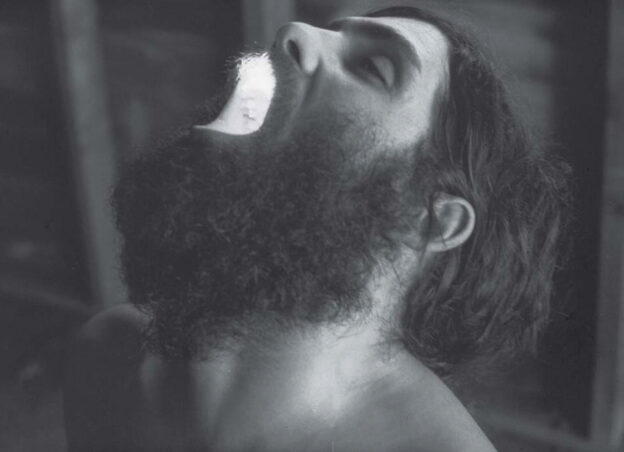
Swallowing Sunlight
Paul Forte 1976
Limited edition b&w photo documentation (private performance),16×20 inches.
Note: This photograph from a 35mm negative is undoctored. I found a way to direct a beam of sunlight into my mouth in the darkened space of an old garage.

Artist’s Breath
Paul Forte 2008
Assemblage, sealed bottle on brass & wood stand, 13×4.5 inches.
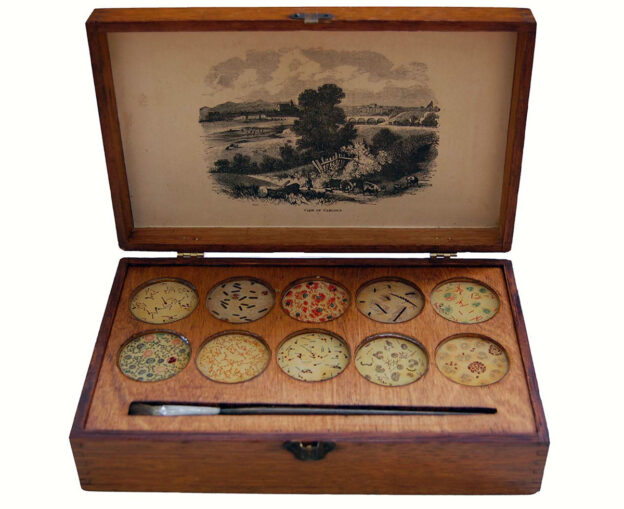
Bucolic Strains
Paul Forte 2007
Assemblage, bacteria illustrations (sealed in resin) in wood box with
pastoral etching and paint brush, 7x9x5.5 inches.
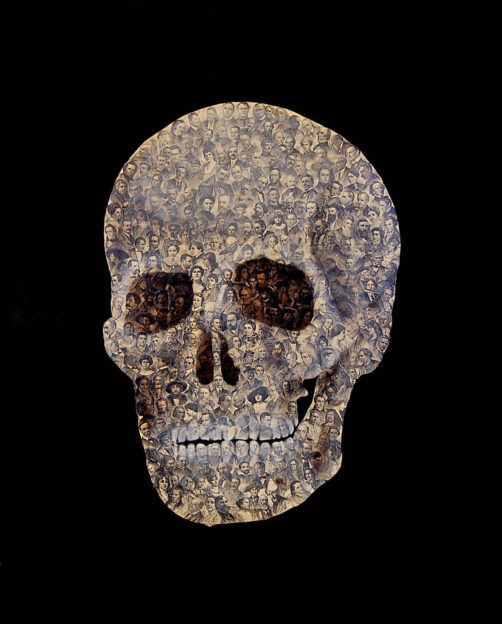
History Lesson
Paul Forte 2009
Collage and mixed media on board, 32×40 inches.
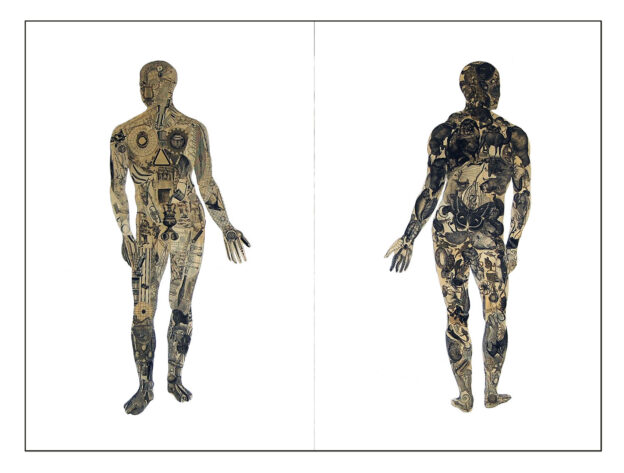
Illustrated Man (Nature and Culture)
Paul Forte 2005
Collage over medical illustrations on board, diptych, 47.5 x62 inches
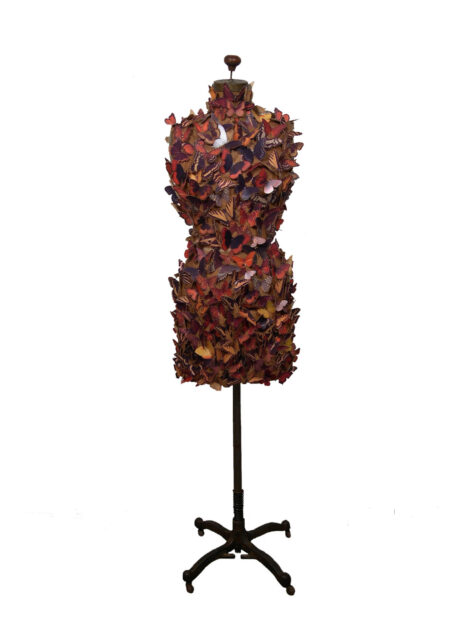
Mantle (After a Fashion)
Paul Forte 2007
Assemblage, dressmaker’s mannequin and photocopies, 64x13x10 inches.
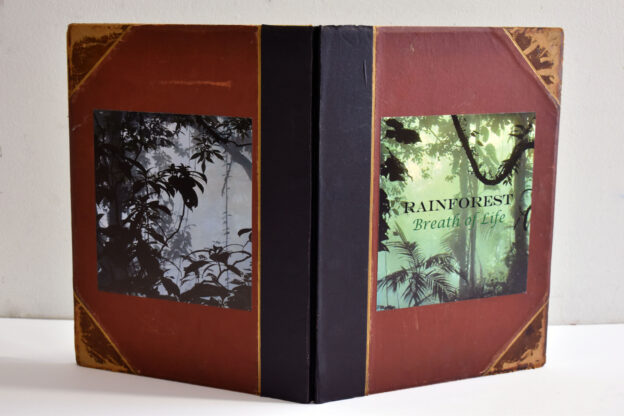
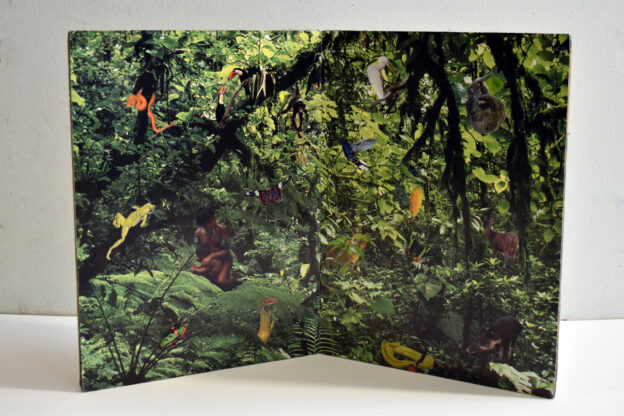
Rainforest
Paul Forte 2026
Book Work photograph with collage elements on book covers, 19.5×13 inches.
(Front cover & interior)
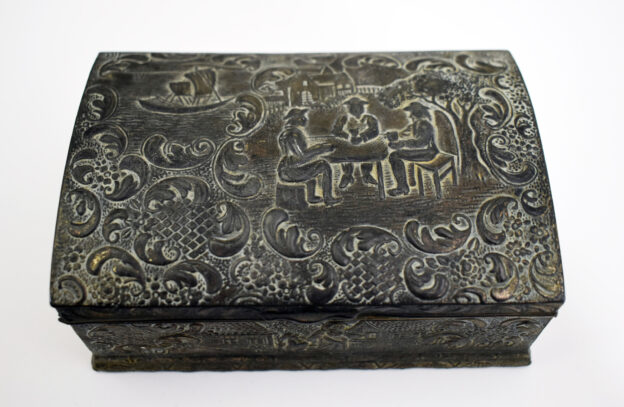
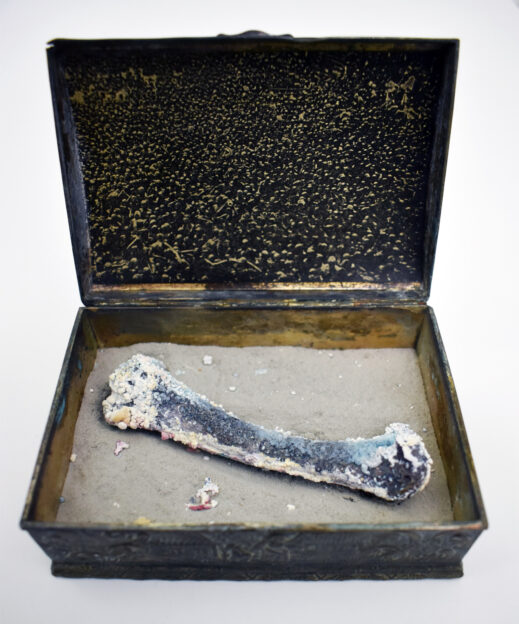
Remains (Relic)
Paul Forte 2011
Assemblage, found metal box, bone & crystals, sanded sheet music dust, photograph,
4.5×4.75×3.25 inches.
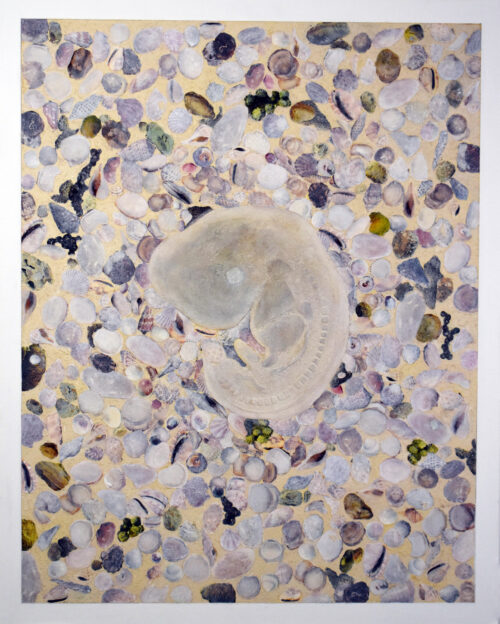
Sea Nymph
Paul Forte 2026
Collage and mixed media on board, 32×40 inches.
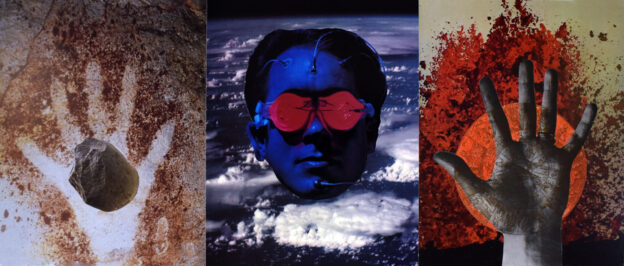
Sea Nymph
Paul forte 2026
Collage and mixed media on board, 32×40 inches.
……………………………………………
All text and images copyright and courtesy of Paul Forte
Get the Full Experience
Read the rest of this article, and view all articles in full from just £10 for 3 months.


No comments yet.