Ways of Seeing and Perceiving
Issue 73 September 2022

The Bride Stripped Bare: Esoteric Origins for Duchamp’s Large Glass
Hidden as it was for such a long time, Marcel Duchamp’s ‘The Large Glass’, is an esoteric work of art in two ways: first, its private nature, and second, its coded content. This essay by Jacquelynn Baas, a renowned curator, cultural historian, scholar and writer, contains groundbreaking research on Duchamp, Kashmir Shaivism, and Western Esotericism. Her aim is not to furnish a detailed key or step by step guide to Marcel Duchamp’s ‘Large Glass’, as others have attempted to do, but rather to provide a wider global context for interpreting ‘The Large Glass’ and assessing its cultural significance.

On ‘Perception: First Form of Mind’
In his recent book, ‘Perception: First Form of Mind’, Tyler Burge develops an understanding of the most primitive type of mental representational: perception. Focusing on the functions and capacities of perceptual states, Burge accounts for their representational content and structure, and develops a formal semantics for them. Drawing mainly on vision science, ‘Perception: First Form of Mind’ is a rigorous, agenda-setting work in philosophy of perception and philosophy of science.

The Unsettled Sense
The eye is a sense organ and an affective organ. It receives and is moved. We see and we cry. This essay focuses primarily on the eye which sees and, in particular, on seeing as a presence to our experience of the world and others. It considers how there is an inherent unsettledness and instability in the phenomenology of seeing. Drawing on the phenomenological investigations of Maurice Merleau-Ponty, it explores how the phenomenal richness of seeing is, by its nature, in flux and susceptible to disequilibrium; how seeing is therefore also a steadying and bound up with our experience of spatiality and openness.

Can consciousness continue after death? A Neuroscientific Perspective
What happens when we die? Unless we accept a religious explanation, the only remaining possibility seems to be the annihilation of consciousness. But another possibility is consistent with evidence from neuroscience. Our brains easily form predictive models of the behavior of close friends and loved ones, which emulate these other selves much as advanced computers can emulate other electronic devices. Whether these emulations are conscious is an open question, but there is preliminary evidence from several sources that the brain can host multiple independent spheres of consciousness. This opens up the possibility of survival through the medium of other brains.
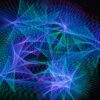
Jack Tait: Master of the Analog Drawing Machine
The authors herein present an introduction to the extraordinary and wide-ranging work of analog drawing machine artist Jack Tait. Now 88 and still active as an artist and theorist, that work has been previously recognized only within a relatively small circle of specialists within his native Britain; but given the current explosion of interest in techno-art, it has seemed appropriate to the authors to employ the communication format to introduce his art to a global audience: a body of work addressing the currently vital questions of the analog versus the digital, and the random versus the deterministic.
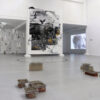
Reimagining Joya: Bringing Joya Residency experiences to the Thames-Side Studios Gallery
‘Reimagining Joya’ is an exhibition inspired by the experiences and artistic responses of a group of artists who have all participated in Joya: Art + Ecology / AiR residency. The artists involved, alumni from the MA Art & Science, from Central Saint Martins, University of the Arts London, invite us to connect with the ecosystems we inhabit.

Ways of Seeing at 50: an icy blast of a book about male voyeurism, art, capitalism and so much more
Joanna Mendelssohn is Honorary (Senior Fellow) School of Culture and Communication University of Melbourne. Editor in Chief, Design and Art of Australia Online, The University of Melbourne. Her first book was the seminal study on Sydney Long (1979). This was followed by a series of studies on Lionel Lindsay. Her most recent book, co-authored with Catherine De Lorenzo, Alison Inglis and Catherine Speck, is Australian Art Exhibitions: Opening our eyes, (T&H 2018). This project is the culmination of an ARC Linkage Project with UNSW, University of Melbourne and University of Adelaide in partnership with the National Gallery of Australia, National Gallery of Victoria, Art Gallery of New South Wales, Art Gallery of South Australia and Museums Australia.
Flies evade your swatting thanks to sophisticated vision and neural shortcuts
Jamie Theobald is Associate Professor of Biological Sciences, Florida International University. His lab studies insect neurobiology and behavior, focusing on visual control during flight. Wings get insects into the air, but like human aircraft, control systems were the real innovation. Vision is centrally important to flight control as it provides instantaneous information about speed, heading, deviations from course, obstacles and navigational targets. They manipulate these variables during free flight, tethered flight and brain recordings, to determine the computations insects rely on to generate their extraordinary performance in the air.
Ravindra Palavalli-Nettimi is a Postdoctoral Research Associate, Florida International University.
“My specializations include animal behavior, entomology, insect vision, neuroethology, navigation, miniaturization, ecology, and evolution. I obtained my PhD for my work on ant vision and navigation from Macquarie University, Sydney.”

Science images can capture attention and pique curiosity in a way words alone can’t
Science photographer Felice Frankel is a research scientist at the Massachusetts Institute of Technology in the department of Chemical Engineering with additional support from Mechanical Engineering. She joined MIT in 1994.
Frankel is a Fellow of the American Association for the Advancement of Science and was awarded a Guggenheim Fellowship. She was previously a Senior Research Fellow in Harvard University’s Faculty of Arts and Sciences in the Initiative for Innovative Computing (IIC), and a Visiting Scholar at Harvard Medical School’s Department of Systems Biology.

The tongue: how one of the body’s most sensitive organs is helping blind people ‘see’
Mike Richardson is a Research Associate in Psychology, University of Bath.
“I’ve had somewhat of a zigzag path through academia. I left sixth form intent on being a ‘professional’ kayaker (this meant living out the back of a van somewhere near a river). Then I studied Sport and Exercise Science at the University of Portsmouth, where I discovered that science was awesome and I wanted to do that instead. Specifically, I found that the brain is pretty crazy and I wanted to know more! I then proceeded to complete a Master’s in Cognitive Neuroscience at the University of Sussex and recently finished my PhD in Psychology at the University of Bath, where I studied visual impairment and exercise. I currently work as a Research Associated at the University of Bath, where I study audience experiences in live performance and immersive technology (which isn’t really anything to do with visual impairment or kayaking).
I currently produce content for the science communication platform: ‘SENSE(LESS) Psychology).”