Other Minds
Issue 74 November 2022



On a Multispecies Studio
Julie Andreyev is an artist-activist, researcher and educator in Vancouver, located on the unceded, traditional and ancestral territories of the Coast Salish people, including the xʷməθkʷəy̓əm (Musqueam), Sḵwx̱wú7mesh Úxwumixw (Squamish), and səl̓ilw̓ətaʔɬ (Tsleil-Waututh) First Nations, as well as the unceded traditional territories of nonhuman animals and plantlife. Her multispecies studio practice, called Animal Lover, explores more-than-human creativity and ways of knowing.
The Intelligent Mind of an Insect
Lars Chittka is the founder of the Research Centre for Psychology at Queen Mary, University of London. Work in the Chittka lab is poised at the intersection between sensory physiology and learning psychology on the one hand, and evolutionary ecology on the other. Why do animals have the sensory systems they do? How do they use them in their natural foraging environment? How do cognitive-behavioural processes function in the economy of nature? Pollinator-plant interactions have been used as a model system to study these questions. Bees have been the organisms of choice in most of these studies, because their colonies can be easily kept, their experience can be readily controlled, they have a rich behavioural repertoire and amazing learning capacities.
Lars Chittka is author of the book ‘The Mind of a Bee’ (Princeton University Press, 2022).

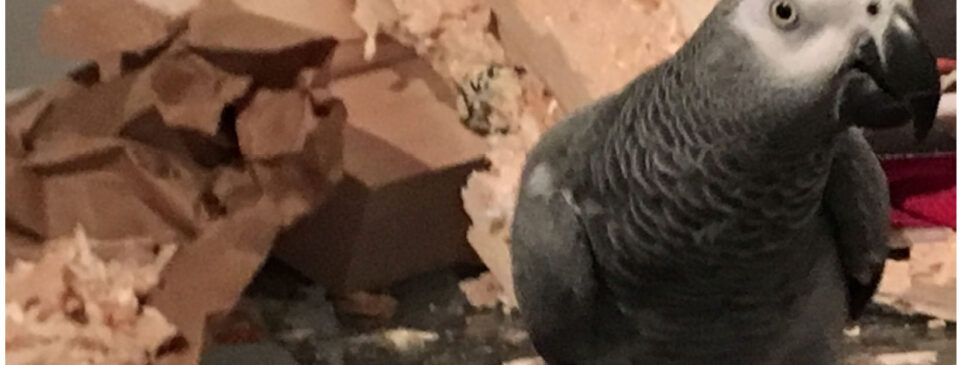
Hannah and Joe: Interspecies Art between Bird and Man
“The creative partnership of Hannah and Joe is a striking example of interspecies communication within art, a category in which works of art result from the interactions and meaningful connections between two different species.”
Charissa N. Terranova is a writer and educator. She researches complex biological systems from a cultural purview, focusing on the history of evolutionary theory, biology, and biocentrism in art, architecture, and design.

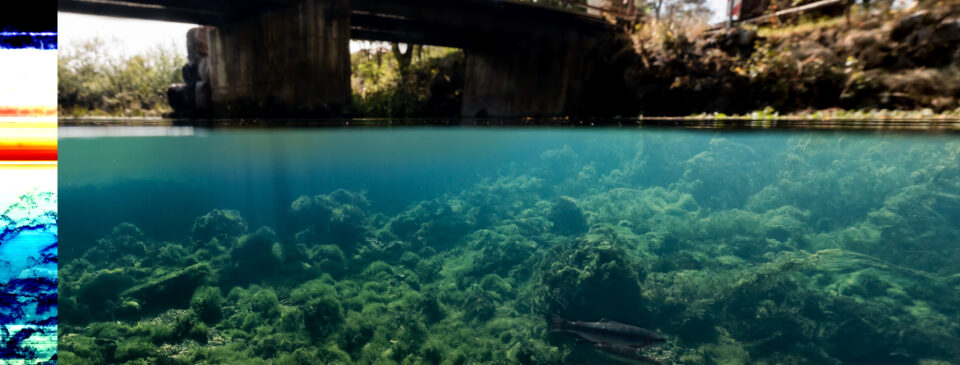
Aquaforming
Robertina Šebjanič is an artist whose work explores the biological, chemical, political and cultural realities of aquatic environments and the impact of humanity on other organisms. Her projects call for the development of empathetic strategies aimed at recognising the rights of other (non-human) species.
Extract from ‘Endless Forms: The Secret World of Wasps’
Seirian Sumner is a Professor of Behavioural Ecology at University College London, where she studies the ecology and evolution of social insects. she passionately fights for the wasp to be rightly reframed in the public’s consciousness. From their extraordinary evolutionary story and ecological significance to their sophisticated social worlds, unique hunting methods and cultural inspiration she unravels all their mysteries, challenges our perceptions, and gives reasons to value them, stirring new heraldry for these undiscovered gems of nature. This is an extract from her debut book, ‘Endless Forms: The Secret World of Wasps’ (William Collins, 2022).

The Greek Myth Born of Aristotle
Jackie Higgins is a writer and film-maker who works span the arts and the sciences. She is author of ‘Sentient: What Animals Reveal about our Senses’ (Picador, 2021). She read zoology at Oxford University as a student of Richard Dawkins, then worked at Oxford Scientific Films, making wildlife documentaries for National Geographic, BBC Natural world and The Discovery Channel.

Observation Station
Heather Barnett discusses Observation Station, a series of interspecies interventions designed to examine how and why we look at animals, and which animals we choose to observe. The project is part of the Machine Wilderness residency programme in Amsterdam, centred on public fieldwork developing methodologies and prototypes of ‘wilderness machines’ that engage with local environmental complexity.
Researchers trained an AI model to ‘think’ like a baby, and it suddenly excelled
Susan Hespos is Professor of Infant Studies at MARCS at Western Sydney University and Professor of Psychology at Northwestern University in Evanston, Illinois, USA. She leads a research program on understanding our earliest evidence of cognitive capacities in infancy and what changes over development. Her work is published widely in top journals in cognitive and developmental psychology, including Nature, Proceedings of the National Academy, Psychological Science and Cognition.

Dolphins use signature whistles to represent other dolphins – similarly to how humans use names
Jason Bruck is Assistant Professor of Biology, Stephen F. Austin State University.
“I focus on the interplay of evolution, cognition and sociality in animals. Specifically I examine how complex social systems in cetaceans, primates and other vertebrates drive the evolution of complex learning and memory skills. Animals with fluid, complex social dynamics have a greater need to remember many social partners over unpredictable lengths of time. Therefore animals with complex social systems like humans, dolphins, chimps, elephants, corvids and some parrots for example should display something called long-term social recognition, which allows them to remember many social partners, sometimes for life.”

Cross-pollination among neuroscience, psychology and AI research yields a foundational understanding of thinking
Paul S. Rosenbloom is Professor Emeritus of Computer Science, University of Southern California.
“Before I retired, I was also Director for Cognitive Architecture research at the Institute for Creative Technologies. I have pursued research in artificial intelligence for most of the last 45 years, focused on integrated cognition/intelligence; that is, on how to combine the core mechanisms necessary to yield general human-like intelligence. I am a Fellow of the Association for the Advancement of Artificial Intelligence, the Association for the Advancement of Science, and the Cognitive Science Society.”
Christian Lebiere is a Research Faculty in the Psychology Department at Carnegie Mellon University, having received his Ph.D. from the CMU School of Computer Science. Since 1991, he has worked on the development of the ACT-R cognitive architecture and was co-author with John R. Anderson of the 1998 book ‘The Atomic Components of Thought’. Most recently, he has been involved with John Laird and Paul Rosenbloom in defining the Common Model of Cognition, a community-wide effort to consolidate and formalize the scientific progress resulting from the 40-year research program in cognitive architectures.
John E. Laird is the John L. Tishman Professor of Engineering, University of Michigan.
“My major research interest is in creating human-level artificial intelligent entities, with an emphasis on the underlying cognitive architecture. As part of my research, I study both artificial and natural intelligence.”

If animals could speak, would we understand them?
Jennifer Ann McDonell is Associate Professor, University of New England.
“The ‘NonHuman turn’ in the Humanities, which emerged in the final decades of the twentieth century, addresses some the most urgent and difficult conceptual issues in Humanities scholarship: the politics and material practices of species difference, the functions of animals in nature/cultures, and the fragile status of the ‘human’ in an era of accelerated environmental crisis. Supported by both textual analysis and archival work, my research in this area aims to identify and analyse intersections between species and discourses of gender, class, race, ethnicity in Victorian literature and culture.”

Six amazing facts you need to know about ants
Charlie Durant is a PhD Candidate, Department of Genetics and Genome Biology, University of Leicester.
“I study the microbial ecology of these ant-phage-bacteria communities by studying their entire genetic content, or metagenome. I hope to find out whether bacteriophage are important in shaping the communities of bacteria that live with ants.”
Max John is a PhD Candidate, Department of Genetics and Genome Biology, University of Leicester, University of Leicester.
“I am studying the genomics of social organisation, focusing on the genomic basis of polymorphic social organisation in ants. Specifically, I am investigating the evolution of “social chromosomes”, which function similarly to sex chromosomes but control the number of reproductive queens in ant colonies.”
Rob Hammond is a Lecturer, Department of Genetics and Genome Biology, University of Leicester.
“My research focuses on the evolution of complex traits. I am interested in the organization of social insect societies with projects on the genetic changes underlying differences in social organisation, how social traits influence the genome, and the diversity and role of bacteriophages in social insect nests.
Clever cuttlefish show advanced self-control, like chimps and crows
Dr Alexandra Schnell is a Research Fellow of Darwin College and a Research Associate in the Comparative Cognition Lab at the University of Cambridge. Her research interests centre on complex learning and memory mechanisms in animals and how these abilities have evolved across diverse taxa. Her primary model species include cephalopods (octopus, cuttlefish, and squid) and corvids (members of the crow family) but she also has experience working with elephants, freshwater fish, and juvenile crocodiles. In addition to her interest in cognitive evolution, she also has an interest in sensory ecology, neuro-ethology, sentience, and welfare.

Suckers for learning: why octopuses are so intelligent
Lisa Poncet is Doctorante en neuroéthologie, Université de Caen Normandie.
“Après un master en écologie, éthologie et écophysiologie, où j’ai travaillé sur le comportement d’animaux très variés (chiens, crapauds accoucheurs, chouettes effraies, corbeaux freux …), j’ai débuté un doctorat en neuroéthologie. Depuis 2 ans, j’étudie des animaux très particuliers : les seiches communes et les poulpes communs. Je cherche à mieux comprendre leur mémoire et leur capacité à planifier le futur, et à améliorer nos connaissances sur l’origine et l’évolution de ces facultés.”