Identity
Issue 49 April 2019


On ‘Identity’
Florian Coulmas is Professor of Japanese Society and Sociolinguistics at the IN-EAST Institute of East Asian Studies at Duisburg-Essen University. He has published numerous books, including ‘An Introduction to Multilingualism’ (OUP, 2017) and ‘Writing and Society: A Introduction’ (Cambridge University Press, 2013). In 2016, he was awarded the Meyer-Struckmann-Prize for Research in Arts and Social Sciences. For the past three decades he has served as Associate Editor of the ‘International Journal of the Sociology of Languages’, during which time he has observed the steadily increasing use of the concept of identity in both general and scholarly publications. His latest publication, ‘Identity: A Very Short Introduction’, was published in February 2019.

Contained
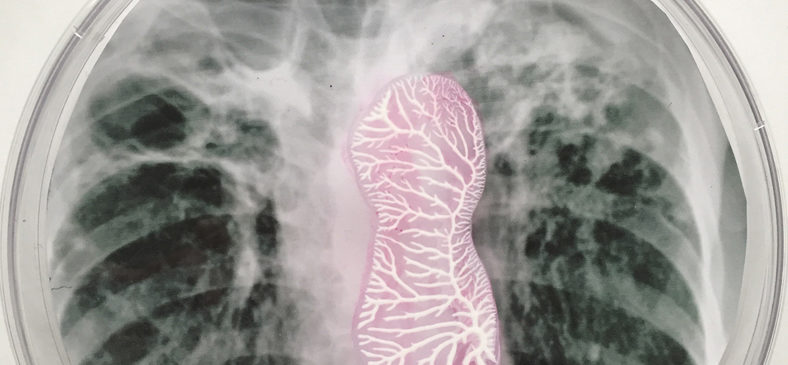
Inspired by an aesthetic in which art, science, medicine and ecology intersect, Elaine Whittaker’s art practice considers biology as contemporary art practice. Based principally in installation, sculpture, painting, drawing and digital imagery, her artworks incorporate a range of materials: from the traditional, such as paint, pigment and wax, to the unconventional, such as mosquitoes, salt crystals, cells and live microorganisms. They have been exhibited nationally and internationally, in art and science galleries, and featured in literary, medical and art magazines, including William Myers’ book, Bio Art: Altered Realities (2015). In this article she reflects on Contained, her 2018 exhibition, and the effects of illness on identity as experienced by her mother when she contracted Tuberculosis at an early age.

A house built on sand? A critical examination of the concept of ‘identity’ within contemporary ‘identity politics’, from a sociological perspective.
Adrian Holme is a teacher, writer and artist. He is an Associate Lecturer on the MA Art and Science, Central Saint Martins, and his cross-disciplinary background encompasses biology, fine art and information science. He is also a Lecturer on the BA Hons. Illustration course at Camberwell College of Arts, UAL, where he coordinates and delivers a humanities / critical theory element. His art practice extends across drawing, installation and performance, and he also works as a commercial copy writer and editor. In ‘A house built on sand?’ he draws upon sociological theory to critically examine the concept of identity represented in contemporary ‘identity politics’.

Breaking new ground in African philosophy
Jonathan O. Chimakonam Ph.D, is a Senior Lecturer at the University of Calabar, Nigeria. He is also a Research Associate at the University of Johannesburg, South Africa. His teaching and research interests cover the areas of African Philosophy, Logic, Philosophy of Mind, Environmental Ethics and Postmodern/Postcolonial Thought. In this exclusive interview he discusses his aim to break new grounds in African philosophy by formulating a system that unveils new concepts and opens new vistas for thought (Conversational philosophy); a method that represents a new approach to philosophising in African and intercultural philosophies (Conversational thinking); and a system of logic that grounds them both (Ezumezu).

Notes on an Aphantasic Artist
Matthew MacKisack is a cultural historian and a Postdoctoral Research Fellow at the University of Exeter Medical School. He has published numerous articles in intellectual and cultural history, focusing on how imagining and imagination have been employed and understood.

The ‘real you’ is a myth – we constantly create false memories to achieve the identity we want
Giuliana Mazzoni is Professor of Psychology, University of Hull. Human memory represents her main research interest, and more specifically the study on how personal memories are remembered in normal people and in those whose ability to remember is exceptional. Her work on memory has been featured in newspapers and magazines in the UK (among many, The Sunday Times) and around the world (among many,The Washington Post).

How DNA ancestry testing can change our ideas of who we are
Dr Caitlin Curtis is a research fellow at The University of Queensland. She has broad expertise in genetics including conservation genetics, ancient DNA, DNA forensics, and vector genomics. Caitlin is fascinated by the intersection between genomics and technology and the ensuing privacy and data protection issues.

Erik Erikson knew that self-invention takes a lifetime
M M Owen is a British nonfiction author. He obtained his PhD at the University of British Columbia, and runs an animation studio called Misfit Productions.