Emerging Ideas
Gabrielle Hoad – The Luminous Envelope: visualising the invisible
The Luminous Envelope is a body of contemporary photographic work developed in response to a historic plaster model of Fresnel’s Wave Surface. Created in the 19th century as a teaching aid, the Fresnel model sought to communicate abstract concepts in tangible form. It is drawn from an equation that describes the double refraction of light in a particular type of crystal. The Luminous Envelope is used as a way of reflecting on this process of transcription (from equation to physical object), and on the gap between the world and our representations of it.
“No human eye had ever seen this envelope when Sir William Hamilton inferred its existence.”
John Tyndall – Six Lectures on Light (1873)
“The models were not ‘evidence’ in any sense of the term. They were boundary objects, good for trading meanings and for showing figures but illegitimate as objects of pure mathematics….”
Soraya De Chadarevian & Nick Hopwood – Models: The Third Dimension of Science (2004)[i]
In 2015 I was one of a group of artists invited to work with a range of 19th century teaching aids held at Oxford University Mathematical Institute[ii]. Made by the German firm of Martin Schilling, they rendered scientific and mathematical equations as plaster models; that is to say, they represented abstract entities as tangible objects that could sit on a shelf.
Models, analogies, boundary objects
This opportunity fitted well with my long-standing interest in the notion of the model, both as a representation of something that might be built in the future (such as an architect’s model or an artist’s maquette) and as a simplified description that assists with prediction or understanding. In the past decade I’ve worked with climate models, animal models for human disease and 3D-printed models derived from highly detailed GPS coordinates. In this case I was interested in descriptive models that assist with understanding and which attempt some degree of precision or accuracy; that is to say, not just sketches or diagrams.
What draws me to such models is the way they highlight the gap between the world and our representations of it; no matter how faithful we attempt to be in our transcription, the recording always falls short in some way. Sometimes we are able to create a virtually seamless transition from observed or projected data to an object but some disparities will always be evident. On other occasions, the correspondence is fuzzy and, at best, symbolic.
Co-existing (imperfectly) in the infinite abstract and measurable physical realms, Oxford’s plaster models could be seen as ‘boundary objects’ as defined by Susan Leigh Star and James R. Griesemer[iii].
“A boundary object is any object that is part of multiple social worlds and facilitates communication between them; it has a different identity in each social world that it inhabits. As a result a boundary object must be simultaneously concrete and abstract, simultaneously fluid and well-defined.”
Boundary objects can include diagrams, papers and publications as well as models – anything that aids the translation of ideas from one setting to another. Yet, despite its ubiquity, the practice of visualising complex mathematics and theoretical physics has long been contentious. In 1948, the physicist Richard Feynman was reprimanded by Niels Bohr, the father of quantum mechanics, for daring to visualise atomic particles in the now-famous series of Feynman diagrams. Bohr also said that when it comes to describing atoms “language could only be used as poetry” (Al-Khalili, 2018)[iv] suggesting that rational, verbal explanations will be inadequate to the task.
Controversially, the Schilling plaster models afford sensory qualities to equations. I was particularly fascinated by the claim that the models were locked away in the 1940s “to protect students from the dangers of intuition” (Batson, 2014)[v]. In fact, the constant refrain from Professor Sam Howison of Oxford University, who patiently guided the group of artists through engagement with the collection, was that we were dealing with “surfaces not solids”, even as we held the heavy objects in our hands.
When Howison talks of geometric ‘surfaces’ he isn’t referring to touch and texture but to abstract entities of infinite or indeterminate scale (but no volume) described by points and lines. In other words, surfaces lack the mass of objects in the everyday world. Mathematicians may use analogies such as ‘saddle’, ‘pretzel’ or bubble’. You may be able to imagine these surfaces, or even construct and manipulate them on a computer screen in a virtual three-dimensional space[vi], but you cannot touch them or feel their weight.
Despite this contradiction, some artistic processes – particularly those concerned with patterns and systems – lend themselves very well to the translation, transcription or illustration of mathematical concepts. When working on The Luminous Envelope I was clear that I was primarily responding to an object – “the model” – and not the underlying concept. In other words, the process of transcription was already complete and my work was to reflect or expand on that process.
Finding a way to respond: the Oxford project
Oxford’s collection of 19th century plaster models was uncovered during a move to new premises. Shortly afterwards, in 2015, a group of artists, including myself, was invited to produce work inspired by them.
Although the models have since been thoroughly logged, restored and identified, at this point they were still a dusty jumble (Fig. 1). I chose to respond to a curious, rounded pebble, scored with lines that looked like string on a parcel. Compared to some of the larger, more intricate models with their complex curves and threading, this initially looked to be a very simple object (Fig. 2). I liked the way it fitted my hand and rocked gently on the table-top. Later, it was found to have two further interlocking parts that enclosed the pebble, and revealed to be a model of Fresnel’s Wave Surface[vii]. I was fascinated to realise that this solid, opaque plaster object represented notional light waves emanating from a particular type of crystal (optically biaxial). The crystal’s molecular structure causes light to refract in predictable ways, and the university’s model offers a ‘snapshot’ of this wave-front as it radiates from a single point.
Working out a response to such an object that already held significant meaning and demonstrated considerable aesthetic value, proved challenging. Mathematicians are rightly proud of the aesthetic qualities of their equations, both in themselves and the way they can be manifested as sculpture, music and, in the case of the new Oxford Mathematics Institute, architecture.
“the design of the two ‘crystals’ covering the light wells in the north and south atria were based, respectively, on the graph K3,3 and on a surface plot of the solution of an eigenfunction problem for the two-dimensional Laplacian. For the area in front of the main entrance, Sir Roger Penrose designed a new realisation of his non-periodic tiling, to be laid in granite slabs inset with stainless steel bands” (Woodhouse, 2013)[viii]
The new work was due to be displayed in public areas of the Mathematical Institute but its main audience (and to some extent its patrons) were the academics of the Maths Department and their students. Wanting to honour the knowledge embodied by the object, I researched the science related to the optics of crystals, but accepted that I would have to proceed largely intuitively.
Taking a cue from Bohr and his disparaging reference to poetry suggested an oblique rather than direct approach to the subject matter, and a focus on affect. A poetic approach would mean a search for potent analogies and evocative metaphors that don’t simply translate the outputs of one discipline to the outputs of another (for example numbers to music, or coordinates to shapes), and prioritise an emotional or sensory response over an intellectual one.
A process that produced beautiful yet unpredictable results became central to this quest. Polarisation is a technique frequently used in the study of crystals, and I began to explore its possibilities in photography. When sandwiched between two layers of polarising film, materials such as cellophane and acrylic plastic produce rainbow effects at points of stretch or stress by separating light into different colours.
The rainbow effects occur through the property of birefringence, which is also exhibited by many crystals. It causes light passing through the material’s molecular structure to emerge at different speeds and therefore at different wavelengths (ie colours). These effects are multiplied by layering the cellophane. (Edwards & Langley, 1981)[ix]
The Oxford plaster model renders the behaviour of light as solid, interlocking, plaster objects. I set out to invert that process by dissolving tangible objects into zones of light. I therefore proceeded to make small geometrically inspired structures such as cones, cubes and tetrahedrons out of folded clear cellophane, using origami and other paper-folding techniques. Sellotape (also birefringent) was deployed to secure the rather springy material in place. Although semi-transparent, these were physical objects which, like Oxford’s 19th century teaching aids, had definable edges, volume and weight, as well as an element of permanence. But I wanted to photograph them to give the appearance of pure, ephemeral, coloured light (Figs. 3 and 4).
In making my final selection of images, however, ambiguity – the evocation of some kind of liminal state – became more important. I wanted to suggest a process of transformation by offering some sense of residual form as the polarising filters rendered each object as areas of colour. I also sought to echo the strange illegitimacy of solid objects that claim to represent mathematical equations. The object exists, it refers to something true, and yet it is its own fiction. (See Toon, 2017[x] for a further explanation of the idea of models as types of fiction.)
The title of the series The Luminous Envelope takes its cue from a practical experiment based on Fresnel’s equation, carried out by Humphrey Lloyd using an aragonite crystal.
A most remarkable verification fell to the lot of the late Sir William Hamilton, of Dublin, who, taking up the theory where Fresnel had left it, arrived at the conclusion that at four special points of the ‘wave-surface’ in double-refracting crystals, the ray was divided, not into two parts but into an infinite number of parts; forming at these points a continuous conical envelope instead of two images. No human eye had ever seen this envelope when Sir William Hamilton inferred its existence. He asked Dr. Lloyd to test experimentally the truth of his theoretic conclusion. Lloyd, taking a crystal of aragonite, and following with the most scrupulous exactness the indications of theory, cutting the crystal where theory said it ought to be cut, observing it where theory said it ought to be observed, discovered the luminous envelope which had previously been a mere idea in the mind of the mathematician. (Tyndall, 2004: 209)[xi]
My title was chosen as an imperfect real-world analogy (a wrapper, a cover) for a behaviour of light; it unites the tangible and intangible in one phrase. However, it also refers to a physical proof of a theory: the constant to-and-fro between ideas in the minds of a mathematicians and the scientific experiments that connect them (sometimes) to observable phenomena.
Conclusions: a meaningful slippage
The photographs that make up The Luminous Envelope parallel the uneasy translation of fleeting or entirely abstract phenomena into stable, tangible objects: equations to plaster, light to paper. To manifest my ideas, I chose a physical, if insubstantial, material (cellophane) often used to wrap and enclose. I constructed dimensioned entities, then made them disappear.
Although existing in three dimensions, the cellophane objects have been reduced by photographic representation into two dimensions. Furthermore, what appears to the naked eye as a translucent material is rendered in rainbow colours by the polarisation filters and photographic process. These rainbow colours are not inherent qualities of the objects but different wavelengths of light interacting with a camera’s sensor. As such, they barely create even the illusion of physical forms. Like the mathematical equation that inspired them, the entities represented by these photographs do not exist in any tangible, real-world sense.
Fresnel’s Wave Surface is a theory about the behaviour of light; the plaster representation of the equation in the Oxford collection is not the same thing as the equation itself. Instead it is a boundary object that communicates across social worlds. It facilitates exchange between the mathematical expert and the mathematical beginner, between theoretical and haptic modes of understanding.
Some instances of art and design that correspond to mathematical concepts might be seen as equivalents – for example, a weaving pattern directed by the Fibonacci series, Penrose’s non-periodic tiling. However, the images of The Luminous Envelope lack the same directness of exchange. They may be “simultaneously concrete and abstract, simultaneously fluid and well-defined” (Star & Griesemer, 1989) but they cannot be so easily mapped one to the other. There is a slippage, brought about by introducing intuition, association and imagination into the making. Instead, the images of The Luminous Envelope should be seen as a provocation not an elucidation. Where they will they lead the viewer is far from predictable.
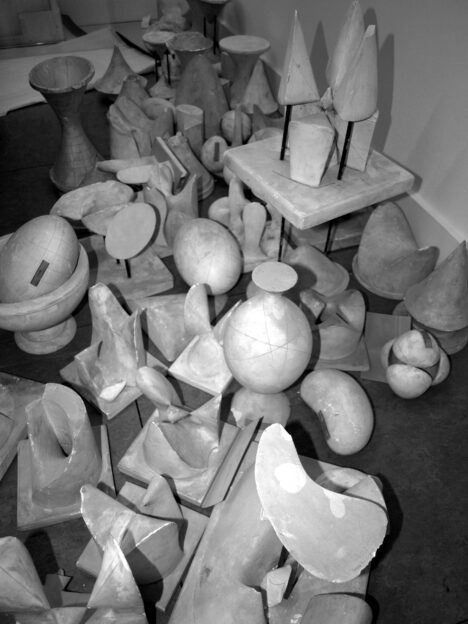
Figure 1: Uncatalogued plaster models at Oxford Mathematical Institute
Credit: Metron Collaborative (Diane Jones-Parry & Annabel Ralphs)
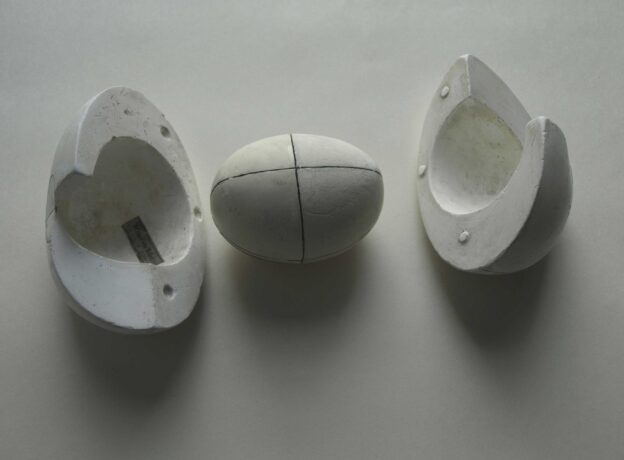
Figure 2: Two-part plaster model of Fresnel’s Wave Surface, Oxford Mathematical Institute
Credit: Metron Collaborative (Diane Jones-Parry & Annabel Ralphs)
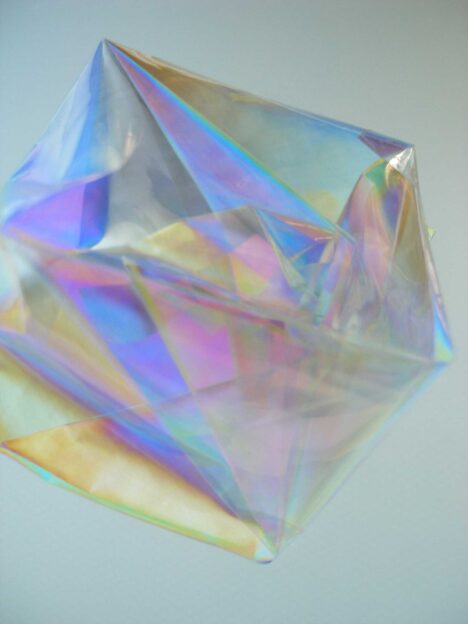
Figure 3: ‘The Luminous Envelope – Collapsing Cube’ 2015
Credit: Gabrielle Hoad
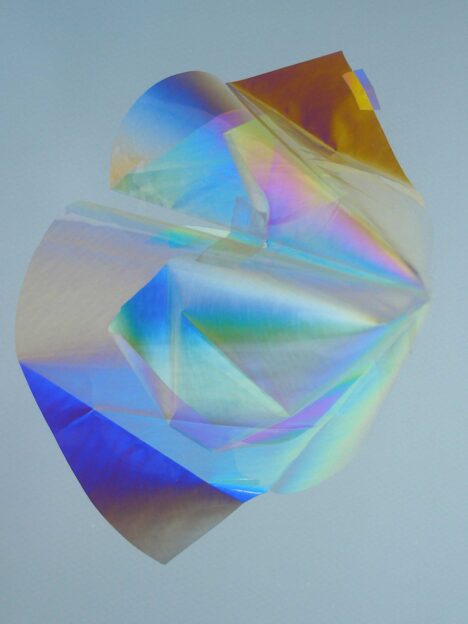
Figure 4: ‘The Luminous Envelope – Unravelled Octahedron’ 2015
Credit: Gabrielle Hoad
…………………………………….
[i] De Chadarevian, S. & Hopwood, N. (eds) (2004) Models: The Third Dimension of Science, Stanford University Press
[ii] Exhibition: Illegitimate Objects, Oxford Mathematical Institute, 18 September – 12 November 2015, curated by Metron, featuring work by Katrina Blannin, Elaine Le Corre, Bella Easton, Tim Ellis, Gabrielle Hoad, Sally Howkins, Diane Jones-Parry, Stephen Lee, Iavor Lubomirov, Ruth Millar, Annabel Ralphs, Luke Ralphs, Felicity Shillingford, Kate Terry
http://www.illegitimateobjects.info [Accessed 31/12/20]
[iii] Leigh Star, S. & Griesemer, J. R. (1989). “Institutional Ecology, ‘Translations’ and Boundary Objects: Amateurs and Professionals in Berkeley’s Museum of Vertebrate Zoology, 1907-39, Social Studies of Science. 19 (3): 387–420.
[iv] Online documentary: Al-Khalili J. (presenter) (2018) Atom: The Illusion Of Reality – Episode 3 (26m,30s) | Reel Truth Science, YouTube
https://youtu.be/KFS4oiVDeBI [Accessed 3 January 2021]
[v] Batson, J. (2014) This Is What Math Equations Look Like in 3-D
https://www.wired.com/2014/06/math-equations-models/ [Accessed 28/12/21]
[vi] In this sense, digital modelling software offers a closer correspondence, in that virtual three-dimensional images can be constructed and then manipulated in virtual space. However any attempt to materialise these images, for example by importing them into a CAD program for the purposes of 3D printing, offers no real ‘improvement’ in correspondence compared to plaster models as it once again ascribes scale and volume to a non-physical entity.
[vii] Unlike some of the other equations/models which describe pure geometric concepts
[viii] Woodhouse, N. The Andrew Wiles Building: A short history [2013?] Oxford University.
https://www.maths.ox.ac.uk/system/files/attachments/OxfordMathematics_ROQ_leaflet.pdf Accessed 28/12/21
[ix] Edwards, S.J. and Langley, A. J. (1981) Leonardo, Vol. 14, No. 3, pp. 187-190 Producing Colours Using Birefringence Property of Transparent, Colourless Stretched Cellophane
[x] Toon, A. (2017) ‘Imagination in scientific modelling’ in The Routledge Handbook of Philosophy of Imagination ed. Amy Kind
[xi] Tyndall, J. (1872-1873) Six Lectures on Light, Project Gutenberg 2004. http://www.gutenberg.org/files/14000/14000-h/14000-h.htm [Accessed 28/12/21]
…………………………………………
Gabrielle Hoad uses photography, moving image, sound, text and live actions to investigate the gap between the world and our representations of it. She has a particular interest in the notion of the model, both as a representation of something that might be built in the future (such as an architect’s model or an artist’s maquette) and as a simplified description that assists with prediction or understanding (such as computerised climate models).
In 2021, she worked with Dr Rebecca Hock of Nottingham University on a project relating to the use of the laboratory rat as a model for humans in neuroscience research. As an ESI/RANE Creative Affiliate (2014-15), she worked with Dr Jonathan Bennie of Exeter University’s Environment & Sustainability Institute to visualise microclimate data. In 2013-14, funded by Arts Council England, she worked with Dr Steven Portugal of the Royal Veterinary College’s Structure & Motion Lab on Solid Air, a project that brought together specialised data loggers with 3D printing technology to visualise bird flight paths.
Get the Full Experience
Subscribe today and view all issues in full from just £10 for 3 months.
Comments are closed.