On Complexity and Consciousness
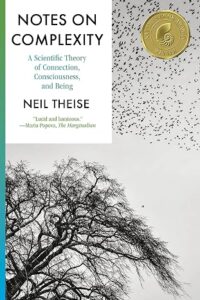
Neil Theise is a Professor of Pathology at the NYU Grossman School of Medicine. Through his scientific research, he has been a pioneer of adult stem cell plasticity and the anatomy of the human interstitium. Dr. Theise’s book, ‘Notes on Complexity: A Scientific Theory of Connection, Consciousness, and Being’ (Spiegel & Grau, 2023) calls on his studies in complexity theory to address topics such as consciousness studies and science-religion dialogue. In this interview he discusses his life, ideas and work.
Richard Bright: Can we begin by you saying something about your background?
Neil Theise: As a complexity theorist, I often teach people about how low-level unpredictability plays a role in the life of an organism or a community of organisms. For example, a food line of ants in a colony looks from above to be a straight line but looking closely, there are always a few “divergent” ants not following the line. The ants are not lost. They are the ants that may happen upon a new food source even as the old one is being depleted. In doing so, by exploring alternate modes of being within their environment, they allow the colony to adapt.
My medical career, for many years, looked like a straight line that stretched from the circumstances in which I discovered my unexpected passion for looking at tissues under a microscope to becoming established in a specialty that allowed me to indulge that passion: diagnostic liver pathology. But I was a bit of a divergent ant, wandering off, exploring where my mind took me, while the line kept on straight without me. I tried sticking to that path, but each time, there was another divergent ant on their own winding path to encounter, one who would introduce me to new paths of knowledge (as I would do for them).
As a kid I had dreamed of being a great scientist. Becoming pre-med, I had aspired to being helpful to rooms full of waiting patients, but upon starting my pathology residency, I just aspired to be a skilled and helpful diagnostician. Tongue in cheek, echoing His Holiness the Dalai Lama’s “I’m just a simple Buddhist monk”, I enjoyed saying, honestly, that “I’m just a simple liver pathologist.” That was my straight-ahead path.
I also enjoyed being academic, nestled in the collaborative environment of a major teaching hospital. Any research I did for the first decade of my career was what we call clinical-pathologic correlations, simply trying to refine how we might extract more usefully informative details from the few short threads and fragments of a patient’s liver tissue that I receive on the microscope slide. Basic science aspirations for laboratory focused research were only in my rearview mirror.
Nonetheless, as the hours of each day at the microscope passed, sometimes with trainees or clinicians looking through the ‘scope with me, sometimes alone in my office, my vision became sharper (that does happen, eyes and brains daily trained to see more) and my understanding became more subtle. By my mid-thirties, unbidden hypotheses about how diseases happened or progressed started to bubble up from below, often arising within my mind while sitting on my meditation cushion with my fellow Zen students. Even when I could successfully set them aside during the sitting period, they would always be there awaiting me when the bell rang to end the session.
Some of my earliest ideas like that involved the biopsy specimens from patients diagnosed with the newly discovered hepatitis C virus, correlating microscopic findings with clinical features of disease progression or treatment responses. I also had access to whole livers, the dying diseased organs removed by the liver transplant team while saving the life of the lucky recipient of a new, healthy liver. In these, small cirrhotic nodules stood out to me and by looking at their slides carefully, I helped to elucidate how cancer arises in human chronic liver diseases, work that laid the foundation for today’s radiologic screening for early liver cancer.
Not all tissues were diseased, however; good news for the patient and a chance for me to contemplate the wonders of a healthy, normally functioning liver. Though these were the least pathologically interesting tissues, there were still new things to notice. I discovered previously unrecognized anatomy in the biliary tree, the branching bile ducts that drain the liver. I discovered that their smallest branches were longer than had previously been thought. This at first seemed an incidental finding, but upon going back to examine how these newly defined, tiniest elements changed in diseases, it became clear that they were a living niche for human liver stem cells – the existence of which had not even been fully accepted until that time even in mice. Now I could show it in humans.[i] It was 1996.
My departmental chair at New York University felt I needed to become a “real scientist” to explore these novel insights. I didn’t really want to go on sabbatical. I liked being that “simple liver pathologist,” but with encouragements from the chair that I could return to my normal life after a three-month sabbatical, I left New York for Yale Medical School to learn some new skills. Unpredictably, I met another willingly divergent ant, Diane Krause – like me, a pathologist by training, but also a stem cell biologist. As we made new discoveries the three months turned into a year and a half in which Diane turned me into a stem cell biologist.
Investigating a few inconsistencies in my explanations for how this stem cell niche could help heal the liver, we kept pushing the envelope beyond what she or I, or anyone else had known, finding that stem cells of any one organ (in our case the bone marrow) could become stem cells of every organ. We were amongst the handful of pioneering teams exploring the topic of such cellular flexibility – known as “adult stem cell plasticity” – around the turn of the Millenium. Ours was the first team, however, to show that such potential for plasticity could be seen in a single adult stem cell (from the bone marrow), meaning an adult cell could behave like a stem cell from an embryo.[ii]
This work had not only scientific consequences, but political ones at national and international levels. The American anti-abortion movement seized to fine tune their opposition to embryonic stem cell research, moving beyond calling it unethical (because embryos were broken up to obtain their constituent cells), to saying that the research was unnecessary since our team’s work had shown that adult cells could do whatever embryonic cells could do. Currying favour with his political base, President George W. Bush gave his famous address to the nation limiting the possibilities of embryonic stem cell research. That was a vast and unfortunate oversimplification of the science and its potential. Alas, wandering ants don’t always find nourishment. I think that the full potential for stem cell contributions to regenerative medicine have never been fully realized.
Nonetheless, around that time, because of the new visibility of my research, I was invited to join an art/science collaboration, under the auspices of the Wellcome Trust in the UK, curated by an old friend, Peter Ride, at the University of Westminster. The interests of Peter and the Wellcome Trust in interdisciplinary collaboration was served by introducing me to artist Jane Prophet for in-person meetings, alternating between our home cities of London and New York, so that he could record our conversations.
One might say that they were exploring, what happens when ants from one colony meet those of another. The idea was that in studying how an artist and scientist might talk, light might be shed upon how to foster cross-discipline creativity. While we weren’t required to have a creative outcome – a research paper, art project, or even continuing engagement – it was hoped that they might learn something about what goes right in such collaborations or what might prevent them from being creative.
Fortunately, something exciting sparked between Jane and I while Peter mediated and got it all down on record. At first, we spent a lot of time simply “learning each other’s languages”, the vital starting point for any interdisciplinary collaboration. She told me of how she had become interested in people’s emotional connections to characters in computer games, what we have come to call “avatars.” With programmer Gordon Selley (yet another divergent ant), she built a virtual world called TechnoSphere.[iii] Users were invited to login and invent their own creatures to wander the land, selecting individualized combinations of physical features and behaviours. Eventually there were thousands of creatures roaming the TechnoSphere virtual landscape.
Then something unexpected happened. Just as Diane and I had started witnessing cells behaving in unanticipated ways, the virtual creatures began spontaneously self-organizing into social behaviours that Gordon had not programmed. Gordon noticed a drop in herbivore deaths. Going into the code, he found grazing herbivores organizing themselves into herds. They were evolving protective behaviours just as did real life ruminants. In turn, carnivores coordinated new, more efficient hunting strategies, lining up along the mouths of closed valleys waiting for the herbivores to exhaust the food within. When the herbivores made to leave, the carnivores massacred them. Gordon recognized the pattern of diminished attacks followed by sudden herbivore population collapses. Then there was the Long March: hunting and procreation largely ceasing as herbivores and carnivores together migrated in single file from one end of TechnoSphere to the other.
These grazing, hunting and migrating behaviours were self-organizing social activities that were natural outcomes of the creatures’ individual behaviors. Researchers in the nascent “artificial life” field took note of TechnoSphere. Invited to an international artificial life meeting, Jane and Gordon had been told that their “game” was an example of artificial life. Jane demurred, saying, “No, this is just artificial artificial life.” The scientists disagreed: “TechoSphere was alive” in every meaningful way that living things are.
The adaptive self-organization displayed by the virtual creatures was what connected Jane’s work to mine. She realized that stem cells moving through the body had much in common with TechnoSphere’s creatures. I asked her to explain and, as recorded by Peter in my New York office on May 9, 2003, Jane said, “Ideas about pathways are interesting. A lot of people who are involved in digital biology are interested in things like swarming people and so called ‘soup organism’ behaviour. And one of the useful models to take forward is about ant colonies…”
From relatively simple interactive behaviours between individuals (cells, ants, humans, TechnoSphere creatures), remarkably intricate forms of collective organization could spontaneously emerge. These weren’t planned top-down, they arose from local interactions in a bottom-up fashion. These were the first principles of complex systems theory, a field with which I was unfamiliar, but in the coming days Jane revealed its elegance and simplicity, presenting it as both accessible and compelling. And what was it about? It was about life. How life comes into being and sustains itself. How life works.
I stayed a liver pathologist, but my life’s work broadened out and branched.
RB: Have there been any particular influences to your ideas on the science of complexity?
NT: Jane, Peter, and I were too energized to stop after we completed our required meetings. We wanted to think more deeply about stem cells as a complex system and explore possibilities for both scientific research and artistic expression. We formed the “CELL Team” by inviting mathematician Mark D’Inverno and computer scientist Rob Saunders to join us.[iv] All of them taught me to think more freely about what constitutes a complex system and what the bridging concepts were between living things across many scales, from the microscopic domains of cells, tissues, and organs I routinely wandered between during work hours, to the communities of organisms – colonies, flocks, cities, cultures, ecosystems – that they contemplated.
Even more importantly, perhaps, they demonstrated by their intellectual fearlessness how I could be fearless, too. If complexity theory applies across all scales, was there any topic off limits? Nonetheless, we started with stem cells, and our first scientific papers and art projects arose directly from our group’s give and take, our sharing perspectives about them.
The books Complexity, Life at the Edge of Chaos by Roger Lewin[v] and Emergence: The Connected Lives of Ants, Brains, Cities, and Software by Steven Johnson[vi] were essential remedial reading for me. Written for a lay audience, they introduced this liver pathologist to the broadest history and major themes of complex systems theory. Eventually, I had the great fortune to meet Stuart Kauffman, a founding pioneer of the complexity studies with a particular interest in biological complexity. He treated my neophyte understandings with respect, affirmed that however much I was a newbie, my instincts were solid and worth pursuing.
I followed my nose into every scale of material existence I could nose around in. There were none, I found, that couldn’t be illumined from a complexity view. Living things, indeed, the entire world, are not merely composed of hierarchies as humans and a few other species prefer to experience it. They are better thought of as “holarchies” (coined by Arthur Koestler) in which every complex system was a whole made of parts in which every part was also the whole.[vii]
The entire universe, from the most infinitesimal scales of the quantum realm to the largest cosmological scales, could be thought of in this way. I found myself reaching not only for the empirical sciences which were my academic foundation, but domains of philosophy I had previously shunned (as “uninteresting”), and spirituality and mysticisms of diverse cultures that I had been curious or even passionate about for decades which I kept in a box of practice separate from scientific theory.
While I never really sought integration of these different approaches to understanding the “true nature” of reality, if there was only one, they started to interweave into a view of reality that was, to me, seamless and coherent.
RB: In your book, Notes on Complexity: A Scientific Theory of Connections, Consciousness and Being, you state “Unpredictability is a defining hallmark of complex systems. Unpredictability is also the source of all the extraordinary capacities for unbridled creativity in complex systems. Its implications are profound”. Can you say more about this? Also, what is the relationship between cells and self-organising systems?
NT: Unpredictability, limited randomness, divergent ants, or “quenched disorder” are just ways of labelling how the unexpected plays a role in the perpetuation of life, across all levels of scale of the living universe; and the nail in the coffin of the occasionally useful, but necessarily incomplete notion that the universe is nothing more than a complicated machine.
The idea of a “clockwork universe” in which every interaction follows mechanically from all that preceded it has been a driving imperative behind all the successes of reductionist science. Providing solutions to scientific questions and, in turn, generating the extraordinary technologies that we depend upon, the concept implied that we could actually understand our place in the world. Alas, that place became more peripheral, drained of the possibility of free will, and perhaps of meaning, with each of us being merely a cog in the grinding away of the machine of the world. Each cell was a cog in the world of our bodies, each atom and molecule cogs in the machinery of the cell, every quantum particle an infinitesimal cog in the vastness of all material reality.
But complexity theory definitively undermines that metaphor.
In a system of interacting individuals, if there is too much randomness, then there is no self-organizing creative adaptation. It is all just ants wandering blindly, uncooperatively, in a wilderness. They will die together or they will die alone.
On the other hand, if there is too little randomness, the system has no options for exploring new and creative possibilities of interaction in the face of a changing environment. It is just a machine. If environmental changes, it will break down – like an air conditioner struggling to keep up with an epochal heat wave, or a refrigerator trying to keep things cool amid a wild-fire.
There is a sweet spot for unpredictability displayed by all living things, the balance in which the possibility for adaption, continuity, and rebirth become possible.
Stuart Kauffman speaks of the “adjacent possibles”, a limited, though undefinable array of possibilities for what the next moment holds for any living being. It is not truly infinite – that would be an emblem of out-of- control randomness, total disorder. Nor, however, can it be fully specified or defined.[viii]
The future, moment by moment unfolding of our lives, of all existence, is also, therefore, unspecified and undefined.
When the CELL Team first started digging into complexity together, it was important to be clear about the mechanisms by which this limited randomness could be demonstrated at the level of cells organizing into tissues, allowing for regeneration and repair in response to development, injury, and aging over an organism’s lifetime. Likewise, moving to lower scales such as those at which cells arise from molecules and molecules from atoms, I had to understanding each scale’s mechanisms for some form of quenched disorder. At the nanoscopic level, I could find examples of it, for example, in the behaviours of molecular “motors” (bad metaphor alert) as they form part of the assembly of what we recognize as cells at the microscopic scale. It is the rules of chemical interactions, governed for example by the Pauli exclusion principle in atoms’ electron orbitals, that define quenched disorder in how atoms bind themselves into molecules and how small molecules assemble into larger ones. At subatomic quantum scales, the mathematical equations (e.g. Schrodinger’s wave equations, Heisenberg’s formula for Uncertainty) describe that quenched disorder with exquisite precision, showing how at its most fundamental scales, the universe is not a machine.
RB: Does complexity theory explain how the brain creates mind? Or does it suggest that mind arises from the universe wherever it becomes sufficiently complex in structure?
NT: When I first encountered complexity theory, I was tempted to think that brain makes the mind. Though, while ideas about consciousness interested me in so far as meditating was a means of exploration – and being frustrated by my slowness in that pursuit – I was uninterested in the science of consciousness.
However, even to the most casual student, complexity theory eminently appears to have something to say about that topic. When I started to think about complexity, I casually had to consider the matter of consciousness a bit more directly.
Self-organizing members of all complex systems give rise to unpredictable emergent structures at higher levels of scale. For example, colonies are the emergent self-organization of interacting ants. Neighbourhoods are the emergent structures of in cities. Our tissues, organs, bodies are emergent properties of the interacting cells of our bodies and microbiomes. A primary hallmark of emergence is that its forms are always unpredictable (though they can be studied through computer modelling) and that their behaviours are not predictable from studying the underlying parts of the whole.
It has been obvious to me (back then) and most of the field of consciousness studies, that mind shared the features of emergent structures of a complex system made up of the brains many parts; its colossal number of interacting nerves and other cells, their anatomic arrangements, its signalling molecules, the surging interplays of electrical currents and the resulting electromagnetic fields. It seemed to make sense, perhaps even be obvious.
Except for the “hard problem of consciousness.” Philosopher David Chalmers coined this term[1] to describe our persistent inability to explain the experience of what we hold in our conscious awareness, the perceived qualities of existence.[ix] We can explain how a color arises from photons of certain wavelengths passing through the lens, hitting the retina, creating chemical signalling that sends electrical currents shooting along the optic nerve to the visual cortex. We can even observe every one of these events and measure them in real time. But they don’t reveal the source of our experience of lavender arises in our field of awareness. Nor, for that matter, how a “field of awareness” itself is generated.
Despite myriad peer reviewed journal articles, books, conferences and debates, no cognitive neuroscientist can yet say any finding is anything but a “neural correlate of consciousness”, not an immediate, irreducible cause of consciousness. This “Hard Problem” is the hard problem for all materialist perspectives on reality.
Many bets have been made between philosophers and scientists about when the solution to the Hard Problem would be solved. The scientists have never won the bet and the philosophers naturedly agree to continuing for another decade or so. In recent years, considering the persistence of the Hard Problem, some serious scientists have surrendered to the idea that materialism, or physicalism, can’t alone explain the presence of consciousness in the universe. They understand that consciousness, in some fashion, perhaps in more simple forms, pervades existence. This approach is called “panpsychist.”
Some will say it is the hallmark of living things to be conscious and, since cells are the smallest irreducible living thing, as defined by the Cell Doctrine of my own Western biomedical training, all cells have some relatively non-complex tiny bit of consciousness. But how do these very small minds of individual cells combine into the complexity of our human minds (or the minds of a bat, a bee or its hive, an aspen grove, a whale, or a puppy)? This is the so-called “Combination Problem.”
Some will say that consciousness resides in still smaller scale entities, perhaps in not yet understood aspects of quantum scale interactions or perhaps they are even as yet undiscovered particle/field conveyors of consciousness, the way electrons convey electromagnetism and gluons convey the strong force.
However, regardless of how a panpsychist approaches the Hard Problem, they are merely pushing it downward in scale, they aren’t solving it or eliminating it. Around this time, I met physicist and cosmologist Menas Kafatos in a kind of strange serendipity, at the 2010 Toward a Science of Consciousness meeting in Stockholm. Menas was the next divergent ant to bump into me on the path.
Together, we found a panpsychist approach that showed some promise by examining the aspect of consciousness we label “sentience.”[x] Sentience we defined as anything (living thing, cell, molecule, atom, subatomic particle) that sensed aspects of the world around it, processed what had been sensed within itself inclusive of a limited unpredictability inherent in all complex systems, and then responded to the world based on that somewhat unpredictable processing.
But even our own panpsychist approach was ultimately unsatisfying. It failed to a sense of “where” my meditative experiences arose “from” in my Zen practice. Menas had already encountered the same dilemma in making sense of his own mystical experiences in the Kashmiri Saivist tradition. Empowering each to take a step beyond our reductionist trainings, myself in biology, him in physics and cosmology, we had to consider a third possibility for explaining consciousness, that of “idealism”, the notion that mind is what comes first, that a non-dual, Fundamental Awareness (as we would come to name it), just the pure Awareness of Awareness Itself, was the Ground of Being, in Paul Tillich’s phrase, out of which the material universe arises.
I would not have made this leap easily or understood how to make it, without the lead and prodding from Menas, who, as I said, was ahead of me on the curve, both in terms of experience and understanding. Together, combining our scientific expertise, we were able to make some progress on a formal statement of our idealistic ideas and found fellow travellers exploring similar ideas from very different perspectives, such as philosopher Bernardo Kastrup with his “Analytic Idealism”[xi] and Donald Hoffman, a cognitive psychologist, whose “Conscious Realism” approach arises from his computational research.[xii]
RB: In the book you also discuss quantum mechanics, in particular the quantum foam/vacuum. How does this relate to consciousness studies?
NT: The limitation of the panpsychist approach that Menas and I employed was that it couldn’t get us past the lower limits of space-time itself. The universe is not an endlessly reductionist regress to ever smaller elements of a panpsychist system. It ends at the quantum foam, the endlessly seething production and annihilation of virtual particles from the energy replete field of space-time, out of which the smallest quantum scale entities (strings, or whatever) manage to interact leading to subatomic particles, atoms, molecules, and the “whole catastrophe” of our universe.
Compelled to look more deeply, we came to understand that space-time may not be the most fundamental perspective on reality, on the material universe. I sometimes refer to it as the Big-C Consciousness out of which the small-c consciousness of our personal is expressed. It is the Fundamental Awareness Menas and I used in our formal presentation of the ideas.[xiii] This is the realm of non-duality, in which there is no separation between subject and object. That is what we mean by “Awareness of Awareness” – it is open field of ever-present Awareness that undergirds reality, to which we all have direct access, because it the field of Awareness within which all of our experiences unfold to us.
The realm of duality is the world of our everyday lives, in which subjects (each of us), can be aware of the objects – the “objective realty” – around us can apply words to describe it. Non-duality precedes subject and object and thus lies beyond our capacities to describe it in human terms, beyond the linguistic, mathematical, artistic human means which rest in subject/object duality.
Influenced by Kashmiri Saivist contemplative inquiry, we postulate that, in stirring within Itself to know Itself, Fundamental Awareness differentiates into primordial Subject and Object. Separation between Subject and Object necessitates distance, such as in space and in time (and perhaps other dimensions). With the appearance of space and time, we then have space-time, the energy rich field out of which springs the quantum foam and manifest reality. Thus, we say that Pure Awareness becoming aware of itself, manifests the world. Our world is the Source of All coming to know Itself.
RB: The American philosopher, historian, and psychologist, William James, spoke about the need for understanding consciousness by not only by studying behaviour and functionality, but also by introspection. The first two have been studied extensively, but not so much introspection, particularly in the West. With Eastern philosophy and religion there have been two and a half thousand years of people studying the mind through meditative practices. How much would that be of benefit to contemporary consciousness research?
NT: I very strongly agree with William James. I’m increasingly tempted, even in academic settings – though it doesn’t particularly win me admirers or change anyone’s mind – to say what I really think, and so I might as well say it in print, here, I guess.
I consider it unreasonable for a scientist or philosopher of consciousness to consider themselves expert in the subject when they have never tried to meditate themselves or, at the very least, respectfully and earnestly consulted with experts and adepts of contemplative practice. It is like someone who studies recipes in cookbooks to proclaim themselves a skilled chef, without ever making, let alone tasting the food.
RB: What are currently the most important questions, problems, or challenges confronting the understanding of consciousness, and what are the prospects for progress?
NT: See above. The materialist assumption is that the brain makes the mind. The idealist perspective suggests instead that the brain is a receiver, a transducer of Big-C Consciousness into small-c consciousness. What would we learn by evaluating the full body of experimental data about the brain from that alternate perspective? Might we not discover something interesting?
Until the scientific and philosophical communities own up to the limitations of reductive, materialist perspectives, by which they reflexively dismiss other perspectives only as products of delusion, dementia, or deceit, the prospects for progress within our culture are as limited as they have been for a very long time.
………………………………………
[i] Theise, N. D., Saxena, R., Portmann, B. C., Thung, S. N., Yee, H., Chiriboga, L., Kumar, A., & Crawford, J. M. (1999). The canals of Hering and hepatic stem cells in humans. Hepatology, 30(6), 1425–1433.
[ii] Krause, D. S., Theise, N. D., Collector, M. I., Henegariu, O., Hwang, S., Gardner, R., Neutzel, S., & Sharkis, S. J. (2001). Multi-organ, multi-lineage engraftment by a single bone marrow-derived stem cell. Cell, 105(3), 369–377.
[iii] Prophet, J. (1996). Sublime ecologies and artistic endeavors: Artificial life and interactivity in the online project “TechnoSphere.” Leonardo, 29(5), 339–344.
[iv] Prophet, J., & D’Inverno, M. (2006). Transdisciplinary collaboration in “CELL.” In P. A. Fishwick (Ed.), Aesthetic computing (pp. 186–196). MIT Press.
[v] Lewin, R. (1992). Complexity: Life at the edge of chaos. Macmillan.
[vi] Johnson, S. (2001). Emergence: The connected lives of ants, brains, cities, and software. Scribner.
[vii] Koestler, A. (1967). The ghost in the machine. Macmillan.
[viii] Kauffman, S. A. (2019). A world beyond physics: The emergence and evolution of life. Oxford University Press.
[ix] Chalmers, D. (1995). Facing up to the problem of consciousness. Journal of Consciousness Studies, 2(3), 200–219.
[x] Theise, N. D., Kafatos, M. C. (2013). Sentience everywhere: Complexity theory, panpsychism and the role of sentience in self-organization of the universe. Journal of Consciousness Exploration and Research, 4(4), 378–390.
[xi][xi] Kastrup, B. (2024). Analytic idealism in a nutshell: A straightforward summary of the 21st century’s only plausible metaphysics. Iff Books.
[xii] Hoffman, D. D. (2019). The Case Against Reality: Why Evolution Hid the Truth from Our Eyes. W. W. Norton & Company.
[xiii] Theise, N. D., & Kafatos, M. C. (2016). Fundamental awareness: A framework for integrating science, philosophy and metaphysics. Communicative & Integrative Biology, 9(3), e1155010.
………………………………………..
https://www.neiltheiseofficial.com/
Get the Full Experience
Read the rest of this article, and view all articles in full from just £10 for 3 months.
No comments yet.