Contemplating Connections
Issue 70 February 2022
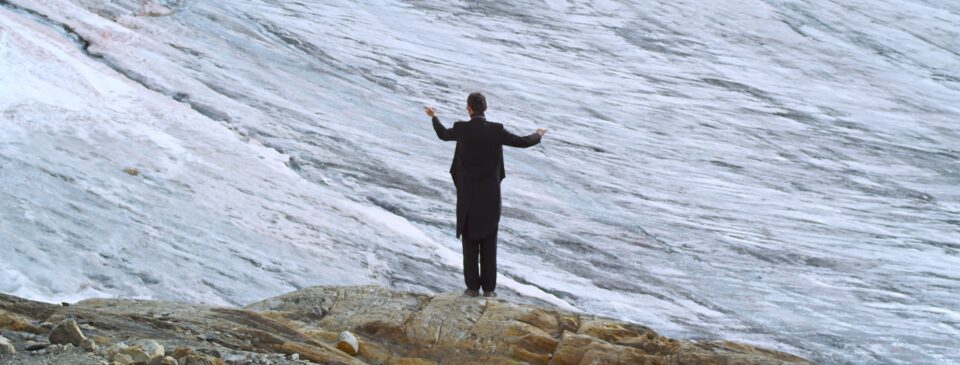

Paul Walde: Requiem for a Glacier
Paul Walde is an artist, composer, and curator. Walde’s body of work suggests unexpected interconnections between landscape, identity, and technology. In 2013, he completed ‘Requiem for a Glacier’, a site-specific sound performance featuring a fifty-five-piece choir and orchestra live on the Farnham Glacier in the Purcell Mountains. In this interview with art and ecology author, John K. Grande, he discusses this work as well as his other projects.

Time Traveller: Donald Burgy’s journey from the far future to the distant past
Donald Burgy has been well-known for his futuristic conceptual artworks for more than 50 years. Much less known is his recent work on the interpretation of prehistoric drawings. This essay considers his recent work as a necessary complement to the earlier work and identifies a fundamental change in Burgy’s understanding of the relationship between art and science as part of this complementarity.

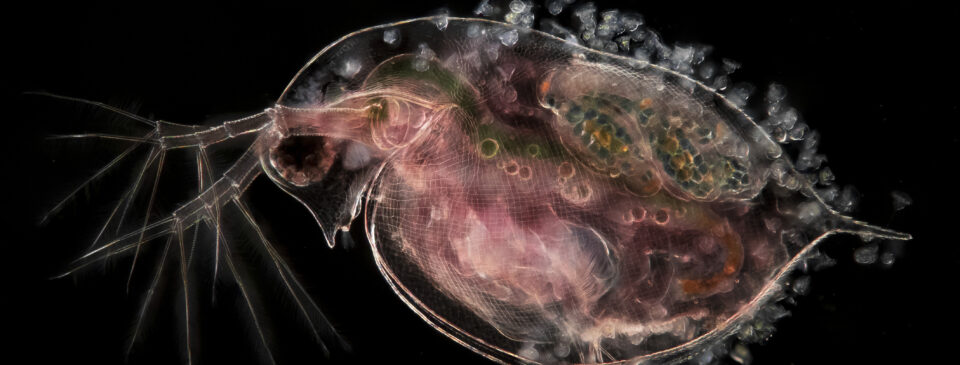
Planktonium
Planktonium is a photo series and short film about the unseen world of microscopic plankton. It is a voyage into a secret universe, inhabited by alien-like creatures. Jan van IJken filmed the plankton through his microscopes, revealing the beauty and delicate structures of the minute organisms in the finest detail. These stunningly beautiful organisms are unknown to most of us, because they are invisible to the naked eye. However, they are of vital importance for the ecosystem.

Contemplatives in Conversation: Images in Contemplative Practice
Images in contemplative practice turn on a seeming contradiction: they can serve as guides on the mystical path but can easily become obstacles as well. On October 10th, 2021, I met with Don Salmon on Zoom, as the two of us shared our experiences and ideas about the promises and pitfalls of using images to deepen our connection to God. This piece, which is based on our conversation, explores the contradictions inherent in our use of images for spiritual guidance, along with questions related to the intersection of art and theology. We discuss whether abstract images or images of nature have the same power to inspire contemplation through devotion and love as sacred images of specific mystics, yogis, sages, and saints. Whether there is a difference in the state of consciousness achieved through religious tradition as compared to contemporary methods of spiritual practice that aren’t necessarily associated with a tradition, and the role of imagery in devotional practices vs non-devotional practices. We explore the relative value of image-based vs. non-image-based meditation, and the benefits of using digital images for contemplation. We also discuss the nature of apophatic and cataphatic methods and how different traditions approach images as vehicles for spiritual enlightenment.
from ‘Love Algorithm’
Eleni Cay is a Slovakian-born poet living in England and Norway, and writing in English, Slovak, French, Norwegian and Spanish.. Her award-winning first collection ‘A Butterfly’s Trembling in the Digital Age’ was published by Cakanka in Slovakia, Parthian Books in the UK and Hein Verlag in Germany. Eleni is also known for her filmpoems, dancepoems and multimedia poetry, which have been screened at international festivals and featured on Button Poetry. These three poems are taken from her latest collection ‘Love Algorithm’, originally published by The Black Spring Press Group, 2021, London.
Points of Ignition
Lynne Goldsmith’s first book, ‘Secondary Cicatrices’, won the 2018 Halcyon Poetry Prize, was a 2019 Finalist in the American Book Fest Awards, a 2020 Human Relations Indie Book Award Gold Winner, a new Finalist Award in the International Book Awards, and a Distinguished Favorite in the NYC Big Book Awards . Her poetry has been published in Backchannels Journal, Spillway, Thimble Literary Magazine, Environmental Magazine, Red Planet Magazine, among others, with upcoming poems in Tiny Seed Literary Journal and Scotland’s 2020 Geopoetry Conference program. Her poetry book ‘Secondary Cicatrices’ recently won a Book Excellence Finalist Award. Her self-published children’s book is a Royal Dragonfly Award Winner—Honorable Mention for Picture Books 5 & Younger.

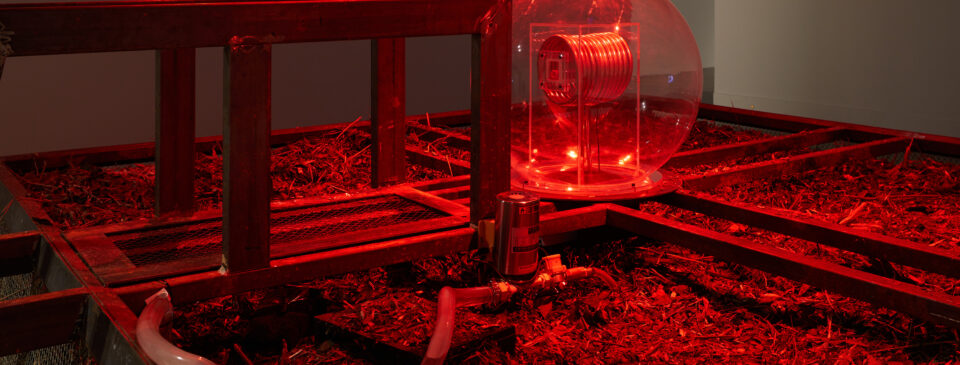
SymbioticA present ‘Sunlight, Soil & Shit (De)Cycle’ (3SDC)’
Taking place in Perth, Western Australia, biological arts pioneers SymbioticA present ‘Sunlight, Soil & Shit (De)Cycle’ (3SDC) – a provoking arts meets science project about the three elements in our utopian future that farming is trying to live without.

How the stunning abstract art of Hilma af Klint opens our eyes to new ways of seeing
Joanna Mendelssohn is Principal Fellow (Hon), Victorian College of the Arts, University of Melbourne. Editor in Chief, Design and Art of Australia Online, The University of Melbourne. A graduate of the University of Sydney, she began her career as curatorial assistant at the Art Gallery of New South Wales before becoming a writer and later an academic at the College of Fine Arts (now UNSW: Art & Design). As well as teaching Australian art history, for many years she was also Program Director for the Master of Art Administration. The author of many books, including ‘The Life and Art of Sydney Long’, (McGraw-Hill 1979); ‘Lionel Lindsay: an artist and his family’ (Chatto & Windus 1988) and ‘Letters & Liars: Norman Lindsay and the Lindsay Family’ (Angus & Robertson 1996), she has also curated a number of exhibitions including Larter Family Values (Casula Powerhouse Arts Centre 2006) and wrote the catalogue for The Yellow House 1970-1972 (Art Gallery of New South Wales 1990). She has written art criticism for the Sydney Morning Herald, Independent, The Bulletin and Australian; and for many years has been a contributing editor to ArtLink.

How could the Big Bang arise from nothing?
Alastair Wilson is Professor of Philosophy at the University of Birmingham, working on metaphysics, epistemology, philosophy of science and philosophy of physics. His doctoral thesis was on the metaphysics of Everettian (many-worlds) quantum mechanics, and this line of thought culminated in his book The Nature of Contingency: Quantum Physics as Modal Realism (OUP, 2020). More recently he has worked on explanation and dependence in physics and metaphysics as part of his ERC-funded project FraMEPhys, on metaphysical explanation in physics. He has also worked on laws of nature, chance, properties, causation, counterfactuals, and the epistemology of disagreement and of self-locating beliefs. He was President of the Society for the Metaphysics of Science in 2017-18 and Honorary Secretary of the British Society for the Philosophy of Science in 2018-19. He remains on the SMS and BSPS committees, and is also a member of the climate task force of the Philosophy of Science Association and a Trustee of the Philosophy of Physics Association. He is PhilPapers editor for the categories ‘Interpretation of Quantum Mechanics’ and ‘Theories of Modality’, and a Managing Editor of the open-access journal Ergo.
Everything we see is a mash-up of the brain’s last 15 seconds of visual information
Mauro Manassi is Assistant Professor in Psychology, University of Aberdeen.
“I joined the Psychophysics laboratory at École Polytechnique Fédérale de Lausanne (Lausanne, Switzerland) for a PhD in Neuroscience (2009-2014). My PhD focused on how our visual system organizes the cluttered environment around us in a coherent manner (go to https://www.mauromanassi.com/crowding for more info about my work on visual organization).
At the end of my PhD, I was awarded of the Early Postdoc.Mobility fellowship by the Swiss National Science Foundation, for an 18 months postdoc in the laboratory of Perception and Action at UC Berkeley (California, USA). Here, I have become interested in how our visual system stabilizes our visual interpretations of the world, turning discontinuous and chaotic retinal images into coherent visual percepts.”
David Whitney is Professor of Psychology, University of California, Berkeley.
“My lab and I are broadly interested in perception science. I am broadly interested in a variety of topics in perception, including visual and visuomotor localization, motion perception, object recognition, perceptual and motor crowding, and visual impairments. In my lab, we use a variety of techniques, including psychophysics, functional magnetic resonance imaging (fMRI), and transcranial magnetic stimulation (TMS).”
Talent, you’re born with. Creativity, you can grow yourself
Jyoti Mishra is Assistant Professor in the Department of Psychiatry and the founder and director of the Neural Engineering & Translation Labs (NEATLabs) at University of California, San Diego. NEATLabs innovates neuro-technologies for scalable brain health mapping and precision therapeutics. At the intersection of neuroscience and digital tech, NEATLabs R&D is informing personalized mental healthcare, education as well as climate change resilience.