Exploring Segments of Dissociation in Neurological Disorder
Luca M Damiani is an Artist, Author and University Fellow, focusing his ongoing creative practice and research on neuroscience/health, technology and nature. His work also crosses over with human rights and social design. Luca has a neurological disability and has had various visual art books and academic articles published, as well as being exhibited internationally.
“Focusing on my neurological-brain trauma (caused by an accident in 2018), my ongoing research-based practice looks at various areas of applied art and design, with the main focus on my own sensory disability as well as various branches of neuroscience, social design and technology.”
This visual work is interconnected and follows the previous articles ‘Processing Hyperacusis and PPPD : Inner-view of Neurological Disorder’ and ‘Processing Hyperacusis and PPPD : Outer-view of Neurological Disorder’. Based on my auto-ethnographic research following my own neurological disability, I observed through time that when the merging occurs between the inner and outer experience of sensory overloads, then dissociation is triggered. Dissociation is a mental state when a person disconnects from the surrounding, often also disconnecting from the sense of space/place in that period of time. A detachment from feelings and even understanding who we are, can also happen.
I have experienced dissociation in various situations; a disconnection sometimes also followed by strong vertigos or short seizures, but often mainly just getting into a state of “a mental flying lightness”. This can be quite dangerous if it happens outdoors; there are clear risks when that happens, and it can end with psychiatric medical care afterwards. Memory is also affected, and to be honest I would not be able to bring auto-ethnography into discussion here if it wasn’t from some data (i.e. words and drawings/designs) that I found after in my notebooks. It seemed that during some dissociative spells, I actually wrote some words and drew some lines in my diary; I think that was helped by the fact that I have been undertaking neuro-physiotherapy and neuro-meditative treatments that might have helped mysubconscious self to still react within my “research questions” that perhaps obsess me (!). Questions of now various years of research, trying to understand more about my invisible condition of neurological brain trauma.
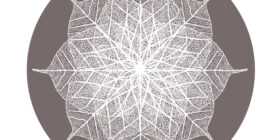
And so, in this piece, I bring together for the first time some of these elements; they are contextualised and put into the framework of the research practice, but I have tried to keep them as raw as I could in the text found in the diary/note-book. So, even though it is not a huge amount of work in terms of quantitative research, I think it is a strong amount of work in terms of qualitative research and auto-ethnography during dissociative moments. So, the following, under the format of poetry and graphic design are a representation and reflection of my dissociation. The words in bold are actually from the diary itself; I have then added a line of narrative during the analysis of the data. The graphic designs were created combining the designs from the inner and outer pieces from my previous data, merged and cut with the lines (and lots of dots) drawn in my notebook during dissociation.
The meaning of this creative work is to then bring together the triggers (inner and outer) of the dissociative disorder, reflecting the “rupture” (based on my line drawings as sharp cuts) in awareness of the inner and the outer, and then connect with words that were written as a “feeling” of that dissociation in that very moment. Exploring this interconnection of stages, I have created the below.
Rolling up and down of a tab,
the cursor triggers the visual stimuli
and external movement
is to begin.
Pulsating loss
as a secondary aspect
of the consistent and intrusive FOG.
I am not sure
in this real trouble.
The language started to change.
Possibility of induced fall
in spatial movement.
The light is persistent,
no matter what.
Crystals rigged in vertigo screen stimuli
can then stretch as a response.
It is only a second.
…
…
…
…
…
…
…
…
…

…
…
…
…

…
…
…
…
…
…
…
…

…

…
…
…
…
…
…
…
…

…
…
…
…

…
…
…
…

………………………………………
https://lucadamiani-art.com/
All images copyright and courtesy of Luca M Damiani
Get the Full Experience
Read the rest of this article, and view all articles in full from just £10 for 3 months.
No comments yet.